Brick staining changes the color of brick without coating it. The stain soaks into the brick, so its texture, mortar lines and natural variation still show. North Shore Masonry uses brick staining for two jobs: blending repairs, replacement brick and additions into your existing brick, and changing the color of a whole wall. We stain brick. We do not paint it.
What Brick Staining Is
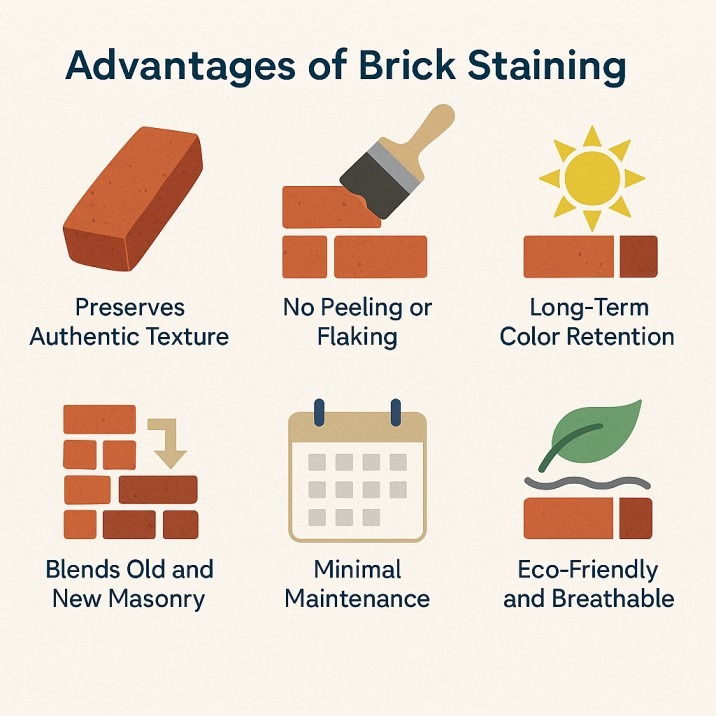
Brick stain is a penetrating mineral or masonry stain. It soaks into the pores of the brick instead of drying as a layer on top, so the wall can still take on water and dry out the way brick should.
Stain deepens or shifts the color you have rather than hiding it, so the wall still looks like brick, not a coating.
Why We Stain Brick and Do Not Paint It
Paint forms a film over the face of the brick. Brick and mortar take on moisture and need to let it back out, and a film can hold it in. When trapped water freezes, paint can blister and peel and brick faces can start to flake. A painted wall also needs repainting from time to time.
If your brick is already painted, that is a common choice and not the end of the story. Our trade is the brick itself, so we stick to a finish that soaks in, lets the wall breathe, and has nothing to peel.
Two Ways We Use Brick Staining
Blending Repairs, Replacement Brick and Additions
New brick rarely lines up with brick that has weathered for decades, so a rebuild, a filled-in window or an addition can stand out as a patch. On older brick our crews repoint with lime-rich mortar and use salvaged brick where we can find a close one. Stain then tones the new brick toward the old, for a blend as close as the existing brick allows, not an exact match.
Full-Wall Color Changes
Stain can also change the color of a whole wall. It is best at deepening or shifting a tone, and the sample area shows what your brick can realistically do before we touch the rest.
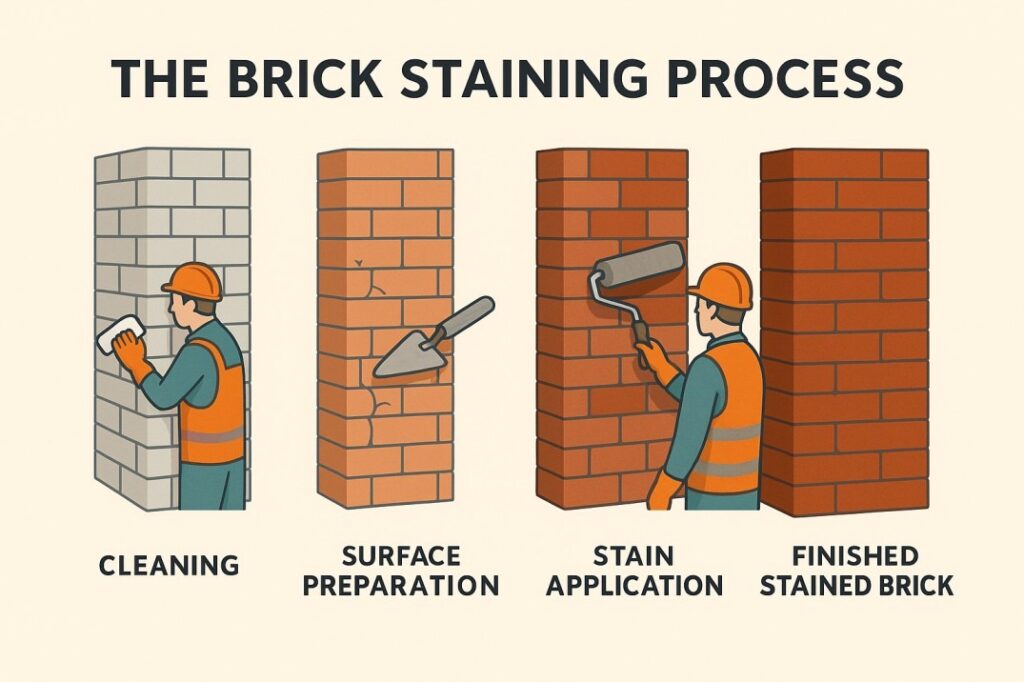
Our Brick Staining Process
1. Inspect the Wall and Test a Patch
We check the brick, the mortar and any old coatings, and a small test patch shows how this brick takes stain. Cracks that suggest the building is moving go to a structural engineer first.
2. Clean the Brick
Dirt, efflorescence (the white salt bloom on brick) and old residue stop stain soaking in evenly. We clean gently and let the wall dry.
3. Repair or Repoint First if Needed
Loose mortar, spalled brick and failed joints get fixed first through our tuckpointing and brickwork restoration work. Stain goes on last.
4. Mix and Test the Color
We try your color on a sample area out of the way, and you see it dry, on your own wall, before we go further.
5. Apply the Stain
Blending means picking out individual bricks or a patched section. A full-wall change means even coverage. We stain on dry, mild days.
6. Review in Daylight
Stain looks different wet than dry, so we review the finished wall dry, in daylight, and touch up any bricks that still stand out.
What Affects Brick Staining Results
- Brick porosity. Soft, older brick drinks stain fast. Dense modern brick takes less, and glazed faces may barely take it at all.
- Paint. Stain cannot soak through paint. Previously painted brick generally has to be stripped before it can take stain, and not every wall strips cleanly.
- Old sealers. A clear water repellent from years ago can still block stain. If water beads on the brick, the sealer has to come off or wear away first.
- Weather. Wet, frozen or sun-baked brick takes stain unevenly, so winter shortens the season in Chicago, Milwaukee and Fort Wayne, and North Texas summers mean working around hot sun.
Caring for Stained Brick
Stained brick has no film, so there is nothing to peel. Care is simple:
- Clean with water and a soft brush, not high pressure or harsh acids.
- Keep gutters and downspouts working so water does not run down the wall.
- Repoint mortar joints when they open up.
Brick Staining Near You
We stain brick across our four markets:
- Chicago, IL and the North Shore suburbs
- Milwaukee, WI and nearby communities
- Denton, TX and the northern Dallas-Fort Worth area
- Fort Wayne, IN
North Shore Masonry has worked on brick since 1978. We are an MCAA member and fully insured.
Frequently Asked Questions: Brick Staining
1. Is brick staining the same as painting brick?
No. Paint forms a film on the brick. Stain soaks in and leaves the pores open, so there is nothing to peel. North Shore Masonry stains brick. We do not paint it.
2. Can staining make new brick blend in with old brick?
Yes, that is one of the main reasons to stain. We tone new or replacement brick toward the existing wall, for a blend as close as the existing brick allows, not an exact match.
3. Can you stain brick that has been painted?
Not directly. The paint generally has to be stripped first, gently enough to protect the brick face, and on some walls that is not worth the risk. We will look and tell you honestly.
4. Is staining safe for old or historic brick?
It can be, because stain does not seal the brick the way a film does. We test first and repair failed joints with lime-rich mortar. In a historic district, check whether a color change needs approval.
5. How long does brick stain last?
It depends on the brick and on exposure. With no film, it does not peel. It typically fades slowly, sooner on a sunny, exposed wall than a sheltered one, and faded areas can usually be touched up.
6. How much does brick staining cost?
It depends on the size of the area, the brick, access, and how much prep and color testing the wall needs. We price it after seeing the wall, and the on-site estimate is free.
Get a Brick Staining Estimate
Tell us what you want to fix, a patch that stands out or a color you want to change, and we will look at the brick and tell you what stain can do. Request your free estimate for brick staining services.