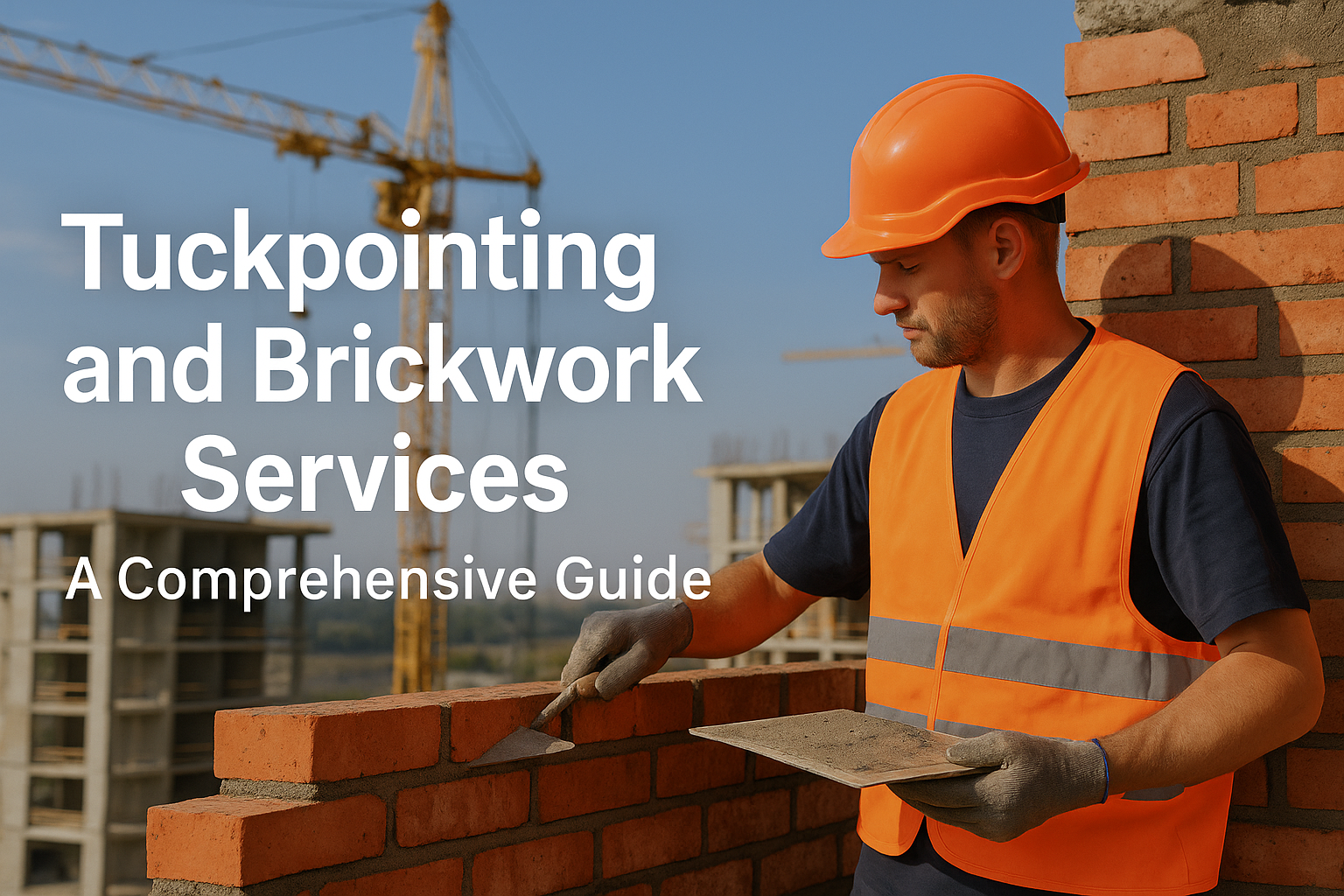
Restoring Strength and Beauty to Masonry Structures
Brick and stone structures have long been admired for their timeless durability and elegant appearance. However, even the strongest masonry can weaken over time. Exposure to moisture, temperature changes, and environmental conditions gradually erodes the mortar joints that hold the structure together, threatening both appearance and stability.
At Northshore Brickwork, we specialize in professional tuckpointing and brickwork restoration services designed to preserve the integrity and enhance the beauty of your property. With years of experience in high-quality masonry repair, our craftsmen restore exterior walls, façades, and architectural details with precision and authenticity, ensuring every surface stands the test of time.
What Is Tuckpointing?
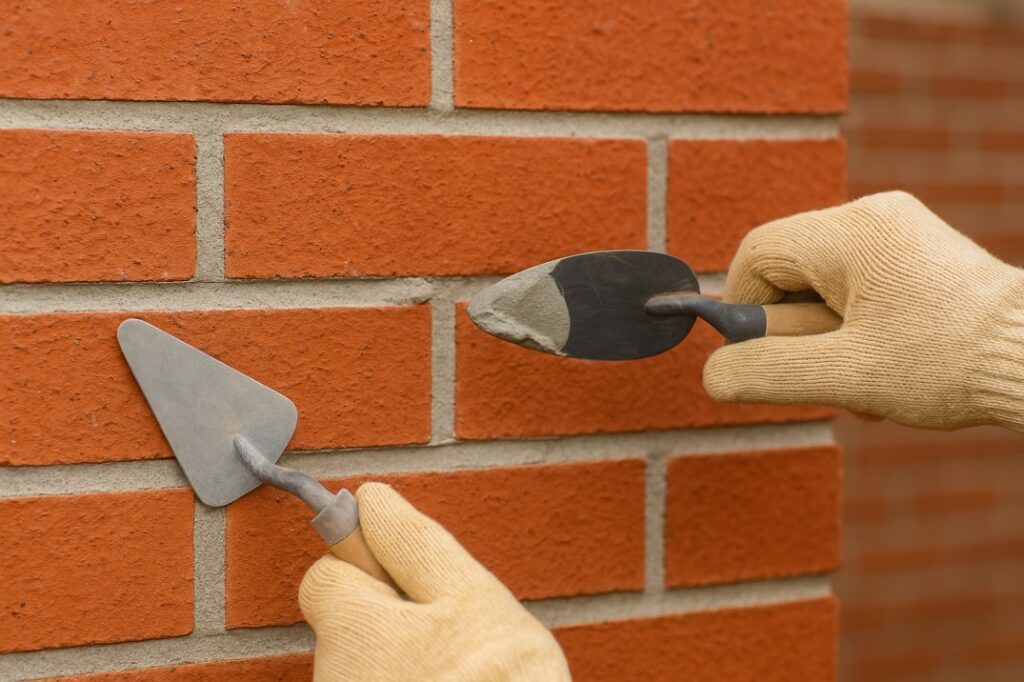
Tuckpointing is the process of repairing and renewing the mortar joints in brick or stone masonry. It involves carefully removing deteriorated mortar from between the bricks, then filling the joints with new mortar that matches the color, texture, and composition of the original material.
This technique not only strengthens the wall but also restores its clean, crisp appearance. In traditional decorative tuckpointing, a fine contrasting line is added to give the illusion of narrow, perfectly uniform joints — a mark of expert craftsmanship.
Modern tuckpointing focuses primarily on structural repair, moisture prevention, and aesthetic restoration. Sealing gaps and cracks prevents water from seeping into the masonry, which is one of the most common causes of long-term damage in brick and stone buildings.
Why Mortar Repairs Are Essential
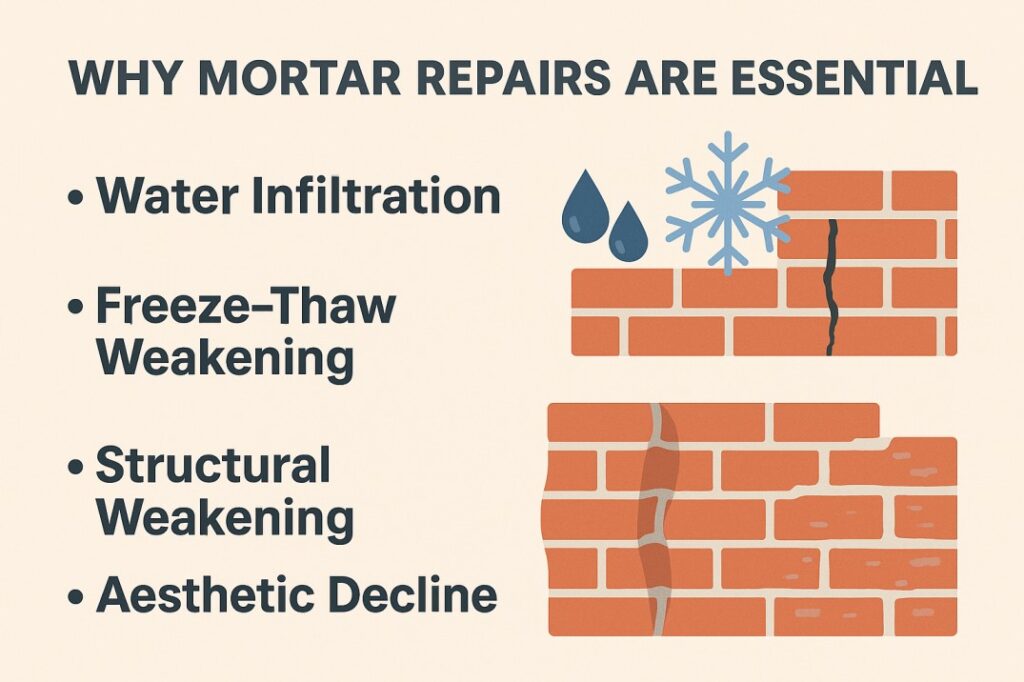
Mortar joints are the unsung heroes of any masonry structure. While bricks or stones form the visible surface, it’s the mortar that holds everything together, allowing the wall to expand and contract naturally. When the mortar begins to deteriorate, several problems can occur:
- Water Infiltration: Cracked or missing mortar allows moisture to enter, leading to internal dampness, mold, and efflorescence.
- Freeze-Thaw Damage: In colder climates, water trapped in the joints freezes and expands, causing the masonry to crack.
- Structural Weakening: As mortar fails, the load-bearing capacity of the wall decreases, potentially leading to bulging or loose bricks.
- Aesthetic Decline: Uneven, crumbling joints make even the most beautiful brickwork appear aged and neglected.
Timely tuckpointing is the key to preventing these issues. It not only stops existing damage from spreading but also restores the original look and durability of your structure.
Our Tuckpointing Process
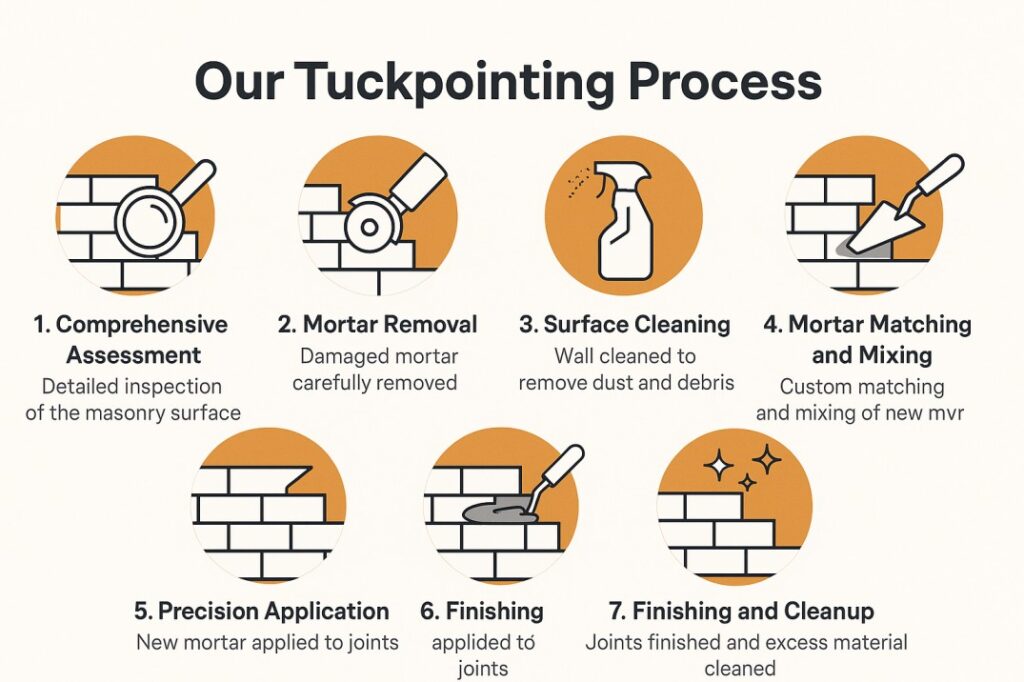
Every project at Northshore Brickwork follows a methodical, quality-driven approach to ensure lasting results. We combine traditional techniques with modern equipment and materials for precision and consistency.
1. Comprehensive Assessment
Our process begins with a detailed inspection of the masonry surface. We assess the extent of mortar deterioration, identify cracks or water damage, and determine whether partial or full tuckpointing is required. This step allows us to tailor the restoration plan to the structure’s condition and material type.
2. Mortar Removal
Using specialized grinders and hand tools, our craftsmen carefully remove the damaged mortar to a controlled depth, typically around ¼ to ¾ inch. This process — known as raking or grinding — ensures that the new mortar can bond effectively with the existing masonry without damaging the bricks themselves.
3. Surface Cleaning
The wall is thoroughly cleaned to remove dust, debris, and residue. A clean surface ensures that the new mortar adheres properly and maintains a consistent color once cured.
4. Mortar Matching and Mixing
Matching the existing mortar is both a science and an art. Our team analyzes the original mortar’s texture, composition, and color to create a custom blend that replicates the original material. Whether the building is modern or heritage, our goal is to ensure seamless visual continuity.
5. Precision Application
The new mortar is applied in layers using specialized pointing tools. Each joint is carefully packed and tooled to achieve the desired finish — whether flush, recessed, or weather-struck. This step restores the structural integrity of the wall and enhances its appearance.
6. Finishing and Cleanup
Once the mortar begins to set, we clean the brick surfaces and refine the joints for uniformity. The result is a clean, crisp finish that revives the building’s appearance and ensures long-term protection from moisture.
Types of Tuckpointing Services We Offer
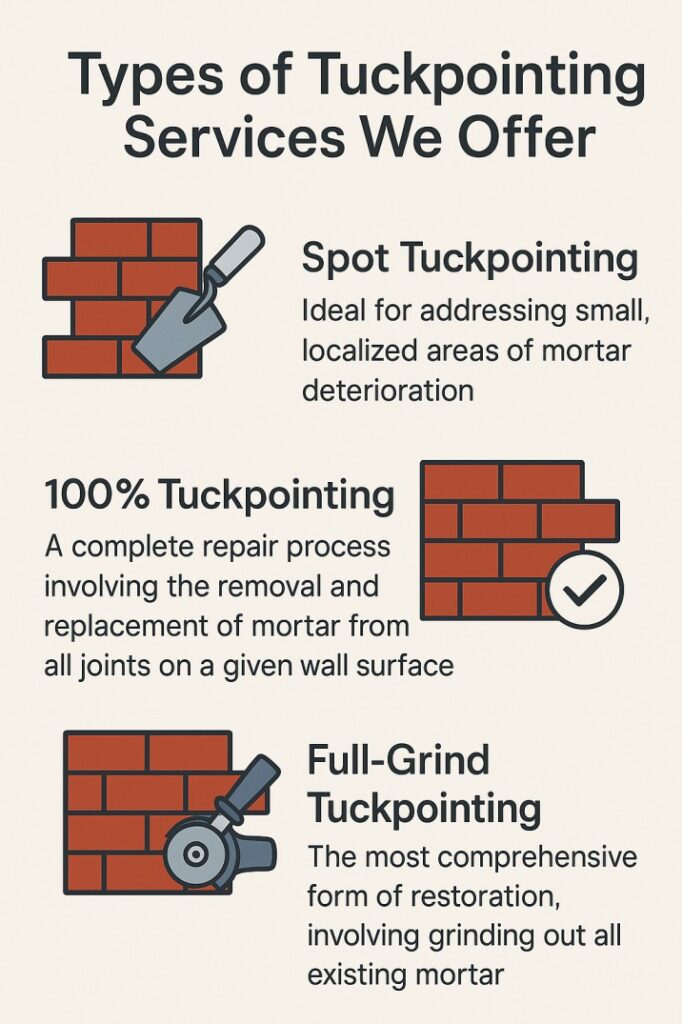
Every structure has unique needs. Depending on the condition of the masonry, we provide several levels of tuckpointing service:
Spot Tuckpointing
Ideal for addressing small, localized areas of mortar deterioration. Spot tuckpointing helps prevent minor damage from spreading and extends the life of the existing masonry.
100% Tuckpointing
A complete repair process involving the removal and replacement of mortar from all joints on a given wall surface. Recommended for buildings with widespread mortar failure or visible cracking.
Full-Grind Tuckpointing
The most comprehensive form of restoration, full-grind tuckpointing, involves grinding out all existing mortar to a greater depth before applying new mortar. This approach ensures complete adhesion and uniform appearance, ideal for major restorations or historic properties.
Brickwork and Masonry Restoration
Beyond mortar repair, our expertise extends to a full range of brickwork and masonry restoration services. Whether you’re dealing with structural cracks, damaged bricks, or weathered façades, our skilled team can restore your property’s strength and aesthetic appeal.
Brick Replacement
Damaged or spalling bricks are carefully removed and replaced with new units that match in size, color, and texture. This meticulous process maintains architectural continuity while reinforcing the wall’s structural integrity.
Structural Masonry Repair
When cracks or bulges indicate deeper issues, we diagnose the root cause — such as foundation movement or moisture retention — and implement long-term repair solutions, including reinforcement and stabilization.
Brick Cleaning and Sealing
Pollution, dirt, and organic growth can dull the appearance of brick surfaces. We use gentle cleaning techniques and breathable sealants to restore color and protect against future staining or moisture damage.
Historic Restoration
Heritage and period structures require special care. Using traditional lime-based mortars and historically accurate techniques, we preserve original craftsmanship while strengthening the masonry for modern performance standards.
Common Causes of Masonry Damage
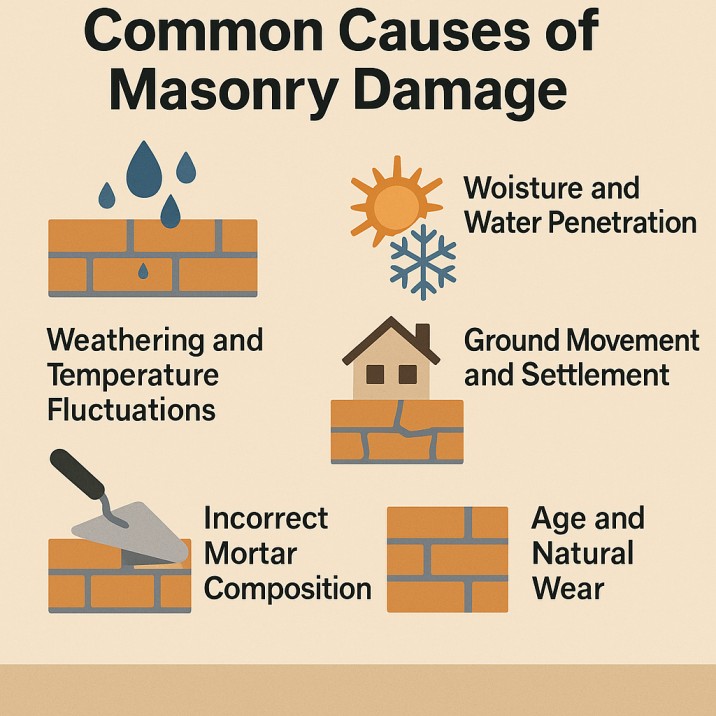
Understanding what causes mortar and brick deterioration helps prevent future issues. The most common culprits include:
- Moisture and Water Penetration
Rainwater, melting snow, and poor drainage systems allow water to seep into joints, leading to erosion and cracking. - Weathering and Temperature Fluctuations
Repeated expansion and contraction from seasonal temperature changes put stress on mortar joints. - Ground Movement and Settlement
Subtle shifts in a building’s foundation can cause horizontal or vertical cracks in the brickwork. - Incorrect Mortar Composition
Using overly hard mortar on soft historic bricks can cause premature failure. - Age and Natural Wear
Even well-maintained masonry requires periodic repointing after decades of exposure.
The Importance of Proper Materials and Technique
Not all tuckpointing is equal. The quality of materials and craftsmanship directly determines the lifespan of the repair.
At Northshore Brickwork, we use high-grade, compatible mortars suited to the specific brick or stone type. Matching not just color but composition — lime vs. cement, coarse vs. fine aggregates — ensures that the new joints move and breathe like the original structure.
Incorrectly matched mortars can trap moisture, leading to brick spalling or accelerated deterioration. That’s why our technicians follow traditional methods and modern engineering standards to deliver durable, authentic, and visually cohesive results.
Benefits of Professional Tuckpointing and Brickwork
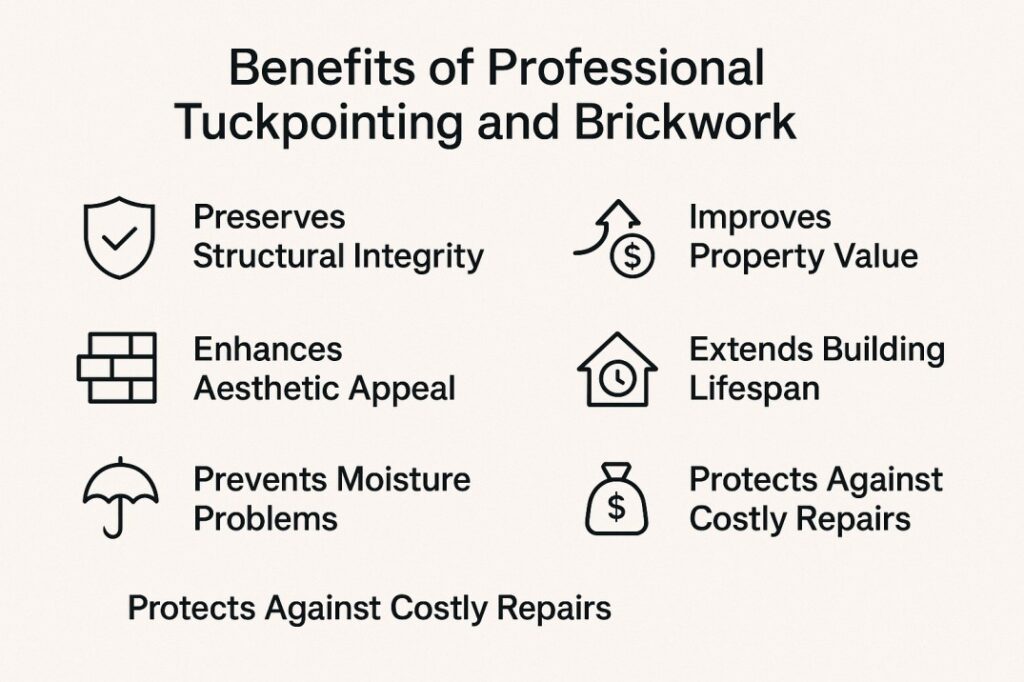
- Preserves Structural Integrity — Strengthens weakened walls and prevents further damage.
- Enhances Aesthetic Appeal — Restores the crisp lines and uniform look of the original masonry.
- Prevents Moisture Problems — Seals gaps to keep out rainwater and prevent internal dampness.
- Improves Property Value — A well-maintained façade adds lasting value and curb appeal.
- Extends Building Lifespan — Regular tuckpointing can add decades of life to your structure.
- Protects Against Costly Repairs — Preventive maintenance reduces the risk of large-scale restoration later.
Signs Your Property Needs Tuckpointing
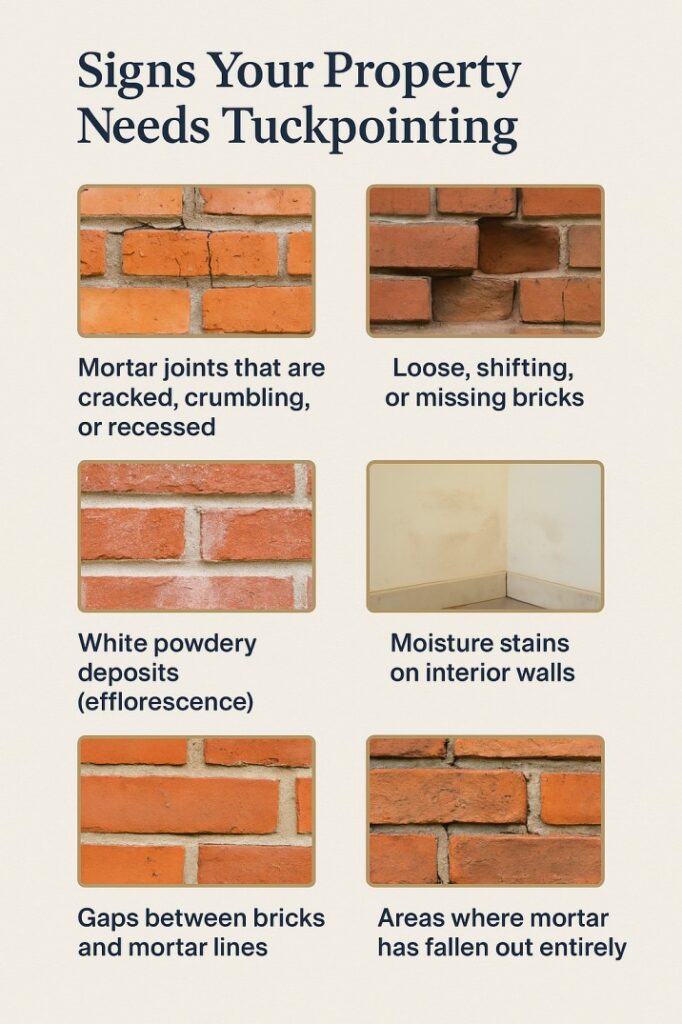
You may need professional tuckpointing if you notice any of the following:
- Mortar joints that are cracked, crumbling, or recessed
- Loose, shifting, or missing bricks
- White powdery deposits (efflorescence)
- Moisture stains on interior walls
- Gaps between brick and mortar lines
- Areas where mortar has fallen out entirely
Early detection is crucial. Addressing mortar deterioration promptly prevents more extensive structural damage and higher repair costs later.
Why Choose Northshore Brickwork
Choosing the right masonry specialist makes all the difference in your building’s longevity. Northshore Brickwork’s reputation is built on expert craftsmanship, attention to detail, and a deep understanding of masonry science. Every project reflects the same standards of precision and pride, whether it’s a small repair or a large-scale restoration.
What sets us apart:
- Skilled masons trained in both modern and traditional techniques
- Custom mortar matching for seamless visual results
- Use of durable, weather-resistant materials
- Commitment to preserving architectural authenticity
- Detailed quality inspections and long-lasting results
We don’t simply repair walls — we restore their strength, character, and story.
Frequently Asked Questions
1. How does improper tuckpointing damage masonry in the long run?
Incorrect tuckpointing — such as using the wrong mortar mix or over-grinding joints — can trap moisture within the brickwork. This prevents the wall from “breathing,” leading to internal cracking, efflorescence, and even brick spalling. In heritage structures, using hard cement mortar instead of lime-based mortar can cause irreversible damage. Professional analysis and material compatibility are critical for long-term stability.
2. What’s the difference between spot tuckpointing and full-grind tuckpointing in terms of structural benefit?
Spot tuckpointing targets small, localized areas of deterioration and is ideal for maintenance or early-stage repair. Full-grind tuckpointing, on the other hand, removes all existing mortar joints across the wall to a consistent depth before refilling them. While more extensive, full-grind tuckpointing provides uniform strength, prevents hidden moisture pockets, and extends the building’s lifespan significantly.
3. How do professional masons ensure color and texture consistency when matching old mortar?
Experienced restorers conduct a mortar analysis to identify the original composition — including sand type, pigment, binder ratio, and aggregate size. They then create multiple test batches and allow them to cure before selecting the closest match. Factors like lighting, surface exposure, and mortar finish are considered to ensure seamless blending with the existing façade.
4. Can tuckpointing fix structural issues like bowing or leaning brick walls?
No. Tuckpointing addresses the deterioration of mortar joints but does not correct foundational or structural movement. If a wall is bulging, leaning, or separating, it indicates a deeper problem — such as settlement, moisture expansion, or wall tie failure. In these cases, tuckpointing is only performed after the underlying structural issue has been stabilized by reinforcement or rebuilding.
5. How often should tuckpointing be performed to maintain masonry longevity?
The ideal maintenance cycle depends on the building’s age, material, and environmental exposure. On average, well-maintained brickwork requires tuckpointing every 20 to 30 years. However, periodic inspections every 5–10 years are recommended to catch early signs of mortar deterioration, especially in buildings exposed to heavy rainfall, salt air, or freeze-thaw conditions.
6. Is it possible to over-tuckpoint or grind too deep into the joints?
Yes. Over-grinding or cutting beyond the necessary depth can weaken brick edges and compromise the structural bond between units. Skilled masons grind only to the depth of deteriorated mortar — typically ¼ to ¾ inch — ensuring sufficient removal for new bonding without damaging the brick arrises (edges). Precision and tool control are essential for this stage.
7. How does modern tuckpointing differ from historical restoration techniques?
Modern tuckpointing often uses stronger cement-based mortars and power tools for efficiency, whereas historical restoration relies on lime-based mortars that allow natural movement and moisture evaporation. Professional restorers use traditional methods when working on heritage structures to ensure authenticity and prevent incompatibility issues that could lead to cracking or decay.
8. Can you perform tuckpointing during all seasons, or does temperature affect the process?
Temperature and humidity significantly influence curing and adhesion. Ideal conditions for tuckpointing are between 40°F (4°C) and 90°F (32°C), with moderate humidity. Extreme cold can freeze the water in the mortar, weakening the bond, while high heat causes premature drying and shrinkage cracks. During off-season work, experts use protective covers and controlled curing methods to ensure consistency.
9. What are the long-term financial benefits of professional tuckpointing and brick restoration?
While tuckpointing may seem like a maintenance expense, it’s one of the most cost-effective preservation investments. Properly executed, it prevents water infiltration that could otherwise lead to interior wall damage, mold remediation, or structural rebuilding. Buildings that undergo timely tuckpointing retain property value, require fewer future repairs, and maintain superior insulation efficiency.
10. How does Northshore Brickwork ensure quality and durability in every tuckpointing project?
Northshore Brickwork combines old-world craftsmanship with modern restoration standards. Each project begins with a structural assessment and mortar analysis. Our masons use only compatible, high-grade materials, maintain consistent joint profiles, and follow a multi-stage quality check — from grinding precision to final curing. This rigorous process ensures not only a flawless finish but also long-term protection against moisture, weathering, and structural stress.