Modern Exterior Cladding Solutions for Commercial, Institutional, Multi-Family and High-End Residential Projects
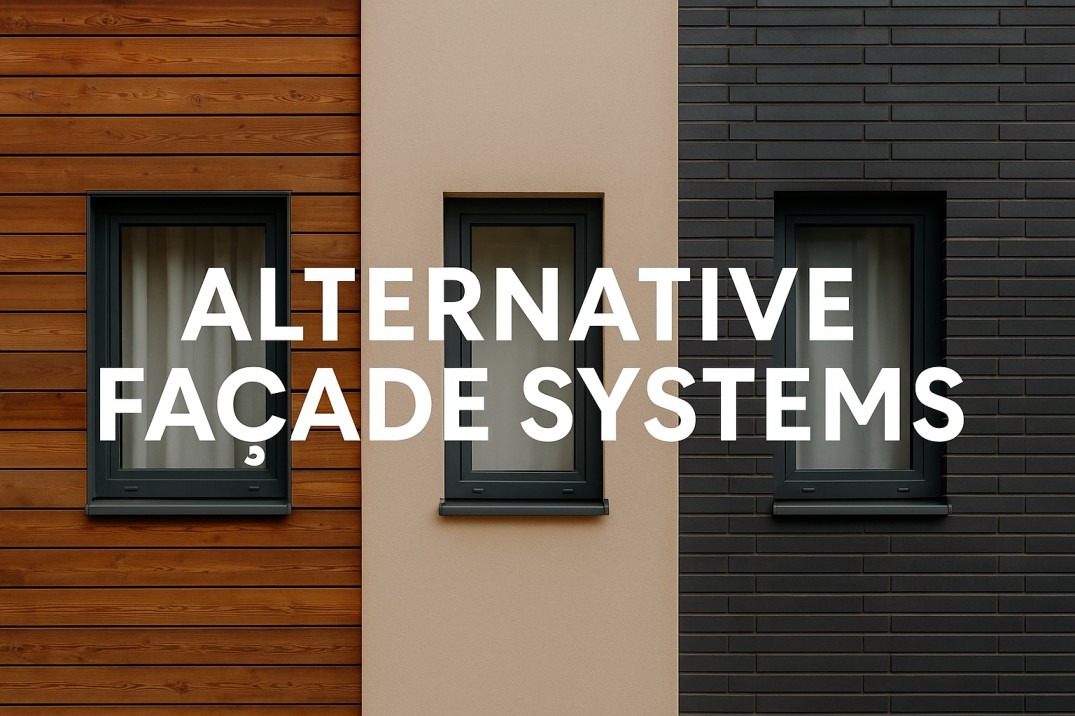
Exterior facades have undergone a major transformation over the last two decades. Where traditional masonry once dominated, modern façade systems such as fiber cement, rainscreens, metal panels, composite cladding and architectural precast now offer lighter weight, faster installation, improved energy performance and far greater design freedom. Architects, developers and property owners are moving toward these advanced façade solutions not only for their visual appeal but also for their structural efficiency, long-term durability, and compliance with evolving building codes.
Traditional brick and stone remain highly valued, but they are not always cost-effective or practical for mid-rise and high-rise construction, retrofit projects, or buildings requiring continuous insulation and advanced moisture management. Alternative façade systems bridge this gap. They provide the look of masonry or modern design finishes while reducing structural load, shortening construction schedules and enhancing building envelope performance.
Modern façade technology now makes it possible to achieve:
- Superior thermal performance with built-in or integrated insulation
- Rainscreen drainage and ventilated cavity systems
- Reduced structural weight compared to full masonry
- Lower installation labor time and project disruption
- A wider palette of textures, colors, coatings and panel geometries
- A façade that can be replaced, upgraded or repaired with minimal demolition
These systems are widely used in commercial offices, universities, municipal buildings, multi-family housing, retail centers, hospitals, hotels and architectural renovations where performance, speed and aesthetics must work together. The shift is not merely stylistic. It is driven by energy codes, fire compliance, sustainability goals and the demand for lower life-cycle cost.
2. Full Breakdown of Systems

Fiber Cement Panels
Composition and Manufacturing
Fiber cement is made from a mixture of Portland cement, cellulose fibers, sand and water. The material is pressed, autoclaved and cured to form rigid, dimensionally stable cladding boards or panels.
Installation Method
Panels are mechanically fastened to furring, steel girts or aluminum sub-framing. They can be installed as a direct-applied system or as part of a ventilated rainscreen assembly.
Thermal and Moisture Behavior
Fiber cement itself is not an insulator, so it is typically paired with continuous insulation behind the panel. When used in a rainscreen configuration, it allows drainage, pressure equalization and drying of the wall cavity.
Expected Lifespan and Warranty
Factory-finished products frequently carry warranties of 30 to 50 years when installed correctly.
Cost and Best Use Cases
A cost-effective option for schools, offices, multi-unit residential and institutional façades. Not ideal for ultra-tall buildings in high wind zones without reinforced subframing.
Metal Panel Systems
Metal cladding includes aluminum plate, steel, zinc, copper, Corten weathering steel and composite systems such as ACM (Aluminum Composite Material). Each type varies in structural strength, corrosion resistance and aesthetic character.
Installation and Support Structure
Most metal systems use concealed fasteners and attach to engineered aluminum or galvanized steel sub-framing. Systems can be flat, ribbed, corrugated, profiled, perforated or custom-shaped.
Fire Resistance and Code Compliance
NFPA 285 compliance is critical, particularly in multi-story applications. ACM and insulated metal panels must meet fire performance standards.
Advantages
Extremely durable, lightweight, highly customizable, available in metallic, matte, anodized, PVDF-coated and textured surfaces.
Performance Limitations
Oil-canning, galvanic corrosion and panel denting are risks if the wrong alloy or gauge is selected.
Rainscreen Façade Systems
A rainscreen is not a material but a façade design principle. Instead of sealing water out completely, the outer cladding deflects most water, while a ventilated cavity drains and dries any moisture that enters.
How It Works
Cladding
Ventilated air gap
Weather-resistive barrier and flashing
Insulation and sheathing
Structural wall
Benefits
Stops trapped moisture
Reduces mold risk
Improves energy performance
Extends service life of sheathing and insulation
Allows façade replacement without touching interior walls
Rainscreens can be built with fiber cement, metal, composite, terracotta, phenolic panels, UHPC, stone veneer or engineered stone.
Composite Cladding Panels
Includes ACM (Aluminum Composite Material), HPL (High-Pressure Laminate), FRP (Fiberglass Reinforced Panels) and other engineered systems.
Core Characteristics
- Lightweight but rigid
- Large panel sizes minimize joints
- Available in wood grains, metallics, stone patterns or flat colors
- Factory-controlled manufacturing ensures uniformity
Best Applications
Corporate branding projects, retail storefronts, hotel chains, airports, educational campuses and high-visibility architectural façades.
When Not Recommended
Extreme impact zones or untested assemblies in high-rise fire rated conditions without proper testing.
Thin Brick and Stone Veneer
Thin veneer provides the look of masonry at a fraction of the weight. Installed using either an adhered system or mechanical support clips.
Advantages
Compatible with rainscreen construction, reduces load on foundations, can be installed on framed construction instead of structural masonry.
Limitations
Not suitable for structural spanning or bearing loads, requires correct flashing and drainage to prevent efflorescence.
Architectural Precast Concrete Panels
Factory-cast reinforced concrete panels delivered to the site and crane-installed.
Strengths
- High durability and longevity
- Can be cast with stone, brick, sandblast or ribbed finishes
- Reduces onsite labor
- Excellent fire resistance
Considerations
Heavy lifting equipment needed, higher upfront cost, careful structural engineering required.
3. Engineering and Building Envelope Science

Modern façade systems are not decorative skins. They are engineered building envelope components that must control air, water, vapor, thermal transfer and structural movement. The performance of the façade depends on:
- Proper use of air barriers and WRBs
- Integration of flashing, copings and sealants
- Thermal break design to prevent condensation
- Fastening methods that resist wind and seismic movement
- Expansion joint layout to prevent cracking and warping
- Fire continuity between floors and floor lines
- Correct drainage plane design and cavity ventilation
The most common causes of façade failure are not material defects but incorrect detailing at corners, window heads, transition joints and roof interfaces.
4. New Construction vs Retrofit Applications
New Construction
Alternative façade systems allow faster installation and lighter structures, reducing steel and concrete demand. Continuous insulation helps meet modern energy codes.
Retrofit / Over-Cladding
Older brick, stucco or CMU façades can be covered without demolition, improving insulation and eliminating water intrusion issues.
Historic Buildings
Façade upgrades can be done while preserving original ornamentation or reproducing it using lightweight replica materials.

5. Architectural Flexibility
These systems allow virtually unlimited design control:
- Textures ranging from stone to matte aluminum to wood grain
- Perforated or back-lit façades for signage and brand identity
- 3D folded panel geometry and curved cladding
- Custom color matching for corporate or institutional palettes
- Panels routed, grooved, tapered or laser cut
- Integration with sunscreens, louvers and fins
6. Sustainability and Green Building
- Metal panels and fiber cement are recyclable
- Continuous insulation reduces operational energy cost
- Lightweight cladding reduces embodied carbon in structure
- Suitable for LEED, Passive House and net-zero envelope designs
- Long service life minimizes landfill waste compared to coatings or stucco repaint cycles
Life-cycle cost analysis often shows that a rainscreen façade has a lower long-term economic footprint than repainting, re-stuccoing or repointing masonry every 10–15 years.
7. Our Process
- Diagnostic façade evaluation
- Engineering and structural load analysis
- 3D façade scanning and thermal review if required
- System selection based on performance and budget
- Shop drawings and mockup review
- Field installation sequencing
- Final inspections, warranties and maintenance handoff
8. Common Failures We Repair
- Water infiltration behind cladding or at joints
- Panel delamination or surface bowing
- Fastener corrosion or missing anchors
- Failed or non-compliant sealants
- Warped panels from thermal movement
- Rainscreen cavity blocked by improper flashing
- Wind-load damage due to inadequate sub-framing
9. Case-Style Examples
Commercial Office Upgrade
Old brick façade over-clad with metal composite rainscreen to modernize appearance and add CI insulation.
Condo Tower Leak Repair
Failed stucco removed and replaced with ventilated fiber cement panel system.
Retail Rebranding Project
High-pressure laminate panels in corporate colors installed over existing CMU without structural changes.
1. Are alternative façade systems as durable as traditional masonry?
Yes, when engineered and installed correctly, many modern façade systems rival or exceed the lifespan of masonry. Metal panels, fiber cement, and architectural precast can last 40 to 75 years depending on coating type, fastening method, and exposure. Unlike masonry, these systems are not porous, do not require repointing, and are less vulnerable to freeze-thaw deterioration.
2. How long do modern panel façades last before needing replacement?
Most premium systems carry manufacturer warranties ranging from 20 to 50 years. Architectural metals with PVDF coatings and fiber cement panels can last multiple decades with minimal upkeep. The sub-framing and air barrier behind the cladding generally outlast the panels themselves, making future replacement easier than with brick or stucco.
3. Can these systems be installed over failing stucco or brick?
Yes, this process is called over-cladding. As long as the existing façade is structurally stable and properly prepared, a new sub-framing system can be anchored through it, allowing a modern ventilated façade to be installed without full demolition. This is a preferred method for occupied buildings because it reduces noise, dust and timeline disruptions.
4. Do rainscreen systems eliminate the need for weep holes?
Yes. Rainscreens rely on a ventilated cavity rather than internal wall weep systems. Instead of trapping moisture inside the wall, rainscreens allow water that gets behind the cladding to drain out and dry naturally. This is one of the main reasons rainscreens outperform stucco, EIFS and face-sealed assemblies in long-term durability.
5. What building heights are suitable for ACM, metal or composite façades?
These systems are commonly used on everything from one-story retail buildings to 50+ story towers. The limitation is not height but engineering: wind-load calculations, sub-framing design, and fire compliance dictate proper panel selection. ACM and metal panels must be tested to NFPA 285 standards in multi-story construction.
6. Can façade panels meet fire code for multi-story buildings?
Yes, but material selection matters. Solid aluminum plate, fiber cement, terracotta and precast concrete are inherently non-combustible. ACM and composite products must use fire-rated cores and be installed as part of a tested wall assembly. Proper specification ensures code compliance for commercial, residential and institutional buildings.
7. Are these systems repairable if a single panel is damaged?
Most panel systems are modular, meaning individual units can be removed and replaced without disturbing the rest of the façade. This is a major advantage over stucco or brick where local repairs are difficult to blend seamlessly. Repairs are usually as simple as removing fasteners, sliding in a new panel and resealing joints.
8. What kind of maintenance schedule do panel façades require?
Most require periodic visual inspection, sealant renewal at 10–15 year intervals, and light cleaning using low-pressure washing or non-acidic detergents. There is no repainting, re-coating or repointing like stucco or masonry, greatly reducing life-cycle cost.
9. How do alternative façades perform in freeze-thaw climates?
Systems designed with ventilated cavities drastically reduce moisture saturation, which is the primary cause of freeze-thaw damage in masonry. Because materials like metal, fiber cement, phenolic panels and precast are non-absorptive, they do not crack or spall from freezing water. Proper detailing of flashing and air gaps is key.
10. What is the cost difference compared to full brick construction?
Installed cost varies widely by material, but most alternative façade systems are 20–45 percent lighter and faster to install than masonry, which reduces labor, scaffolding and structural steel requirements. While some high-end panel systems may equal brick in initial cost, they typically offer lower life-cycle costs due to shorter installation schedules, reduced maintenance and longer finish warranties.