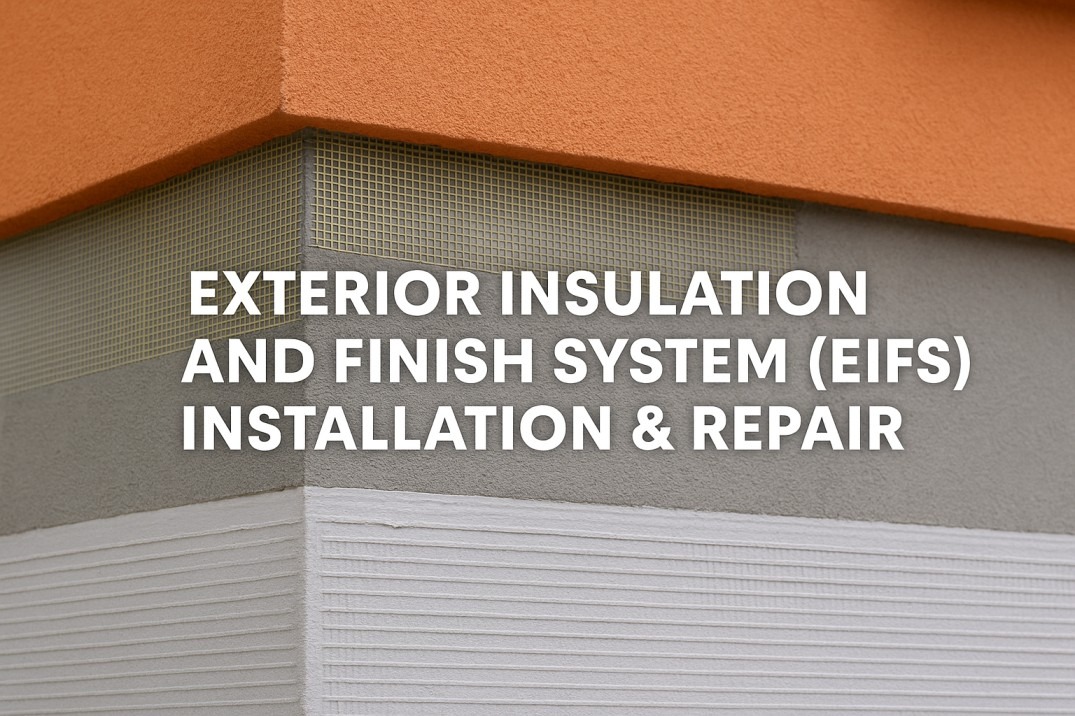
Exterior Insulation and Finish System (EIFS) is one of the most versatile and energy-efficient exterior cladding solutions available today. Designed to combine insulation, weather protection, and aesthetic appeal, EIFS is widely used in both residential and commercial applications. Unlike traditional stucco, which is a cement-based coating applied directly to a wall, EIFS is a multi-layered, engineered wall system that integrates continuous insulation with a decorative finish, allowing for a wide range of textures, colors, and architectural details.
At Northshore Brickwork, our team specializes in full-service EIFS installation, repair, and restoration. Whether you are constructing a new building, renovating an older façade, or addressing moisture or damage issues, we provide expert solutions that protect, enhance, and preserve your property for years to come.
What Is EIFS?

EIFS is a cladding system that typically includes multiple layers, each designed to perform a specific function. These layers work together to protect the building from water intrusion, improve energy efficiency, and provide a visually appealing exterior. The system is non-load-bearing and can be applied over a variety of substrates, including wood, concrete, steel studs, and masonry.
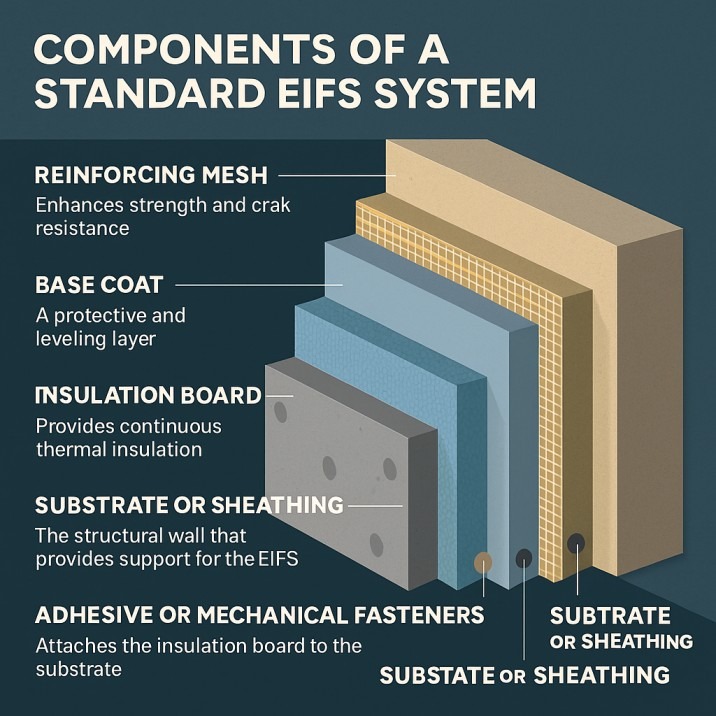
Components of a Standard EIFS System
- Substrate or Sheathing
This is the structural wall that provides support for the EIFS system. It can be made of concrete, masonry, plywood, OSB, or steel studs with appropriate sheathing. Ensuring the substrate is structurally sound and properly prepared is critical for long-term EIFS performance. - Adhesive or Mechanical Fasteners
The insulation board is attached to the substrate using a high-strength adhesive or mechanical fasteners, depending on the system and manufacturer specifications. - Insulation Board
Usually made of expanded polystyrene (EPS) or extruded polystyrene (XPS), the insulation board provides continuous thermal insulation, reduces thermal bridging, and improves overall energy efficiency. - Base Coat
A cementitious or polymer-modified base coat is applied over the insulation to create a solid protective layer. - Reinforcing Mesh
Embedded in the base coat, fiberglass mesh strengthens the system, provides crack resistance, and improves impact performance. - Finish Coat
The finish coat is a durable, weather-resistant layer that provides color, texture, UV protection, and aesthetic appeal. It can mimic the look of stucco, stone, brick, or custom architectural textures.
Types of EIFS Systems
Understanding the type of EIFS installed is crucial for proper maintenance, repair, and upgrades. Modern EIFS systems are designed to handle moisture more effectively than older barrier systems.
- Barrier EIFS
Traditional EIFS systems installed before the 2000s acted as a moisture barrier but had no drainage plane. Water that penetrated cracks or openings could become trapped, potentially causing damage to the substrate or framing. - Drainage EIFS
Modern EIFS includes a drainage plane between the insulation and the substrate. Any water that enters the system is directed out through weep holes or flashing, reducing the risk of rot or mold. - Polymer-Based (PB) EIFS
Uses polymer-modified base coats for flexibility and crack resistance. Commonly used in modern residential and commercial projects. - Polymer-Modified (PM) Systems
Similar to PB systems but often used in more complex applications or where additional impact resistance is needed.
Benefits of EIFS
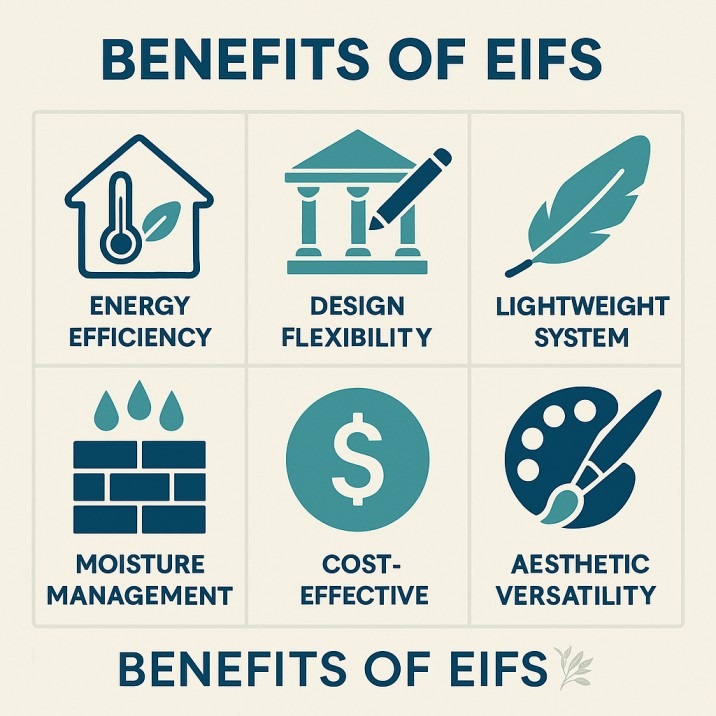
EIFS offers several key advantages over traditional exterior wall systems, including:
1. Energy Efficiency
Continuous insulation provided by EIFS minimizes thermal bridging, which reduces heating and cooling costs and increases occupant comfort. Buildings with EIFS exteriors often exceed modern energy codes.
2. Design Flexibility
EIFS can be shaped into arches, columns, cornices, trim bands, and decorative façade elements. The system can mimic stone, stucco, brick, and other materials at a fraction of the weight and cost.
3. Lightweight System
Unlike traditional stucco or masonry, EIFS adds minimal weight to the building, making it ideal for structures where additional load could be an issue.
4. Moisture Management
Modern drainage EIFS systems are designed to allow water to escape the wall assembly, reducing the risk of moisture-related damage. Flexible coatings also reduce cracking.
5. Cost-Effective
While providing insulation, protection, and design options, EIFS can be more economical than full masonry, stone veneer, or cast concrete for both new construction and retrofits.
6. Aesthetic Versatility
With a variety of textures, colors, and finishes available, EIFS allows architects and homeowners to create unique designs and maintain a building’s curb appeal.
EIFS vs Other Exterior Cladding Systems
| Feature | EIFS | Stucco | Brick Veneer | Fiber Cement | Stone Veneer |
| Thermal Performance | High, continuous insulation | Low unless added | Moderate, requires insulation | Moderate | Moderate to High |
| Crack Resistance | Flexible, mesh-reinforced | Brittle | Low | Moderate | High |
| Weight | Lightweight | Heavy | Heavy | Moderate | Very Heavy |
| Design Flexibility | High | Limited | Low | Medium | Medium |
| Moisture Management | Drainage systems | Limited | Limited | Limited | Limited |
| Cost | Moderate | Moderate | High | Moderate | High |
| Maintenance | Low, periodic recoating | Moderate | Low | Moderate | Low |
Where EIFS Is Commonly Used
- Residential Homes – Energy-efficient façades and decorative details
- Condominiums & Apartments – Multi-story thermal insulation with aesthetic appeal
- Retail & Commercial Spaces – Cost-effective, visually flexible façades
- Hotels & Hospitality – Lightweight system allows for creative designs
- Schools & Institutions – Durable exterior with insulation benefits
- Retrofits & Renovations – Modernizing older buildings with energy-efficient walls
When EIFS Is the Right Choice
- Buildings requiring continuous insulation
- Façades needing custom architectural detailing
- Structures with weight restrictions
- Retrofits where energy efficiency improvements are desired
- New construction seeking design versatility
When EIFS Might Not Be Suitable
- Areas with a high risk of impact or vandalism
- Buildings are already experiencing structural movement
- Projects requiring fireproof masonry
- Installations done by unskilled labor (improper installation causes most failures)
Our EIFS Services
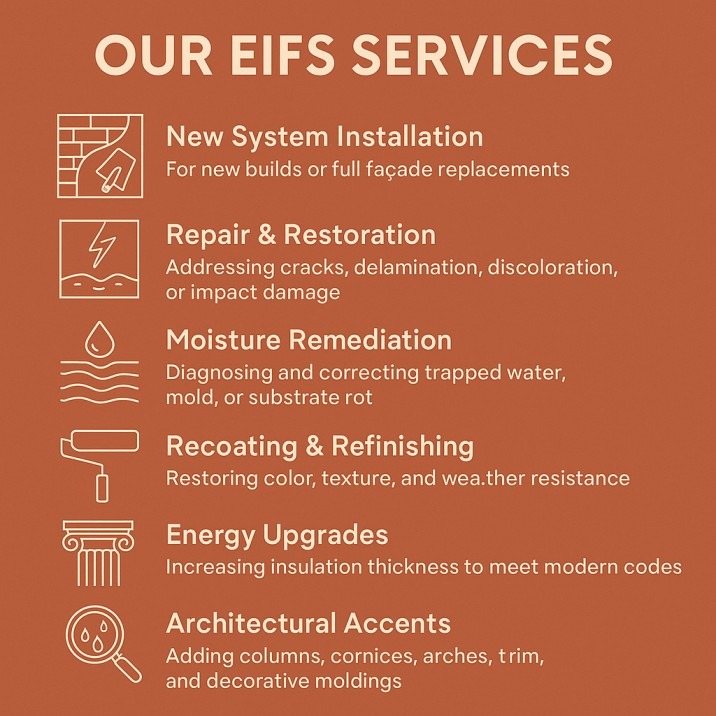
At Northshore Brickwork, we provide comprehensive EIFS services:
- New System Installation – For new builds or full façade replacements
- Repair & Restoration – Addressing cracks, delamination, discoloration, or impact damage
- Moisture Remediation – Diagnosing and correcting trapped water, mold, or substrate rot
- Recoating & Refinishing – Restoring color, texture, and weather resistance
- Energy Upgrades – Increasing insulation thickness to meet modern codes
- Architectural Accents – Adding columns, cornices, arches, trim, and decorative moldings
- Inspection & Assessment – Moisture scanning, substrate evaluation, and project planning
Step-By-Step EIFS Installation Process
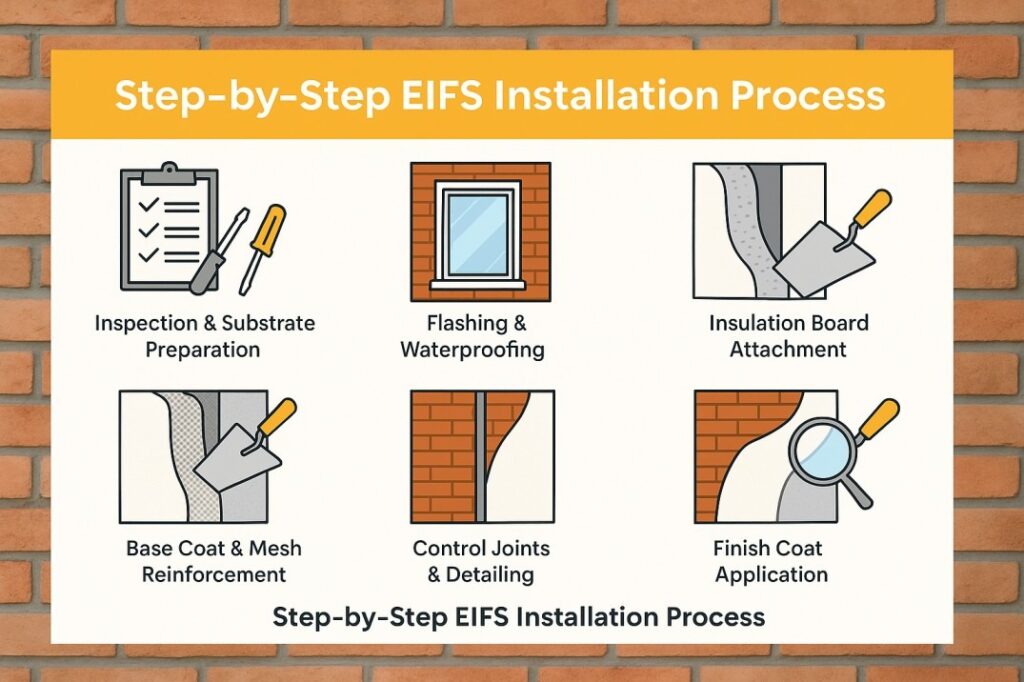
- Inspection & Substrate Preparation – Ensure walls are flat, clean, and structurally sound.
- Flashing & Waterproofing – Install flashing around windows, doors, and terminations.
- Insulation Board Attachment – Adhesive or mechanical fastening to the substrate.
- Base Coat & Mesh Reinforcement – Apply a strong base coat and embed fiberglass mesh for crack resistance.
- Control Joints & Detailing – Install expansion joints and other required terminations.
- Finish Coat Application – Apply color and texture coats for the final exterior appearance.
- Quality Control & Final Inspection – Ensure alignment, color match, and system integrity.
Common EIFS Problems and How We Fix Them
- Cracks or Hairline Fractures – We embed new mesh and repair base coat before applying a finish.
- Water Intrusion / Moisture Damage – Modern drainage retrofits, flashing, and sealant replacement.
- Delamination – Adhesive failures are corrected with substrate preparation and panel reattachment.
- Impact Damage – Replace sections of insulation, base coat, and finish as needed.
- Faded or Discolored Finish – Recoat with high-quality acrylic finishes.
Maintenance & Lifespan
- Cleaning: Mild detergent and low-pressure washing every 3–5 years
- Sealant Replacement: Inspect and replace perimeter and joint sealants every 5–10 years
- Recoating: Finish coat recoating every 10–15 years, depending on exposure
- Expected Lifespan: 30–50 years for the system with proper maintenance
Cost Considerations
Costs vary depending on:
- Surface area and complexity
- Insulation thickness and R-value requirements
- Architectural detailing (cornices, arches, moldings)
- Existing façade condition (retrofit vs new installation)
- Drainage system upgrades or substrate repairs
Warranty, Safety, and Compliance
- Northshore Brickwork follows manufacturer guidelines and ASTM standards
- Systems meet building code requirements for energy, fire, and impact resistance
- Written warranties are available on materials and installation
- Safety protocols are followed for all residential and commercial projects
Why Choose Northshore Brickwork
- Certified and experienced EIFS installers
- Comprehensive moisture and substrate diagnostics
- Full-service EIFS installation, repair, and restoration
- Detailed color matching and texture reproduction
- Written warranties on materials and installation
- Friendly, professional service tailored to your property’s needs
Contact Us
Northshore Brickwork provides complete EIFS solutions for residential and commercial properties. Whether you are installing a new system, restoring damaged walls, or upgrading for energy efficiency, our team delivers reliable, high-quality service.
Contact us today for a consultation, inspection, or estimate, and let us help protect and enhance your building with EIFS.
Frequently Asked Questions
- Can EIFS be installed in cold climates?
Yes. Modern EIFS with proper insulation and drainage functions well in freeze-thaw conditions. - Does EIFS trap moisture inside walls?
Only when installed incorrectly. Drainage EIFS allows water to escape. - Can EIFS be installed over brick or stucco?
Yes, with proper substrate preparation and moisture control. - How long does EIFS last?
Typically 30–50 years with proper maintenance and recoating. - Is EIFS fire-resistant?
Yes, when installed with approved assemblies, it meets NFPA and IBC standards. - Can I hang lights, cameras, or fixtures on EIFS walls?
Yes, but only with proper anchors and supports to prevent damage to the insulation layer. - How do I know if my EIFS has hidden moisture?
Signs include bubbling, discoloration, mold, or water stains. Infrared scans or moisture probes confirm damage. - Does EIFS increase energy efficiency?
Yes. Continuous insulation reduces thermal bridging and can lower heating and cooling costs. - Can EIFS be painted or recolored?
Yes. High-quality acrylic coatings can refresh color and restore protection. - Is EIFS repairable without full replacement?
Most issues can be repaired locally, including mesh and finish coat repairs. - What is the difference between barrier and drainage EIFS?
Barrier systems trap water; drainage systems redirect it to the exterior of the wall assembly. - Can EIFS be installed on curved or custom shapes?
Yes. Foam insulation can be cut and shaped to form arches, cornices, and other details. - Is EIFS suitable for commercial buildings?
Yes. It is widely used in hotels, offices, schools, and retail properties. - How often should EIFS be maintained?
Inspect annually, clean every 3–5 years, replace sealants every 5–10 years, and recoat every 10–15 years. - Will EIFS protect against pests?
Yes. Properly installed EIFS has no gaps or cavities for rodents or insects.