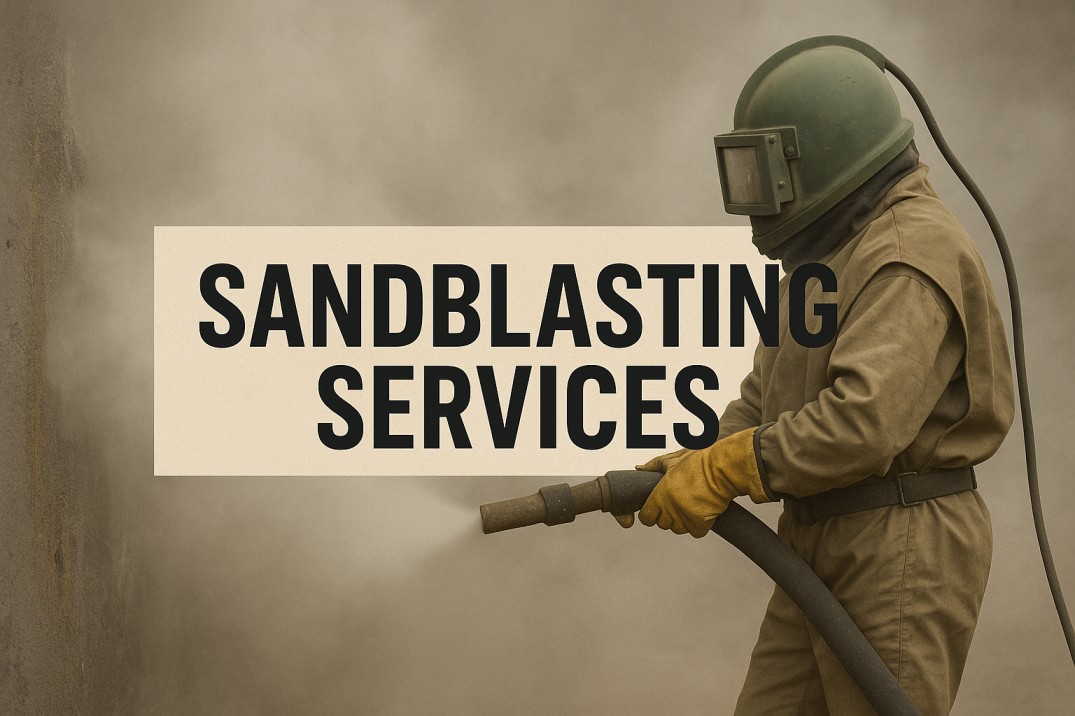
Professional Surface Preparation for Industrial, Commercial, and Residential Projects
Sandblasting is one of the most effective and reliable methods of preparing surfaces for coatings, restoration, maintenance, and structural renewal. It uses controlled abrasive media propelled at high pressure to remove contaminants and create a clean profile that enhances adhesion for paints, coatings, and protective treatments. Whether the requirement is to strip decades of corrosion from steel, prepare concrete before resurfacing, or clean architectural elements without damaging them, sandblasting provides a precise and consistent solution. A well-executed sandblasting process restores integrity, extends the lifespan of surfaces, and ensures the next phase of finishing or protection performs at its maximum potential.
What Is Sandblasting
Sandblasting is a surface preparation technique where abrasive materials such as garnet, glass bead, aluminium oxide, steel grit, or silica free sand are propelled at high velocity using compressed air or a blast wheel. The abrasive impact removes rust, scale, coatings, stains, and surface defects, while simultaneously creating a mechanically etched profile. This profile is critical for ensuring that protective coatings like epoxy, polyurethane, or industrial paint bond to the surface with long term durability. Sandblasting can be adjusted in pressure, media type, and technique to suit delicate surfaces or heavy industrial structures, making it a versatile method across many sectors.
Our Sandblasting Services
Industrial Sandblasting
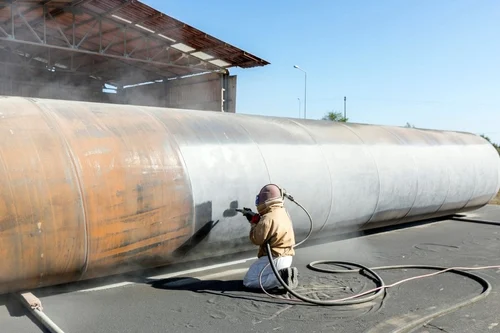
Industrial environments demand precise and powerful cleaning that can withstand harsh operating conditions. Our industrial sandblasting services are designed to handle large scale equipment and structural components. We work on steel beams, machinery parts, plant equipment, industrial floors, storage tanks, shipping containers, pipelines, silos, and heavy fabrication structures. Industrial sandblasting eliminates corrosion, mill scale, and coatings that interfere with structural strength or protective treatments. By restoring the raw surface and creating an optimal texture, we ensure that new protective layers provide maximum resistance to abrasion, chemicals, moisture, and UV exposure.
Commercial Sandblasting
Commercial properties require both functionality and appearance. Our services support building owners, contractors, and facilities managers by delivering detailed surface preparation for commercial renovations, facade cleaning, car parks, storefront upgrades, architectural structures, and large scale maintenance projects. Sandblasting can remove graffiti, old paint, concrete stains, mineral deposits, and environmental pollution. The technique is particularly useful for restoring brick facades, steel fixtures, metal staircases, decorative panels, commercial signage structures, and building exteriors that require uniform cleanup before repainting or sealing.
Residential Sandblasting
Residential sandblasting focuses on restoring home surfaces without causing unnecessary damage. We assist homeowners, builders, and renovation specialists with cleaning brick walls, driveways, timber surfaces, wrought iron, fencing, decking, swimming pool tiles, and stonework. Residential sandblasting can strip paint from heritage homes, remove years of dirt from brick and stone, prepare concrete for resurfacing, and rejuvenate outdoor areas. The process is controlled and customised to avoid over blasting while still producing a clean and fresh surface ready for finishing.
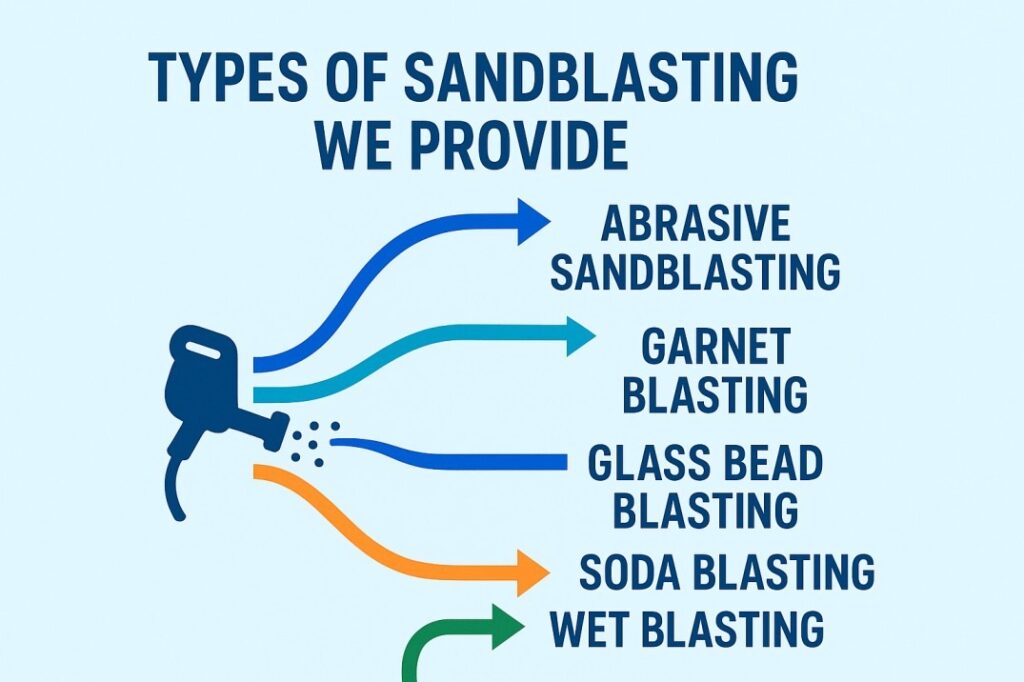
Types of Sandblasting We Provide
Abrasive Sandblasting
Abrasive sandblasting uses strong media like garnet, aluminium oxide, or steel grit to remove thick corrosion, heavy coatings, and deeply embedded contaminants. This method is ideal for industrial steelwork, machinery restoration, and structural preparation. Abrasive blasting is known for producing consistent surface profiles that meet industry standards such as SSPC and NACE, which are essential for high performance coating systems.
Garnet Blasting
Garnet is one of the cleanest and most efficient blasting media available. It produces less dust, provides excellent cutting power, and is suitable for both industrial and commercial applications. Garnet blasting is often used for steel preparation, marine maintenance, concrete cleaning, and high accuracy surface profiling without contaminating the substrate.
Glass Bead Blasting
Glass bead blasting is a non aggressive method used to polish, clean, and peen metal surfaces. It removes surface stains and minor imperfections while preserving the base material. This method is effective on stainless steel, aluminium, automotive components, food grade equipment, and decorative metalwork where a smooth and uniform finish is required.
Soda Blasting
Soda blasting uses sodium bicarbonate which is a very gentle abrasive ideal for delicate surfaces. It is commonly used for heritage restoration, soft wood cleaning, fire damage cleanup, vehicle paint removal, and situations where the underlying surface must remain untouched. Soda blasting is also non toxic and non damaging to the environment.
Wet Blasting
Wet blasting combines water with abrasive media to reduce dust while providing strong cleaning power. It is suitable for residential areas, public spaces, and enclosed job sites where dust suppression is essential. Wet blasting is particularly effective for concrete cleaning, masonry restoration, and facility maintenance.
Common Applications of Our Sandblasting Services
Rust and Corrosion Removal
Sandblasting is one of the strongest techniques for eliminating rust, oxidation, and corrosion from steel and metal surfaces. By removing all contaminants and exposing a clean substrate, protective coatings adhere properly and last significantly longer.
Paint and Coating Removal
Old paint and failing coatings prevent new finishes from bonding. Sandblasting strips these layers completely, leaving a consistent profile ready for repainting or refinishing.
Concrete Cleaning and Restoration
Concrete often accumulates oil stains, coatings, adhesive residues, and surface imperfections. Sandblasting cleans and textures concrete for resurfacing, sealing, stenciling, grinding, or decorative finishes.
Brick, Stone, and Masonry Restoration
Many historic and modern buildings require detailed cleaning. Sandblasting restores brick and stone surfaces by removing pollution stains, aged paint, mortar splashes, and biological growth without damaging the integrity of the material.
Machinery and Equipment Maintenance
Industrial equipment requires periodic maintenance to stay efficient. Sandblasting cleans gears, frames, metal components, and structural parts to restore function and prepare them for protective recoating.
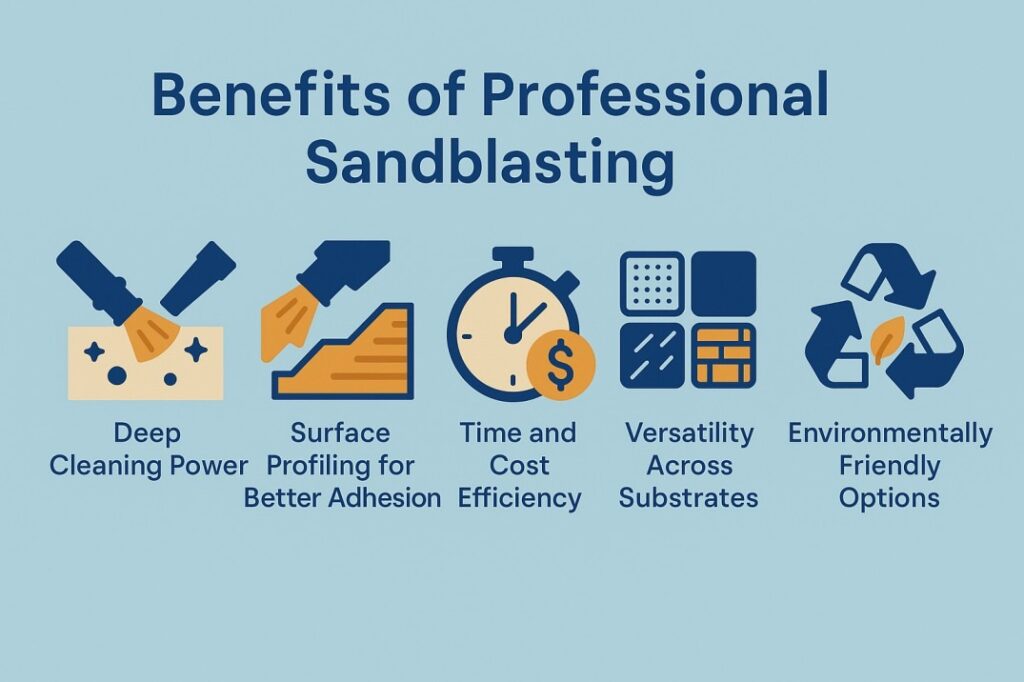
Benefits of Professional Sandblasting
Deep Cleaning Power
Sandblasting reaches into cracks, pores, and textured surfaces that manual cleaning cannot achieve. It provides complete removal of contaminants ensuring maximum surface readiness.
Surface Profiling for Better Adhesion
The mechanical etching created by sandblasting improves the bond strength of coatings which leads to longer lasting protection, fewer failures, and reduced maintenance costs.
Time and Cost Efficiency
Sandblasting covers large areas quickly and removes multiple layers in a single process which makes it more efficient than chemical stripping or manual sanding.
Versatility Across Substrates
The technique works on steel, aluminium, iron, wood, concrete, stone, brick, and composite materials. By adjusting media and pressure, it can be applied to delicate surfaces as well as heavy industrial structures.
Environmentally Friendly Options
Many blasting media are recyclable, silica free, and non toxic. Wet blasting reduces airborne dust, making it suitable for sensitive environments.
Types of Abrasives Used in Sandblasting
Each abrasive material has different cutting energy, density, shape, recyclability, and suitability for certain substrates. The choice of media affects speed, surface finish, and cost. This section explains each in depth.
Garnet
Garnet is one of the most widely used industrial abrasives due to its sharp crystalline structure, low dust output, and ability to produce uniform profiles. It is ideal for structural steel, marine maintenance, tank exteriors, ship hulls, bridge components, and heavy industrial restoration. Garnet is recyclable, stable under pressure, and produces predictable results across a broad range of surfaces.
Aluminium Oxide
Aluminium oxide is an extremely hard abrasive used for aggressive cleaning or profiling. It is often selected for heavy scale removal, deep rust, and industrial manufacturing components. Its angular structure provides high cutting power, making it suitable for preparing surfaces for high performance epoxy or zinc coatings.
Steel Grit and Steel Shot
Steel grit is angular and provides deep cutting action suitable for industrial steelwork and foundry operations. Steel shot is round and used where a peening or polishing effect is required. In wheel blast systems, steel media can be recycled hundreds of times, which significantly improves cost effectiveness in manufacturing environments.
Glass Bead
Glass bead blasting provides a smooth and satin like finish without altering the underlying dimensions of the material. It is ideal for stainless steel, automotive parts, pharmaceutical equipment, food grade surfaces, aluminium components, and decorative metalwork. It removes light corrosion and cosmetic defects without damaging the substrate.
Soda
Soda blasting uses sodium bicarbonate which is gentle on delicate materials. It is used in heritage restoration, fire and smoke damage cleaning, automobile stripping, soft wood cleaning, machinery degreasing, and environments where chemical sensitivity is a concern. Soda does not etch most substrates which makes it excellent for surface cleaning without material removal.
Crushed Glass
This abrasive is effective in applications that require moderate cutting strength with lower dust levels. It performs well on concrete, stone, steel, and masonry and is often used in environmentally sensitive projects because it contains no silica.
Sandblasting Equipment and Technical Specifications
Professional sandblasting involves an advanced set of machinery and control systems. The following are key components of a professional grade blasting setup.
Blast Pot
The blast pot stores abrasive material and regulates airflow and abrasive flow. Proper metering is essential for maintaining a stable stream and avoiding abrasive wastage.
Moisture Traps and Air Dryers
Moisture in the compressed air line can cause abrasive clumping which leads to inconsistent blasting. High quality air dryers ensure clean, dry, pressurised air reaches the nozzle.
Nozzles
Nozzle selection affects blasting width, speed, and surface finish. Venturi nozzles widen the airflow for faster material removal while straight bore nozzles offer a concentrated stream for detail work.
Compressors
Large industrial compressors supply the high pressure air required for consistent abrasive propulsion. The higher the cubic feet per minute output, the more powerful and efficient the blasting process.
Containment Systems
Tarps, enclosures, vacuums, and barriers are used to manage dust, protect surrounding structures, and comply with environmental regulations.
Personal Protective Equipment
Operators use full face respiratory helmets, protective suits, gloves, and hearing protection to ensure complete safety in high pressure abrasive environments.
Surface Preparation Standards and Required Profiles
Industry standards dictate how clean and how textured a surface must be before it is coated. These standards prevent coating failures, corrosion undercutting, peeling, and delamination.
SSPC and NACE Standards
Professional sandblasting often aims to achieve standards such as:
- SSPC SP 5 for white metal blast cleaning
- SSPC SP 10 for near white metal preparation
- SSPC SP 6 for commercial blasting
- SSPC SP 7 for brush off blasting
After blasting, a coating manufacturer often specifies the required anchor pattern expressed in mils or microns. Sandblasting ensures that the profile matches the coating system requirements for epoxies, polyurethanes, elastomeric coatings, zinc primers, and industrial enamels.
Concrete Surface Profile
Concrete blasting must meet International Concrete Repair Institute profile ranges depending on whether the surface will be overlaid, polished, or coated. Blasting ensures the correct surface texture is achieved without removing more material than necessary.
Expanded Applications of Sandblasting
Heavy Industrial Structures
Refineries, chemical plants, warehouses, energy facilities, and steel fabrication shops rely on sandblasting to prepare equipment and structures for protective coating systems that resist harsh chemicals, abrasion, and extreme temperatures.
Marine and Coastal Environments
Saltwater exposure causes rapid corrosion. Sandblasting is essential for maintaining ship hulls, piers, marine pilings, docks, offshore equipment, and coastal structures.
Architectural and Heritage Restoration
Sandblasting can remove pollution residue, graffiti, aged paint, biological deposits, and surface staining from brick, stone, limestone, and concrete. With controlled pressure and gentle media, it restores aesthetic surfaces without damaging architectural details.
Fire and Smoke Damage Restoration
Soda blasting is widely used to remove soot, odor residues, and charred material from wood, brick, and concrete after a fire.
Concrete Resurfacing
Blasting cleans concrete and creates texture for overlays, sealers, epoxy floors, parking garage membranes, and decorative finishes.
Environmental and Safety Protocols
Professional sandblasting must follow strict environmental guidelines to control dust, protect nearby structures, and ensure that waste is collected properly.
Dust Containment
Containment curtains, covered scaffolding, negative pressure enclosures, and vacuum assisted blasting systems prevent dust migration into nearby areas.
Waste Management
Abrasive residue, paint chips, and rust particles must be collected and disposed of according to environmental regulations, especially in industrial and marine settings.
Air Quality Management
Operators use air supplied helmets to ensure clean breathing air while working in high particulate environments.
Noise and Vibration Control
Blasting generates noise which is managed through scheduling, shielding, and equipment placement to minimise impact on nearby occupants.
Surface Integrity Protection
Before blasting, substrates are tested for hardness, moisture content, carbonation, chloride levels, and structural weaknesses to avoid damaging sensitive materials.
Detailed Step by Step Sandblasting Process
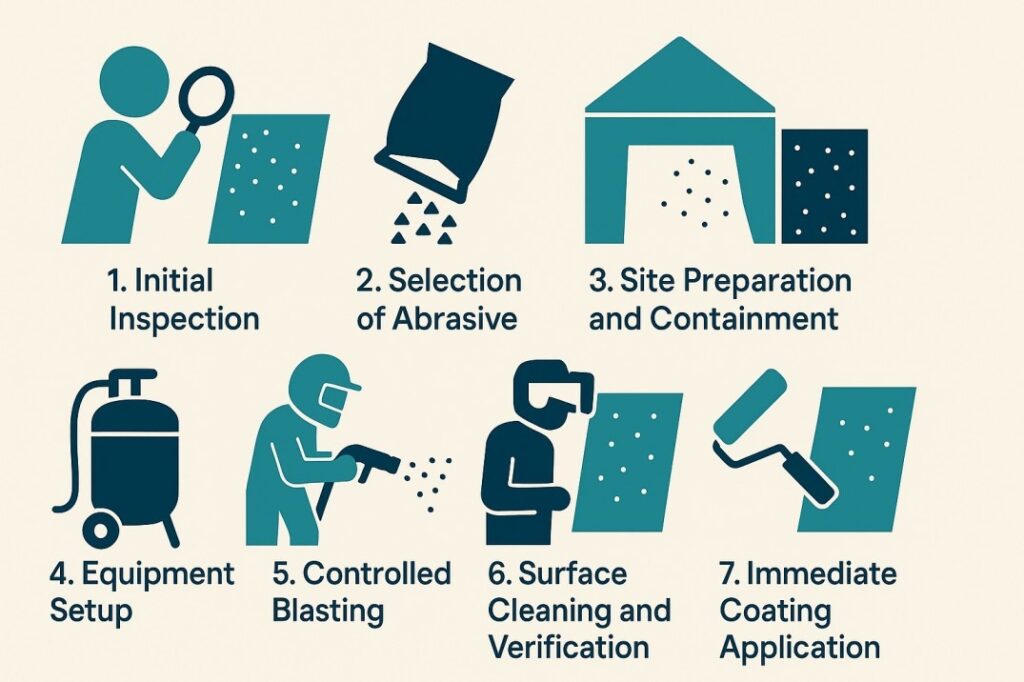
1. Initial Inspection
The surface is evaluated to determine contamination levels, coating thickness, substrate type, and the desired final finish.
2. Selection of Abrasive Material
Media is selected based on hardness, density, surface sensitivity, profile requirements, and environmental considerations.
3. Site Preparation and Containment
Protective barriers are installed to shield surrounding structures, collect debris, and prevent dust migration.
4. Equipment Setup
Air compressors, hoses, blast pots, metering valves, and nozzles are calibrated to match the required pressure and abrasive flow.
5. Controlled Blasting
Operators maintain consistent stand off distance, pressure settings, and motion patterns to achieve a uniform profile.
6. Surface Cleaning and Verification
After blasting, surfaces are checked visually and with surface profile gauges to verify compliance with industry standards.
7. Immediate Coating Application
To prevent flash rusting or moisture contamination, coatings are applied as soon as possible following surface preparation.
Case Style Examples
Industrial Tank Renovation
A corroded steel storage tank was sandblasted to SSPC SP 10 standard and recoated with a multi layer epoxy system that restored structural integrity and extended service life.
Commercial Building Facade Renewal
A commercial brick facade covered in decades of paint was sandblasted with gentle media to expose original brickwork and prepare it for a breathable masonry sealant.
Marine Dock Repair
Salt crystallisation and corrosion were removed from steel piling structures enabling the application of a marine grade protective coating system.
Concrete Floor Resurfacing
A deteriorated warehouse floor was blasted to achieve the required ICRI profile before installing an epoxy system capable of resisting forklift traffic.
Why Choose Our Sandblasting Services
We combine technical expertise, modern blasting equipment, strict safety standards, and attention to detail. Every project begins with an assessment of the substrate, contamination level, coating requirements, and environmental considerations. We choose the most appropriate blasting media and pressure settings to deliver a clean and uniform surface without causing material loss or structural stress. Our team works efficiently, follows industry standard procedures, and ensures the site is left clean, safe, and ready for the next stage of work.
Frequently Asked Questions About Sandblasting
1. What materials can be sandblasted?
Steel, aluminium, concrete, brick, stone, timber, machinery parts, automotive components, and many architectural surfaces can be sandblasted depending on the required outcome.
2. Is sandblasting safe for residential properties?
Yes. When done professionally with controlled pressure and the correct media, sandblasting is safe for brick homes, fences, driveways, and outdoor areas.
3. How long does sandblasting take?
The duration depends on surface condition, area size, media type, and the finish required. Large industrial projects may take several days while smaller tasks may take a few hours.
4. Does sandblasting create dust?
Traditional dry sandblasting produces dust, but this can be controlled using containment methods or eliminated by choosing wet blasting.
5. What is the best media for removing rust?
Garnet and steel grit are typically the most effective for heavy rust because they cut deeply and clean thoroughly.
6. Can sandblasting damage surfaces?
If performed incorrectly, yes. However, professional sandblasting adjusts pressure and media to avoid surface loss or overblasting.
7. What preparations are required before blasting?
Surrounding areas may need protection, equipment should be cleared, and coatings should be evaluated to determine appropriate blasting methods.
8. Is sandblasting allowed in urban areas?
Yes, provided proper dust control and environmental safety measures are used. Wet blasting is often preferred in urban locations.
9. How soon can coatings be applied after sandblasting?
Protective coatings should be applied immediately after blasting to prevent flash rust and contamination.
10. What industries commonly rely on sandblasting?
Construction, marine, manufacturing, automotive, petrochemical, facilities maintenance, residential renovation, and architectural restoration all use sandblasting as a core preparatory process.