Protecting Masonry Structures Through Expert Sealing and Precision Caulking
Moisture is one of the most persistent and damaging elements that any masonry structure faces. Over time, rain, snow, humidity, and temperature fluctuations can penetrate unsealed masonry surfaces and joints, leading to deterioration, staining, and internal damage. At Northshore Brickwork, we provide comprehensive sealing and caulking services designed to protect, preserve, and enhance the structural integrity and appearance of your property.
Whether it’s an aging condominium facade, a commercial structure, or a residential home, our sealing and caulking solutions offer long-term protection against water intrusion, air leaks, and environmental degradation. Combined with expert surface restoration and color coatings, our services not only strengthen your building envelope but also rejuvenate its aesthetic appeal.
The Role of Sealing and Caulking in Masonry Protection
Masonry — whether brick, stone, or concrete — is naturally porous. This means that water, air, and pollutants can penetrate through tiny openings in the material or through deteriorated joints over time. When moisture enters these spaces and becomes trapped, it can cause:
- Cracking during freeze-thaw cycles
- Efflorescence (white salt deposits on the surface)
- Mold and mildew growth behind the walls
- Rusting of embedded metal reinforcements
- Interior leaks and wall discoloration
- Long-term structural weakening
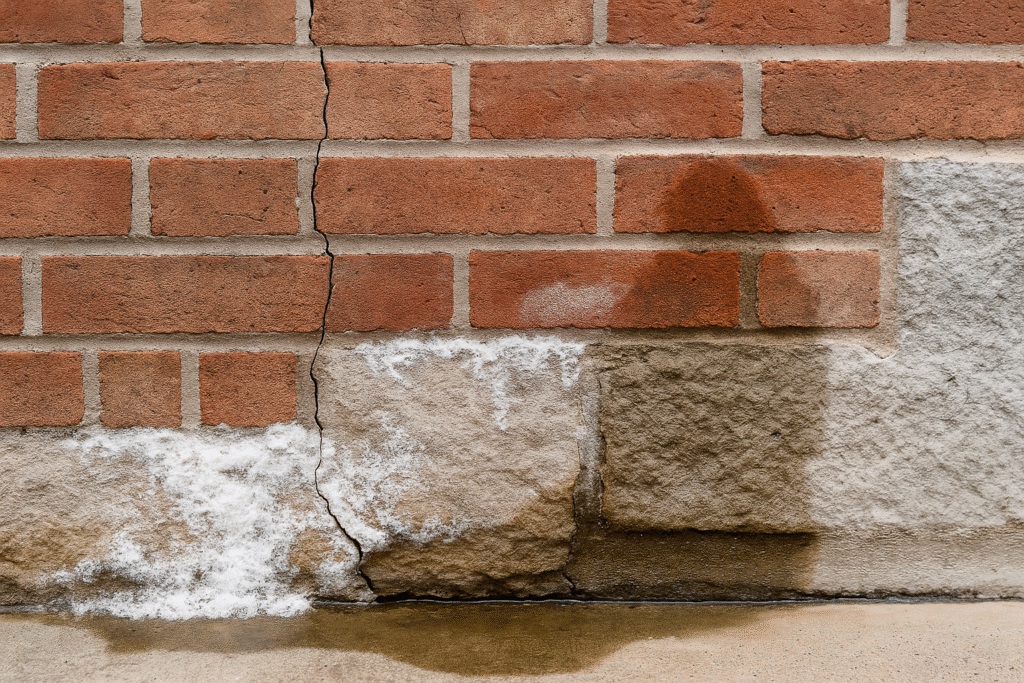
Sealing and caulking create an essential barrier against these elements. While sealing involves applying a protective water-repellent coating over masonry surfaces, caulking focuses on filling joints, gaps, and cracks where moisture and air infiltration are most likely to occur. Together, these services ensure your masonry stays strong, dry, and visually appealing for years.
Understanding Masonry Sealing
1. What Is Masonry Sealing?
Masonry sealing involves the application of a clear or tinted protective coating that penetrates deep into the porous surfaces of brick, stone, concrete, or CMU (Concrete Masonry Units). The goal is to repel water and prevent contaminants from entering the masonry while maintaining breathability — allowing moisture vapor inside the wall to escape naturally.
2. Why Masonry Needs Sealing
Without proper sealing, moisture infiltrates the masonry surface, leading to internal decay, staining, and damage during freeze-thaw cycles. Masonry sealing not only prevents these issues but also enhances the visual vibrancy of the structure by restoring color and texture.
Sealing is especially vital for:
- Building exteriors exposed to heavy rainfall or freeze-thaw conditions
- CMU block walls and condominium facades are prone to leaks
- Limestone or sandstone features that easily absorb moisture
- Historic structures where moisture retention threatens preservation
3. Types of Sealants We Use
At Northshore Brickwork, we use high-quality, professional-grade sealants chosen based on the substrate type and exposure conditions:
- Silane Sealers: Deep-penetrating and highly effective against water intrusion while maintaining vapor permeability.
- Siloxane Sealers: Ideal for bricks and stones, providing surface protection with natural finish retention.
- Acrylic and Elastomeric Coatings: Suitable for decorative applications, offering added UV resistance and color enhancement.
- Breathable Masonry Water Repellents: Designed for historic or porous materials that must retain vapor exchange capability.
Each sealant is tested and applied under controlled conditions to ensure even coverage and maximum longevity.
Understanding Masonry Caulking
1. What Is Masonry Caulking?
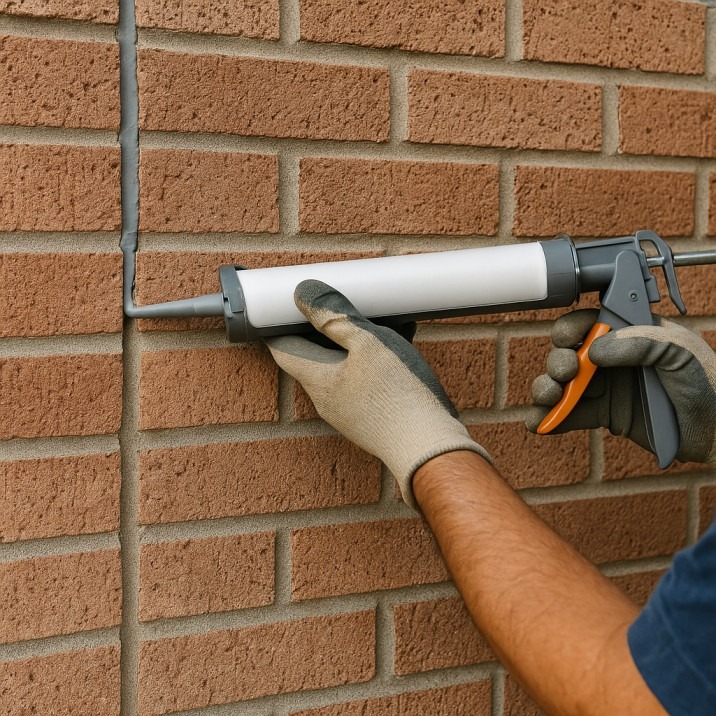
Caulking is the process of sealing joints, cracks, and small gaps in masonry surfaces, particularly where different materials meet — such as between bricks and windows, around limestone copings, or at expansion joints. It prevents water infiltration and movement while allowing the building to expand and contract naturally with temperature changes.
2. Importance of Proper Caulking
Every building moves — slightly but constantly — due to changes in temperature, humidity, and load. Expansion joints, control joints, and coping joints are designed to accommodate that movement. When caulking in these joints fails or deteriorates, it exposes the building to leaks and potential structural damage.
Professional caulking ensures:
- Watertight seals around expansion and control joints
- Prevention of air infiltration and energy loss
- Protection against freeze-thaw expansion
- Reduced maintenance costs and longer building lifespan
3. Materials Used for Caulking
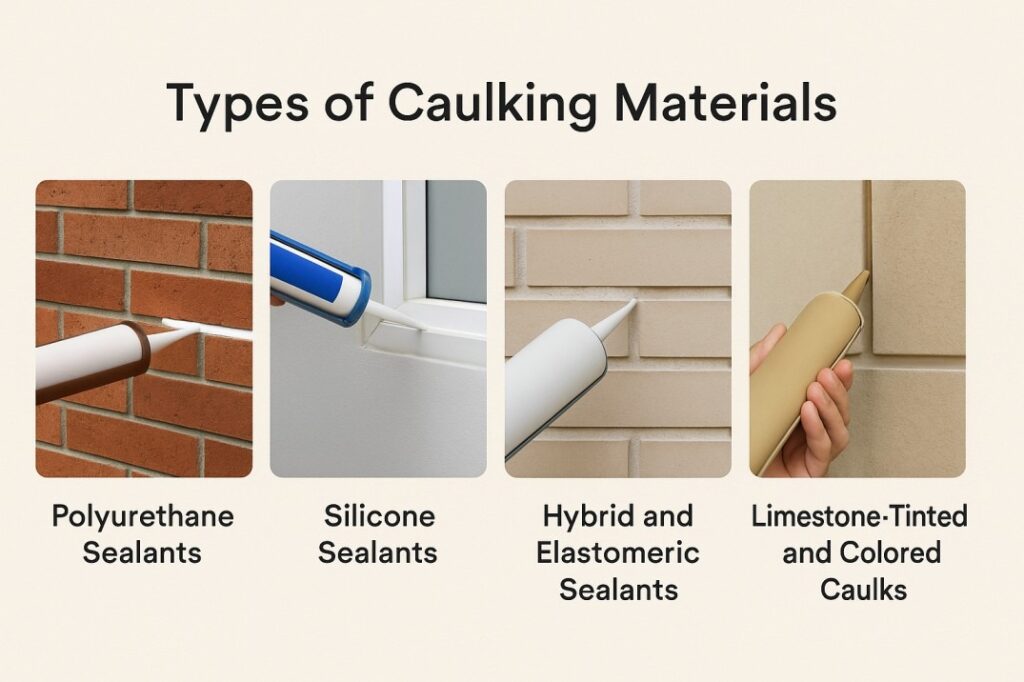
We use only industry-approved, durable caulking materials designed to perform in demanding exterior conditions:
- Polyurethane Sealants – Flexible, durable, and suitable for most exterior joints
- Silicone Sealants – Highly weather-resistant, ideal for expansion joints and glass-to-masonry applications
- Hybrid and Elastomeric Sealants – Offer excellent adhesion and elasticity for a variety of surfaces
- Limestone-Tinted and Colored Caulks – Custom-matched for a seamless, aesthetically pleasing finish
Our experts ensure that each joint is properly prepared, primed, and sealed using the correct material for its intended use and exposure level.
Common Problem Areas We Address
Moisture intrusion and air leaks can occur anywhere in a masonry structure, but certain areas are especially vulnerable. Our sealing and caulking specialists perform detailed inspections to identify these problem zones and implement effective, lasting solutions.
1. Expansion and Control Joints
These joints absorb structural movement. If left unsealed, they become entry points for water infiltration.
2. Window and Door Perimeters
Improperly sealed openings can lead to water leaks, draft infiltration, and interior wall damage.
3. CMU and Brick Facades
Many mid-rise and condominium buildings suffer from facade leaks due to porous CMU blocks or poor original construction. We locate, fill, and seal open joints to eliminate leakage sources.
4. Roof Copings and Parapets
Unsealed limestone or concrete copings at roof edges are common points for water entry. Proper caulking around these joints prevents moisture from penetrating the walls below.
5. Flashings and Wall Penetrations
Sealing around mechanical penetrations, vents, and flashings ensures that these openings remain watertight and weather-resistant.
6. Decorative Stone and Architectural Details
Complex profiles, ledges, and trims require precise sealing to prevent hidden moisture traps that can cause staining or internal decay.
Our Sealing and Caulking Process
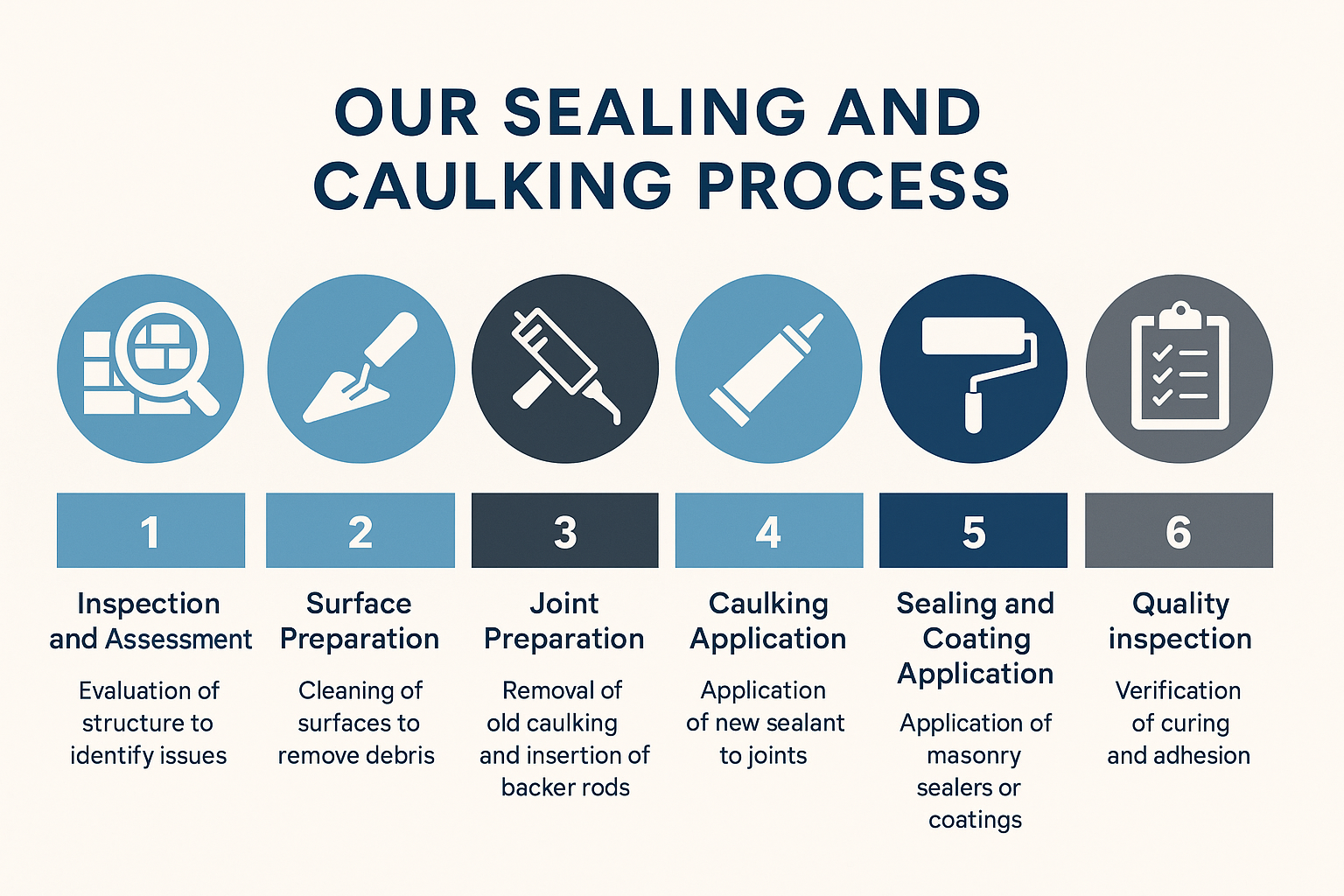
Our process combines technical expertise, advanced tools, and careful workmanship to ensure your structure receives lasting protection.
Step 1: Inspection and Assessment
We start with a thorough evaluation of the structure to identify cracks, gaps, deteriorated joints, and moisture entry points. Using visual inspections and sometimes moisture mapping, we determine the scope and severity of the issues.
Step 2: Surface Preparation
Surfaces are cleaned to remove dirt, efflorescence, and old caulking or sealant residues. Proper preparation ensures strong adhesion and durability of new sealant applications.
Step 3: Joint Preparation
Damaged or failed caulking is completely removed, and joints are cleaned and primed. Backer rods may be inserted to control sealant depth and allow proper flexibility.
Step 4: Caulking Application
New sealant is applied using precision tools to achieve a smooth, uniform finish. Every joint is tooled to the correct shape for optimal performance and appearance.
Step 5: Sealing and Coating Application
We apply masonry sealers or waterproof coatings using spray or roller techniques, ensuring complete coverage without surface buildup. Colored or clear coatings can be chosen depending on aesthetic preference.
Step 6: Quality Inspection
After completion, our specialists inspect every sealed joint and coated area to verify proper curing, adhesion, and uniformity. Final documentation ensures transparency and quality assurance.
When to Consider Sealing and Caulking Services
You should schedule professional sealing or caulking when you notice any of the following:
- Leaks appearing along interior walls or ceilings after rainfall
- Cracks visible around windows, doors, or parapets
- Flaking paint or darkened masonry areas
- White or powdery residue (efflorescence) on brick surfaces
- Gaps between masonry units or copings
- Aged or brittle caulking pulling away from joints
Addressing these signs early prevents larger, more costly structural repairs later on.
Benefits of Professional Sealing and Caulking
- Prevents Water Damage – Protects against leaks, freeze-thaw cycles, and corrosion.
- Extends Masonry Lifespan – Minimizes deterioration and material fatigue over time.
- Improves Energy Efficiency – Reduces drafts and heat loss through air gaps.
- Enhances Aesthetic Appeal – Restores the color and surface appearance of brick and stone.
- Increases Property Value – Adds long-term durability and visual refinement to the building exterior.
- Minimizes Maintenance Costs – Reduces the frequency and severity of future repairs.
- Preserves Structural Integrity – Maintains the performance of expansion joints and coping systems.
Our clients see measurable improvements in both performance and appearance after sealing and caulking services are completed.
Sealing and Caulking for Chicago-Style Masonry
Many Chicago-area condominiums and commercial buildings constructed during rapid development phases were built with insufficient waterproofing. As a result, CMU block facades often suffer from leaks and moisture infiltration, causing internal damage and neighbor disputes in multi-unit properties.
Our team specializes in diagnosing and repairing these failures. We locate open joints, seal them with precision caulking, and apply breathable water sealants to the entire facade. This process eliminates leaks and restores peace of mind — ensuring long-term protection and harmonious living conditions for building residents.
Aesthetic Enhancement Through Protective Coatings
In addition to functional protection, sealing also provides an opportunity to enhance the visual appearance of your building. Northshore Brickwork offers trendy, color-enhanced coatings that modernize and beautify masonry facades, fireplace surrounds, and accent walls.
Whether it’s a subtle matte finish or a vibrant refresh, our coatings provide:
- Uniform color tone
- UV and weather resistance
- Easy cleaning and stain prevention
- A renewed, polished look without altering texture
This fusion of protection and design makes sealing a smart investment in both durability and curb appeal.
Why Choose Northshore Brickwork for Sealing and Caulking
- Expert diagnosis and detailed surface preparation
- Use of premium-grade, breathable masonry sealants
- Precise joint caulking performed by skilled technicians
- Custom color matching for invisible finish integration
- Advanced moisture protection for modern and historic buildings alike
- Comprehensive workmanship guarantee on every project
We don’t simply apply sealants — we engineer complete waterproofing solutions that respect the structure’s material composition and design intent.
Our Commitment to Quality and Longevity
At Northshore Brickwork, we understand that sealing and caulking are more than finishing touches — they are critical components of building preservation. Our team ensures that every layer of protection we apply is scientifically compatible with your structure’s materials, offering years of dependable performance.
Our work philosophy is simple: do it right once. This means using the correct sealants, preparing surfaces properly, and executing every detail with precision. The result is a building that remains dry, secure, and visually timeless.
Frequently Asked Questions
1. How long does masonry sealing last?
High-quality, professionally applied sealants can last between 5 to 10 years depending on exposure, building orientation, and maintenance practices. Regular inspection ensures continued performance.
2. Can sealing prevent existing leaks?
Sealing helps prevent future leaks, but existing leaks must first be addressed through proper caulking or structural repair before the sealing process for best results.
3. Is sealing suitable for all masonry types?
Yes, but each material requires specific treatment. We select sealants compatible with brick, limestone, concrete, or CMU to ensure breathability and chemical compatibility.
4. Will sealing change the color or texture of my walls?
Clear penetrating sealers typically do not alter the natural appearance of masonry. However, tinted or acrylic coatings can be applied intentionally for color enhancement.
5. How often should caulking be replaced?
Exterior caulking generally lasts 7 to 10 years. Exposure to sunlight, wind, and temperature extremes can shorten that lifespan, so periodic inspection is essential.
6. What causes caulking to fail prematurely?
Poor surface preparation, incompatible materials, or improper application can cause premature cracking or detachment. A professional application eliminates these risks.
7. Can you match the color of caulking to my existing limestone or brick?
Yes. We provide color-matched sealants that blend perfectly with surrounding materials, maintaining a natural and uniform look.
8. Do you use breathable sealants for historic masonry?
Absolutely. Breathable silane and siloxane sealants allow moisture vapor to escape, preventing trapped dampness that could harm historic structures.
9. How does sealing improve indoor comfort?
By preventing air and moisture infiltration, sealing and caulking reduce drafts, stabilize indoor humidity, and enhance energy efficiency.
10. What sets Northshore Brickwork’s sealing and caulking apart?
Our difference lies in precision and understanding. We don’t just apply materials — we analyze how each building breathes, moves, and reacts to the environment. Every seal is tailored for performance, longevity, and aesthetics.