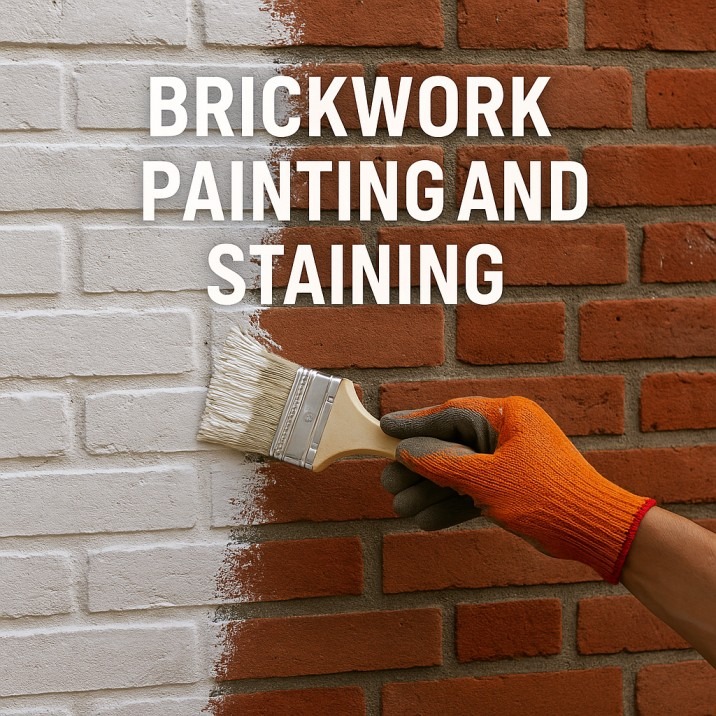
At Northshore Brickwork, we specialize in elevating the beauty, performance, and longevity of your brick structures through expert brickwork painting and staining services. Whether you want to modernize your home’s façade with a clean, contemporary finish or preserve the rustic elegance of your original masonry, our highly skilled craftsmen deliver precision and excellence with every stroke.
Brick surfaces, while inherently durable, are not immune to environmental stressors. Sun exposure, moisture infiltration, pollutants, and age can gradually dull their color and weaken their structure. Our painting and staining services address these challenges by combining aesthetic enhancement with advanced surface protection, ensuring that your property not only looks beautiful but remains resilient for years to come.
Understanding Brick Surface Finishing
Brickwork finishing is both a science and an art. It involves careful assessment of the masonry’s condition, followed by the selection of a finish that harmonizes with the building’s design while offering robust protection against environmental wear.
Over time, brick surfaces can become discolored, porous, and structurally compromised. This happens due to:
- Continuous exposure to UV rays, which fade natural pigments.
- Water absorption, leading to efflorescence and freeze-thaw damage.
- Pollution and dust accumulation dull the brick’s natural tones.
- Previous coating failures, where non-breathable paints trapped moisture inside the masonry.
Our goal is to restore and reinforce the natural integrity of your brickwork through professionally executed painting and staining methods that combine visual sophistication with technical durability.
Brick Painting: Complete Transformation Through Color
Brick painting allows property owners to redefine their architectural character without replacing the structure. It is ideal for both new and aging buildings seeking a refreshed appearance. The process creates a uniform, protective, and moisture-resistant finish that complements the building’s overall design palette.
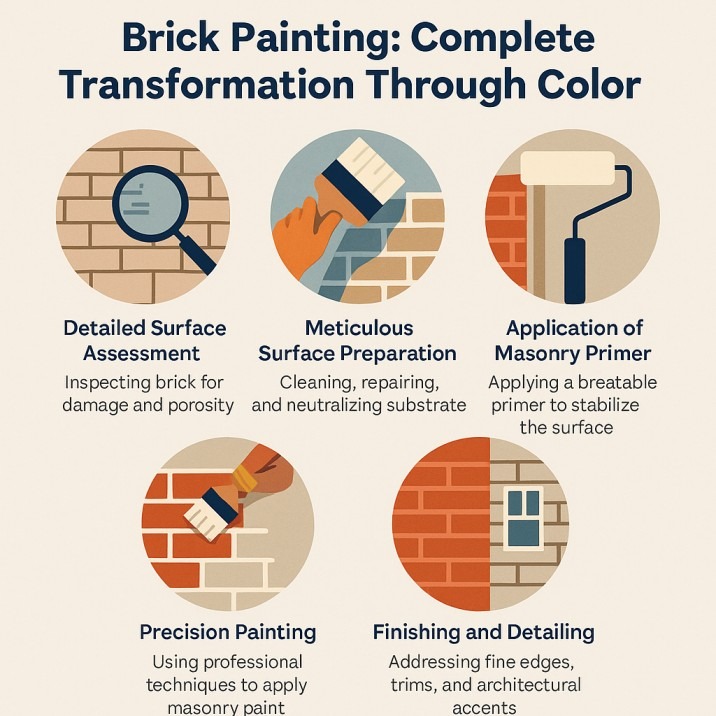
1. Detailed Surface Assessment
Every successful paint application begins with an understanding of what lies beneath. Our team begins by inspecting the brick façade to identify issues such as spalling, efflorescence, cracks, and mortar deterioration. We then determine the brick’s porosity, previous coating type (if any), and the building’s exposure conditions.
This diagnostic step ensures that the surface is prepared with precision — because even the best paint fails if applied on an unprepared base.
2. Meticulous Surface Preparation
Preparation is the foundation of longevity. We perform a multi-stage cleaning and repair process:
- Mechanical cleaning using soft pressure washing or chemical cleaning agents to remove dirt and organic buildup.
- Efflorescence removal using specialized masonry-safe treatments.
- Crack repair and mortar repointing, ensuring all joints are solid and watertight.
- pH neutralization of the brick surface to ensure proper paint adhesion.
This ensures a completely clean, stable substrate ready to bond effectively with our masonry coatings.
3. Application of Masonry Primer
We apply a breathable, silicate-based primer that bonds to the mineral composition of brick. This allows trapped moisture to evaporate while preventing external water penetration. Priming stabilizes the surface, enhances adhesion, and provides a uniform base tone for the paint layer.
4. Precision Painting Process
Our team uses premium-grade, mineral-based or elastomeric masonry paints, chosen based on the project’s exposure and design requirements. Each coat is applied uniformly using professional spraying and rolling techniques. The paint cures to form a vapor-permeable yet waterproof layer, ensuring durability and flexibility during temperature changes.
We also perform controlled testing during the process — such as moisture checks and adhesion tests — to guarantee performance longevity.
5. Finishing and Detailing
Once the main coating is complete, we address fine details such as edges, corners, window trims, and architectural accents. The final outcome is an even, flawless surface with exceptional color depth and weather resistance.
Advantages of Brick Painting
- Complete Aesthetic Control: Choose from endless color options — from bold whites and greys to deep earth tones — for total customization.
- Enhanced Protection: Shields the surface from rain, snow, UV radiation, and pollutants.
- Waterproof and Breathable: Prevents moisture ingress while allowing vapor release.
- Low Maintenance: Requires minimal upkeep with long repaint cycles.
- Improved Energy Efficiency: Reflective coatings can reduce heat absorption.
- Increased Property Value: Adds visual appeal and a refreshed, high-end finish.
Brick painting is an investment in your property’s longevity and identity, transforming dull or aged exteriors into stunning architectural statements.
Brick Staining: Subtle Enhancement, Lasting Strength
Brick staining offers a more natural and refined approach to revitalizing masonry. Unlike paint, which coats the surface, stains penetrate into the brick’s pores, bonding chemically with its mineral content. The result is a translucent, color-enhanced finish that retains the authentic texture of the original brickwork.
This method is ideal for heritage buildings, homeowners who love the natural aesthetic of brick, or projects requiring color uniformity across repaired sections.
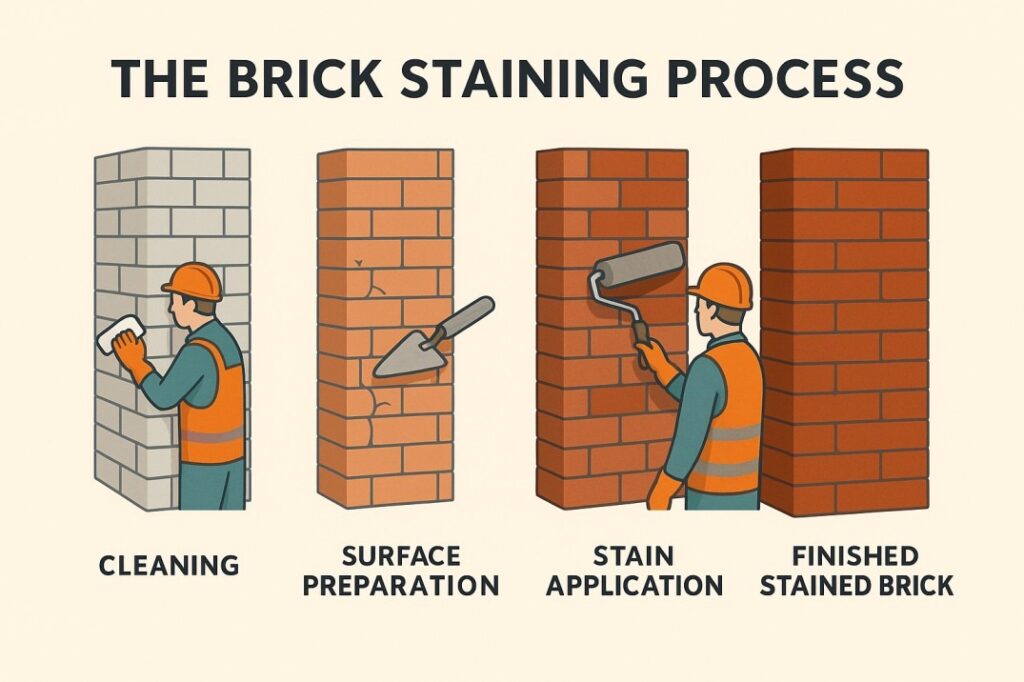
1. Expert Evaluation and Color Planning
Every staining project begins with an in-depth evaluation of the brick’s type, absorption rate, and color characteristics. Different bricks — clay, sand-lime, or calcium silicate — absorb stain differently, so our specialists adjust formulas accordingly.
We also help clients choose from a broad palette of mineral-based stain colors — from warm terracotta and sandstone hues to modern charcoal and walnut tones — ensuring the end result harmonizes with architectural intent.
2. Intensive Cleaning and Preparation
Brick surfaces are cleaned of dirt, debris, efflorescence, and any previous coatings. Because stain needs direct contact with the brick’s pores, preparation is key. Even small residues can block absorption and create uneven coloration.
Our cleaning process is non-abrasive and tailored to preserve the brick’s surface integrity.
3. Application of Professional-Grade Stains
We apply stains using specialized low-pressure sprayers or hand brushes to control saturation and depth. These stains penetrate deeply, reacting with the mineral composition of the masonry to create a permanent color change rather than a surface film.
Each layer is carefully evaluated for color consistency and texture visibility. The process enhances the brick’s tones, enriches shadows, and restores depth without masking its natural character.
4. Protective Sealing (Optional)
For high-exposure surfaces, we apply a breathable silane-siloxane sealer after staining. This invisible barrier repels water, prevents freeze-thaw cycles, and guards against efflorescence — all while maintaining full vapor permeability.
Advantages of Brick Staining
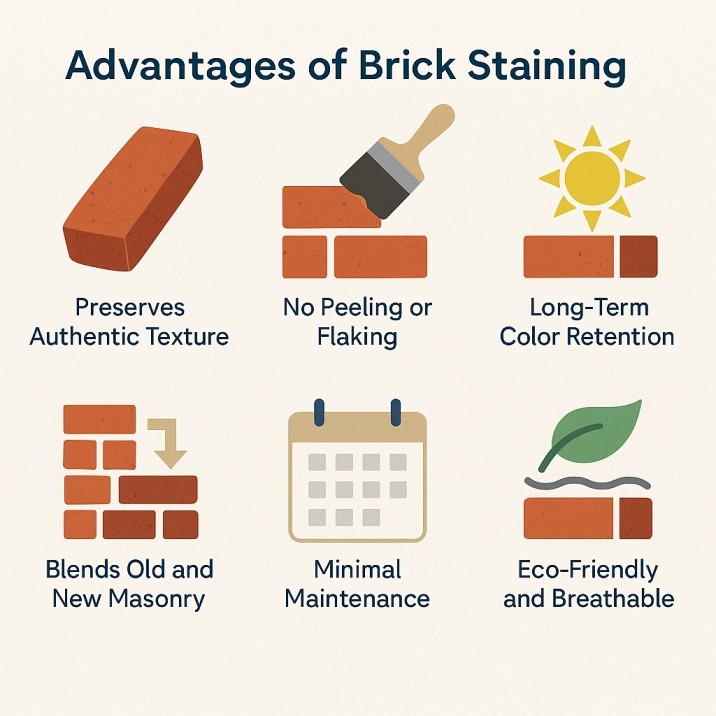
- Preserves Authentic Texture: Maintains the natural beauty and tactile feel of brick.
- No Peeling or Flaking: The stain bonds internally, meaning it will never chip like paint.
- Long-Term Color Retention: UV-resistant mineral stains maintain their hue for decades.
- Blends Old and New Masonry: Ideal for color-matching additions or repairs.
- Minimal Maintenance: Does not require frequent reapplication.
- Eco-Friendly and Breathable: Non-toxic, low-VOC, and allows moisture escape.
Brick staining is not merely a finish — it is a preservation method that protects and enhances masonry while celebrating its natural materiality.
Painting vs. Staining: Choosing the Right Solution
| Factor | Painting | Staining |
| Appearance | Opaque, modern finish | Natural, translucent finish |
| Breathability | High (with mineral paints) | Very high |
| Texture Preservation | Partially hidden | Fully visible |
| Maintenance | Occasional recoating | Minimal |
| Durability | 10–15 years | 20+ years |
| Customization | Full color flexibility | Limited to tone variations |
| Ideal Use | Modern redesigns, full coverage | Historic buildings, subtle upgrades |
Not sure which is right for you? Our experts evaluate your property’s architectural style, material condition, and exposure level to recommend the most suitable approach.
Technical Expertise That Defines Northshore Brickwork
Our team combines traditional masonry knowledge with modern finishing technologies to ensure every project exceeds industry standards. We use only architectural-grade materials tested for adhesion, vapor permeability, UV stability, and environmental safety.
Our services are performed under controlled conditions, ensuring no overspray, uneven coating, or trapped moisture. With precise tools and strict quality checks, we ensure every painted or stained brick surface is both visually flawless and technically sound.
Applications of Brickwork Painting and Staining
- Residential exteriors and facades
- Commercial building rejuvenation
- Interior accent walls and fireplaces
- Heritage property restorations
- Brick columns, planters, and retaining walls
- Multi-unit condominium developments
- Institutional and civic structures
From small-scale restorations to comprehensive façade upgrades, we deliver consistent, high-quality finishes that last.
Maintenance and Aftercare
Proper care ensures your investment remains beautiful for decades. We provide tailored maintenance guidance after every project:
- Use gentle, pH-neutral cleaners for surface washing.
- Avoid abrasive tools that can damage coatings.
- Schedule periodic inspections for cracks or water entry points.
- Reapply sealants or coatings as recommended for your building’s exposure level.
With correct maintenance, our finishes retain color vibrancy and surface integrity well beyond standard industry timelines.
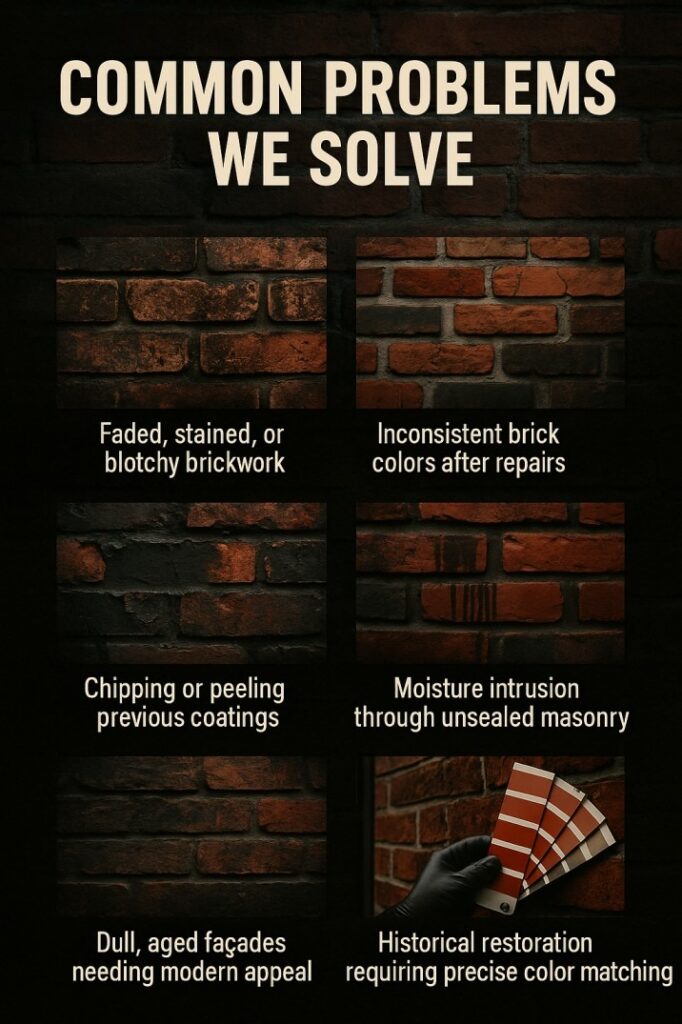
Common Problems We Solve
- Faded, stained, or blotchy brickwork
- Inconsistent brick colors after repairs
- Chipping or peeling previous coatings
- Moisture intrusion through unsealed masonry
- Dull, aged façades needing modern appeal
- Historical restoration requiring precise color matching
Our restoration-first philosophy ensures your structure’s original character is preserved, strengthened, and beautified.
Why Property Owners Choose Northshore Brickwork
- Expert craftsmanship from certified masonry professionals
- In-depth consultation on color, design, and material compatibility
- High-performance coatings tested for long-term adhesion and breathability
- Attention to detail in preparation, protection, and application
- Sustainable practices that prioritize both beauty and environmental responsibility
Every project reflects our dedication to architectural integrity, precision, and client satisfaction.
Conclusion
Brickwork painting and staining are more than aesthetic upgrades — they are forms of architectural preservation and protection. When executed correctly, these services enhance curb appeal, strengthen structural integrity, and extend the life of your building.
At Northshore Brickwork, we approach every project with the philosophy that masonry deserves respect and precision. Our craftsmen combine time-honored techniques with advanced coating technologies to deliver finishes that are as durable as they are beautiful.
Whether you envision a dramatic modern transformation through painting or a timeless enhancement through staining, our expertise ensures results that exceed expectations and stand the test of time.
Frequently Asked Questions: Brickwork Painting and Staining
1. How does breathable masonry paint prevent moisture damage within brick walls?
Traditional paints often trap moisture inside masonry, causing blistering, efflorescence, or spalling over time. Breathable masonry paints, like the mineral-based coatings we use, form a vapor-permeable film. This allows internal moisture to escape while preventing external water penetration. The result is a finish that protects the brickwork from both sides — maintaining structural integrity and reducing long-term deterioration.
2. Can staining help unify different shades of brick after repairs or additions?
Yes. One of the most effective uses of brick staining is color harmonization. When new brick repairs or additions don’t match the original façade, stains can be custom-formulated to blend the tones seamlessly. Because staining penetrates the surface instead of coating it, the finish appears completely natural and consistent across both new and old bricks — eliminating patchy or mismatched appearances.
3. How long does a professional brick staining or painting project typically last?
With proper surface preparation and the use of high-quality materials, brick staining can last over 20 years, while brick painting typically endures 10–15 years before requiring maintenance. The longevity depends on environmental exposure, surface preparation, and the type of coating system used. Northshore Brickwork’s breathable coatings and stains are engineered for maximum durability and color retention, even under harsh weather conditions.
4. What’s the main difference between film-forming paints and penetrating stains for brickwork?
Film-forming paints sit on the surface, creating an opaque, uniform color that changes the overall look of the masonry. Penetrating stains, on the other hand, soak into the pores of the brick and bond chemically with its minerals, preserving its texture and pattern. The choice depends on your goals: paint for bold transformation, stain for subtle enhancement and longevity.
5. Can brick painting or staining improve the building’s insulation or energy efficiency?
Indirectly, yes. Certain light-colored masonry paints reflect sunlight, reducing surface heat absorption during summer months. This helps stabilize interior temperatures and may slightly improve energy efficiency. Additionally, sealing brickwork prevents moisture absorption — keeping walls drier, which also contributes to better thermal performance.
6. How does Northshore Brickwork ensure uniformity and adhesion in painted or stained brickwork?
We adhere to a rigorous multi-step preparation process, including deep cleaning, mortar repair, and priming or conditioning of the surface. Each coating layer is applied under controlled conditions using calibrated sprayers and rollers for even coverage. Adhesion tests, moisture readings, and sample patches are conducted throughout the process to ensure color consistency, surface bonding, and long-term performance.
7. Can old, previously painted brickwork be stained instead of repainted?
In most cases, yes — but only after thorough stripping or cleaning. For staining to work, the brick’s pores must be open and unsealed. Our specialists use controlled methods to remove old paint without damaging the substrate. Once the surface is clean and absorbent, stains can be applied to restore a more natural appearance or adjust the color tone.
8. What happens if moisture or efflorescence develops after painting or staining?
If a building has pre-existing moisture problems, we address them before applying any finish. Proper diagnosis of leaks, cracks, or rising damp is crucial. After painting or staining, efflorescence is extremely rare when breathable materials are used. However, if it does occur, we can safely clean the surface and reapply protective sealants to ensure the problem does not recur.
9. Is brick staining suitable for historical or heritage buildings?
Absolutely. Staining is often the preferred method for heritage restoration because it maintains the brick’s authentic texture and character. Unlike paint, it doesn’t conceal or alter the original surface. Our team carefully matches historic color palettes and works with breathable, reversible materials that comply with preservation guidelines — ensuring both visual authenticity and material safety.
10. Can you combine painting and staining on the same project for design or restoration reasons?
Yes, hybrid approaches are possible and often effective. For example, a property owner may choose to paint the main façade for a bold aesthetic but stain the accent features like chimneys or decorative bands to maintain texture contrast. Our experts design such combinations carefully to ensure both finishes complement each other and age gracefully under the same environmental conditions.
Bonus Insight: What makes Northshore Brickwork’s approach different from standard contractors?
Most contractors treat brick finishing as a surface-level task. At Northshore Brickwork, we treat it as a material science process. Every project begins with a diagnostic assessment of the brick’s mineral composition, environmental exposure, and moisture dynamics. We then specify coating systems that are technically compatible — ensuring adhesion, breathability, and protection without compromising the brick’s integrity. This precision approach is why our finishes outperform typical coatings by years.