What is the minimum depth for repointing? The short answer is 15–25 mm, or at least 2 to 2.5 times the width of the mortar joint. But getting the depth right is only part of the equation.
Repointing (also called tuckpointing in the United States) is the process of removing deteriorated mortar from brick or stone joints and replacing it with fresh mortar. If the old mortar isn’t removed deep enough, the new pointing won’t bond properly — leading to premature cracking, moisture damage, and costly re-repairs within just 1–3 years.
At North Shore Brickwork Milwaukee, we’ve fixed hundreds of failed repointing jobs where the root cause was simple: the previous contractor didn’t rake deep enough. In this expert guide, we break down the exact depth rules, the right repointing tools, mortar mix ratios, repointing brickwork cost, and cheaper alternatives to help you get it right the first time.
What Is Repointing & Why Does Depth Matter?
Repointing (also called tuckpointing in the United States) is the process of removing deteriorated mortar from the joints of a masonry wall and replacing it with fresh mortar. Over time, weather exposure, freeze-thaw cycles, and general ageing cause mortar to crack, crumble, and fall away — leaving gaps that invite moisture, pests, and structural damage.
But here’s what many homeowners miss: the depth at which old mortar is removed is just as critical as the new mortar you apply. If you only scrape out a few millimetres of the surface and skim new mortar over the top, you’re essentially applying a cosmetic bandage. The new material has nothing to grip, and it will pop out within a season or two.
At North Shore Brickwork Milwaukee, we’ve seen countless failed repointing jobs — on both residential homes and commercial buildings — where the root cause was simple: the previous contractor didn’t rake deep enough.
The Minimum Depth Rule for Repointing Brickwork
The industry-standard guideline, referenced by both ASTM C270 and BS 8221, is straightforward:
The 2–2.5× Rule: How Deep Should You Rake Out?
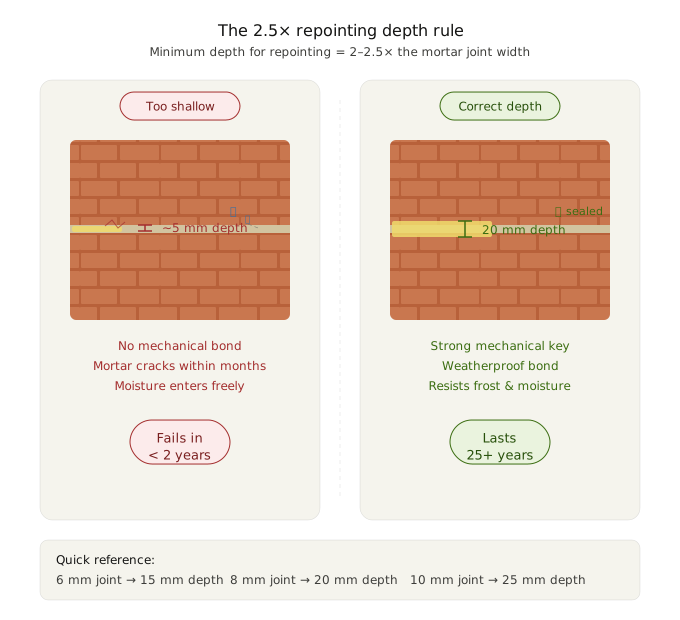
The minimum removal depth should be at least 2 to 2.5 times the width of the mortar joint. Here’s what that means in practice:
| Joint Width | Minimum Rake-Out Depth | Recommended Depth |
| 6 mm (¼”) | 12 mm | 15 mm |
| 8 mm (⅜”) | 16 mm | 20 mm |
| 10 mm (⅜”–½”) | 20 mm | 25 mm |
| 12 mm (½”) | 24 mm | 25–30 mm |
For most standard brickwork in Milwaukee-area homes, joints are 8–10 mm wide. So, the minimum depth for repointing in practice is 15–25 mm for most standard brick joints.
7 Essential Repointing Tools for Proper Depth
Reaching the correct minimum depth for repointing requires the right tools. Using the right repointing tools is critical for achieving proper depth without damaging the surrounding bricks. Here are the tools professionals rely on:
| Tool | Purpose | Best For |
| Mortar Raker (hand or electric) | Removes old mortar to correct depth | Standard brick joints |
| Plugging Chisel | Hand raking delicate or historic joints | Listed buildings, soft brick |
| Angle Grinder with Diamond Blade | Fast mortar removal on straight joints | Large-area modern brickwork |
| Pointing Trowel | Pressing new mortar into joints | All repointing work |
| Hawk | Holds mortar while working | All repointing work |
| Jointer / Striking Iron | Shapes the finished joint profile | Weather-struck, bucket-handle |
| Stiff Brush | Cleans dust from joints before filling | All repointing work |
💡 Pro Tip from Our Team
Avoid using an angle grinder on old or soft brick — the vibration can crack faces. We use a Fein MultiMaster oscillating tool with a carbide blade for precision raking on historic masonry.
How to Choose the Right Repointing Mortar Mix
The repointing mortar mix you use must be compatible with the existing brickwork. Using mortar that is harder than the bricks themselves causes moisture to be trapped, leading to spalling (surface flaking) of the brick faces.
Standard Mortar Mix Ratios (Type N, O, S & Lime)
| Mortar Type | Mix Ratio (Cement:Lime:Sand) | Use Case |
| Type N | 1 : 2: 9 | General-purpose, most residential walls |
| Type O | 1: 0.5 : 4.5 | Soft brick, historic buildings, interiors |
| Type S | 1: 0.5: 4.5 | Below-grade, retaining walls |
| Lime Putty Mortar | 0 : 1 : 3 (NHL lime) | Pre-1920s masonry, natural stone |
For most Milwaukee-area homes built between 1920 and 1980, a Type N mortar mix (1:1:6) is the go-to choice. For older historic homes — especially cream city brick — a softer lime-based mix is essential to prevent brick damage.
Repointing Internal Stone Walls: Cement vs Lime
Stone masonry requires special consideration. If you’re repointing an internal stone wall, the same depth rules apply — but the mortar choice changes significantly.
Why You Should Never Repoint Stone Walls with Cement
Repointing a stone wall with cement (standard Portland cement/OPC) is one of the most common — and damaging — mistakes in masonry.
Portland cement is harder than most natural stone. When moisture enters the wall, it cannot escape through the rigid cement joints. Instead, the moisture is forced out through the softer stone, causing it to crack, spall, and crumble over time.
The correct approach is to use a natural hydraulic lime (NHL) mortar for all stone wall repointing. NHL mortar is breathable and flexible, allowing moisture to migrate naturally through the joints rather than through the stone.
| Factor | Portland Cement ✘ | NHL Lime Mortar ✔ |
| Flexibility | Rigid — cracks with movement | Flexible — absorbs movement |
| Breathability | Traps moisture inside the wall | Lets moisture escape naturally |
| Stone Protection | Causes stone spalling & decay | Protects stone from damage |
| Self-Healing | No | Yes — micro-cracks heal |
| Hardness | Harder than stone (stone fails first) | Softer than stone (joint fails first) |
| Recommendation | NOT recommended for stone | Industry best practice |
Repointing Brickwork Cost & Cheaper Alternatives
Understanding repointing brickwork cost helps you budget appropriately and avoid being overcharged — or undercharged (which usually means corners are being cut).
Average Repointing Cost (Milwaukee Area, 2026)
| Project Type | Estimated Cost |
| Small area (under 10 sq ft) | $300 – $700 |
| Single wall face (100–200 sq ft) | $1,500 – $4,000 |
| Full house exterior | $5,000 – $15,000+ |
| Chimney repointing | $500 – $2,500 |
| Historic lime-mortar work | 20–40% premium over standard |
Cheaper Alternative to Repointing Brickwork
1. Spot Repointing: Only repair the joints that have visibly failed. This can cut costs by 50–70% and is valid if damage is localised. However, if mortar is deteriorating across the entire wall, spot repointing simply delays the inevitable.
2. Pre-Mixed Mortar: Ready-to-use mortar tubes eliminate mixing. They work for very small repairs, but are not a substitute for proper hand-packed repointing on any significant area.
3. Mortar Repair Caulk: Silicone-based joint sealants are sometimes marketed as a quick fix. We do not recommend these — they look wrong, prevent breathability, and peel away within 1–3 years.
Our Honest Advice: True repointing done correctly lasts 25–50 years. Cheap shortcuts typically need redoing within 2–5 years, costing you more in the long run.
6 Step-by-Step Repointing Process (How Professionals Do It)
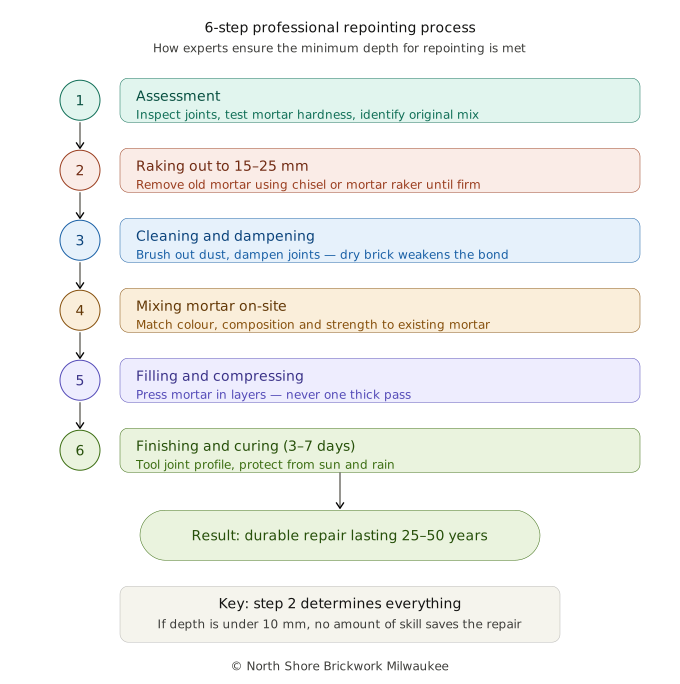
Step 1 — Assessment: We inspect all mortar joints, test mortar hardness, and identify the original mortar composition to determine the correct replacement mix.
Step 2 — Raking Out: Old mortar is removed to the minimum depth (15–25 mm) using appropriate repointing tools. We continue removing until we reach firm, sound mortar.
Step 3 — Cleaning: Joints are brushed out and dampened with water. Dust and debris prevent proper adhesion, so this step is never skipped.
Step 4 — Mixing Mortar: We mix the repointing mortar mix on-site to match the existing mortar in colour, composition, and strength.
Step 5 — Filling & Compressing: Mortar is pressed firmly into the joint in layers (never one thick pass). Each layer firms up before the next is added, eliminating air pockets.
Step 6 — Finishing & Curing: The joint profile is tooled to match the existing finish. The wall is protected from direct sun and rain for 3–7 days for proper curing.
5 Common Repointing Mistakes to Avoid
Going too shallow: The number one cause of failure. If depth is under 10 mm, the repair will not last.
Using mortar that’s too hard: Modern cement mortar on soft old bricks causes the bricks to crack and spall — an expensive problem worse than the original deteriorated joints.
Skipping the dampening step: Dry bricks suck moisture out of fresh mortar before it can cure, weakening the bond dramatically.
Smearing mortar on brick faces: Sloppy application stains brickwork and looks unprofessional.
Repointing in extreme weather: Temperatures below 5°C or above 30°C compromise curing. Rain within 24 hours washes out fresh mortar.
Need Professional Repointing in Milwaukee?
North Shore Brickwork provides expert tuckpointing, repointing, and masonry restoration across Milwaukee and southeastern Wisconsin.
FAQs | What Is the Minimum Depth for Repointing? Expert Guide 2026
Q: How deep does repointing need to be?
Repointing should reach a minimum depth of 15–25 mm, or 2–2.5 times the width of the mortar joint. If existing mortar is soft or crumbling, remove it deeper until you reach firm, solid material. Shallow repairs (under 10 mm) will crack and fail within 1–3 years.
Q: What is the minimum thickness of mortar?
The minimum mortar thickness (joint width) is typically 6 mm. For repointing depth, the minimum fill should be at least 10 mm, though 15–25 mm is strongly recommended for a durable, long-lasting repair.
Q: How deep to rake out pointing?
Rake out old pointing to at least 15–25 mm. Use a plugging chisel or mortar raker and remove material until you hit sound mortar. The joints should be square-cut at the back (not tapered) for the best bond.
Q: What is the thickness of pointing?
Pointing thickness (the visible joint width) is determined by the gap between the bricks, usually 6–12 mm. The depth of mortar behind that visible face should be at least 2–2.5 times the joint width.
Q: Can I repoint a stone wall with cement?
It’s strongly advised not to. Portland cement is harder than most natural stone and traps moisture, causing the stone to deteriorate. Use natural hydraulic lime (NHL) mortar instead — it’s breathable, flexible, and protects the stone long-term.
Q: What is a cheaper alternative to repointing brickwork?
Spot repointing (repairing only visibly failed joints) is the most cost-effective legitimate alternative. Pre-mixed mortar tubes work for minor repairs. Avoid mortar caulks and sealants. Full repointing, though more expensive upfront, is the best value over 25+ years.
Q: How long does repointing last?
Properly executed repointing with correct depth and mortar mix typically lasts 25–50 years. Lime mortar on older buildings can extend this further due to its self-healing properties for hairline cracks.
Q: What is the best weather for repointing?
Ideal conditions are mild temperatures between 10°C and 25°C (50–77°F), low wind, and no rain forecast for at least 24 hours.
Q: Do I need scaffolding for repointing?
For any work above 2 metres (approximately 6.5 feet), scaffolding or a stable platform is required for both safety and quality.
Q: Can I DIY repointing or should I hire a professional?
Small, low-level repairs on modern brickwork can be a manageable DIY project. However, for historic masonry, stone walls, chimneys, or large areas, professional expertise is essential — incorrect mortar choice or technique can cause costly brick damage.