Tuckpointing vs repointing is the most common question Milwaukee property owners ask masonry contractors. The two terms are frequently confused, often used interchangeably, and sometimes deliberately blurred by contractors who want to charge tuckpointing prices for repointing work.
Understanding the real difference between tuckpointing vs repointing protects your budget and ensures you get the right service for your property. In this guide, we clarify exactly what each technique involves, how much each costs, and when each one is the right choice.
Every comparison in this guide is based on our team’s daily experience performing both services at North Shore Brickwork Milwaukee.
Tuckpointing vs Repointing: Quick Answer
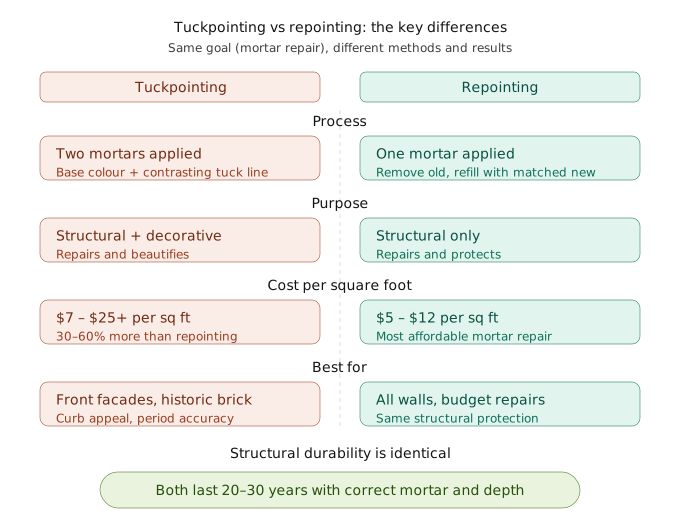
Here is the fundamental difference between tuckpointing vs repointing in one sentence:
Repointing = remove old mortar, replace with new mortar. One step. Structural repair only.
Tuckpointing = repoint with colour-matched mortar + add a thin contrasting decorative line on top. Two steps. Structural repair + aesthetic enhancement.
The contrasting line — called the “tuck” — is the only difference. It creates the illusion of perfectly fine, uniform joints. Without it, you have repointing. With it, you have tuckpointing.
| Feature | Repointing | Tuckpointing |
| Mortar applications | One | Two (base + tuck line) |
| Purpose | Structural repair | Structural + decorative |
| Cost per sq ft | $5 – $12 | $7 – $25+ |
| Labour time | Standard | 30–50% longer |
| Structural benefit | Full protection | Identical protection |
| Visual result | Standard mortar joint | Fine, precise joint illusion |
| Skill level | Professional | Highly skilled artisan |
What Is Repointing? (The Structural Repair)
In the tuckpointing vs repointing comparison, repointing is the simpler, more affordable, and more commonly needed service. Here is exactly what it involves:
The repointing process
Step 1 — Rake out old mortar: Deteriorated mortar is removed to a minimum depth of 15–25 mm (2–2.5 times the joint width) using hand chisels, mortar rakers, or oscillating tools.
Step 2 — Clean and dampen: Joints are brushed clean of dust and debris, then dampened with water to prevent dry bricks from pulling moisture out of fresh mortar.
Step 3 — Apply new mortar: Fresh mortar, matched in type and colour to the existing joints, is pressed into the joints in layers using a pointing trowel.
Step 4 — Finish the joint: The mortar surface is tooled to match the existing joint profile (flush, concave, weather-struck, etc.).
That’s it. One mortar, one application, focused entirely on restoring the wall’s structural integrity and weatherproofing. No decorative enhancement.
When repointing is the right choice
Repointing is appropriate for the vast majority of mortar repair projects. It delivers identical structural protection to tuckpointing at 30–60% lower cost. Choose repointing when the goal is functional repair rather than visual transformation.
What Is Tuckpointing? (The Decorative Technique)
In the tuckpointing vs repointing debate, tuckpointing is the premium option that adds visual refinement on top of structural repair:
The tuckpointing process
Steps 1–3: Identical to repointing — rake, clean, dampen, and fill with base mortar. However, the base mortar is specifically colour-matched to blend with the brick face, making the filled joint “disappear” against the brick.
Step 4 — Cut the groove: While the base mortar is still firm but not set, a thin groove (3–4 mm wide, 3–4 mm deep) is cut along the centre of each joint.
Step 5 — Tuck the contrasting line: A thin ribbon of contrasting mortar (usually white or cream) is carefully pressed into the groove. This line sits slightly proud of the surface, creating the appearance of perfectly fine, uniform joints.
Step 6 — Trim and finish: Excess mortar is trimmed away, and the line is shaped for consistent width and straightness across the entire wall.
According to the Brick Industry Association, tuckpointing originated in 18th-century England as a way to make ordinary brickwork look like expensive rubbed brickwork with perfectly thin joints.
When tuckpointing is the right choice
Tuckpointing is worth the extra cost when visual appearance matters as much as structural repair. Front facades, historic buildings, and premium residential properties benefit most from the refined joint appearance.
Tuckpointing vs Repointing: Complete Comparison
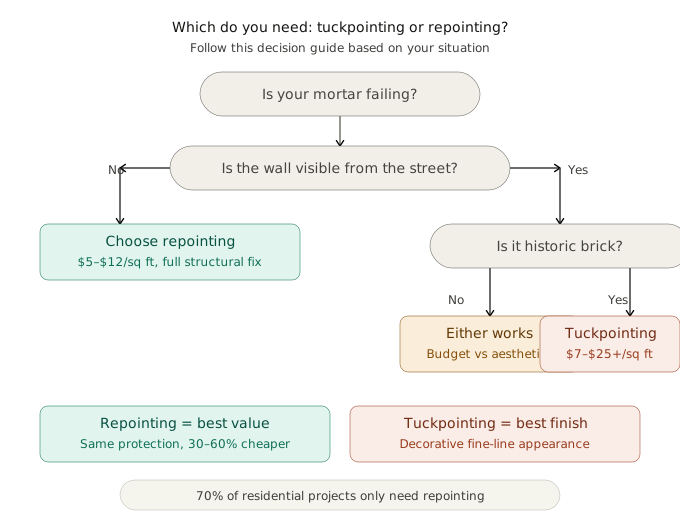
Here is the definitive side-by-side comparison of tuckpointing vs repointing across every factor that matters:
| Factor | Repointing | Tuckpointing |
| Process | One mortar, single application | Two mortars, dual application |
| Structural strength | Full — identical to tuckpointing | Full — identical to repointing |
| Weatherproofing | Complete moisture protection | Complete moisture protection |
| Visual finish | Standard mortar joint | Illusion of fine, precise joints |
| Cost (per sq ft) | $5 – $12 | $7 – $25+ |
| Labour time | 1x (baseline) | 1.3x – 1.5x longer |
| Skill required | Professional mason | Highly skilled artisan |
| Best for | All structural repairs | Street-facing facades, historic |
| Durability | 20–30 years (standard mortar) | 20–30 years (same mortar) |
| With lime mortar | 30–50+ years | 30–50+ years |
| Origin | As old as masonry itself | 18th-century England |
| Named for | Re-pointing (redoing) joints | Tucking a line into the joint |
The most important takeaway from the tuckpointing vs repointing comparison: structural durability is identical. The tuck line does not add structural strength. It is purely decorative.
Tuckpointing vs Repointing: Cost Comparison
Cost is often the deciding factor in the tuckpointing vs repointing decision. Here is a detailed breakdown:
| Project type | Repointing cost | Tuckpointing cost | Savings with repointing |
| Small wall (50 sq ft) | $300 – $600 | $500 – $1,200 | 30–50% |
| Single wall (200 sq ft) | $1,000 – $2,400 | $1,400 – $5,000 | 30–55% |
| Full house exterior | $3,000 – $8,000 | $5,000 – $15,000 | 35–60% |
| Chimney | $400 – $1,500 | $600 – $2,500 | 25–40% |
| Historic property | $3,000 – $10,000 | $5,000 – $20,000+ | 30–50% |
The cost difference between tuckpointing vs repointing comes entirely from the extra labour required for the contrasting line. Material costs are only marginally different. The tuck line demands exceptional precision and patience, which translates to 30–50% more labour hours.
💡 Our Honest Recommendation
At North Shore Brickwork, we recommend repointing for approximately 70% of residential projects. The structural protection is identical, and most homeowners cannot visually distinguish repointing from tuckpointing at normal viewing distance (3+ metres). We only recommend tuckpointing when there is a genuine aesthetic or historical reason.
Tuckpointing vs Repointing: Which Lasts Longer?
This is one of the most common misconceptions in the tuckpointing vs repointing debate. Many homeowners assume tuckpointing lasts longer because it costs more. This is incorrect.
Both techniques use the same mortar at the same depth. The tuck line is a thin decorative layer on top — it does not increase the joint’s structural depth or bond strength.
| Mortar type | Repointing lifespan | Tuckpointing lifespan |
| Type N (standard) | 20–30 years | 20–30 years |
| Type O (soft brick) | 20–25 years | 20–25 years |
| NHL lime mortar | 30–50+ years | 30–50+ years |
The factor that determines longevity is mortar depth, mortar type, and application quality — not whether a decorative line is added. In the tuckpointing vs repointing comparison, durability is a tie.
When to Choose Repointing (and Save 30–60%)
Choose repointing over tuckpointing in these situations:
Rear and side walls: Walls not visible from the street gain nothing from tuckpointing’s decorative finish.
Budget-focused repairs: When structural repair is the priority, repointing delivers identical protection at 30–60% lower cost.
Modern brick (post-1950): Standard modern brickwork has uniform joints that don’t benefit visually from the fine-line illusion.
Interior exposed brick: Indoor brickwork only needs mortar repair for stability, not the street-level visual refinement.
Below-grade and foundation walls: Walls below ground level are never seen. Repointing with Type S mortar is correct and cheaper.
Rental or investment properties: Unless the property is in a premium market, repointing’s lower cost delivers better ROI.
When Tuckpointing Is Worth the Extra Cost
Despite repointing being cheaper, tuckpointing delivers genuine value in specific situations:
Historic or landmark buildings: Historic preservation boards may require the traditional tuckpointing technique with contrasting lines to maintain period accuracy.
Front facades being sold or rented: The visual impact of tuckpointing on a street-facing facade can increase property value by more than the cost difference.
Exposed decorative brickwork: Arches, feature walls, and ornamental masonry look significantly more refined with tuckpointing.
Matching existing tuckpointing: If part of the building already has tuckpointed joints, matching the rest avoids a visible inconsistency.
Personal preference: Some homeowners simply prefer the refined appearance. When aesthetics are a priority, tuckpointing delivers.
The Hybrid Approach: Tuckpointing vs Repointing Together
The smartest approach to the tuckpointing vs repointing decision is often a combination of both:
Front facade: Tuckpointing for maximum curb appeal and visual refinement.
Side walls: Repointing for identical structural protection at lower cost.
Rear wall: Repointing — no aesthetic benefit from tuckpointing on non-visible surfaces.
Chimney: Homeowner’s choice — tuckpointing if visible from the street, repointing if hidden behind the roofline.
This hybrid approach typically saves 25–40% compared to tuckpointing the entire building while delivering the decorative finish where it actually matters. It’s the approach we recommend most often at North Shore Brickwork.
The Mason Contractors Association of America recognises both tuckpointing and repointing as distinct professional masonry skills with different applications and pricing structures.
Need Tuckpointing or Repointing in Milwaukee?
Now you understand the real difference between tuckpointing vs repointing. North Shore Brickwork provides both services with honest recommendations based on your property’s actual needs — no upselling.
Contact North Shore Brickwork today for a free assessment and quote.
FAQs | Tuckpointing vs Repointing
Q: What is the difference between tuckpointing and repointing?
Repointing uses one mortar to replace failed joints (structural repair only). Tuckpointing uses two mortars — a colour-matched base plus a contrasting decorative line — for structural repair and aesthetic enhancement. The structural protection is identical.
Q: Is tuckpointing better than repointing?
Not structurally. Both provide identical mortar depth, bond strength, and weather protection. Tuckpointing is “better” only in visual appearance — it creates the illusion of fine, uniform joints. For structural repair alone, repointing is equally effective at a lower cost.
Q: How much cheaper is repointing than tuckpointing?
Repointing costs $5–$12 per square foot while tuckpointing costs $7–$25+. Repointing is typically 30–60% cheaper because it requires one mortar application instead of two, with less precision labour.
Q: Does tuckpointing last longer than repointing?
No. Both use the same mortar at the same depth. Standard mortar lasts 20–30 years; lime mortar lasts 30–50+ years. The decorative tuck line does not add structural strength or extend lifespan.
Q: When should I choose tuckpointing over repointing?
Choose tuckpointing for front facades, historic buildings, decorative brickwork, and situations where curb appeal matters. For rear walls, foundations, budgets, and functional repairs, repointing provides identical protection at lower cost.
Q: Can I repoint some walls and tuckpoint others?
Yes — this hybrid approach is what we recommend most often. Tuckpoint the front for visual impact and repoint the sides and rear for structural protection. This saves 25–40% compared to tuckpointing everything.
Q: Why is tuckpointing more expensive?
The extra cost comes from the dual-mortar process: colour-matching the base mortar, cutting a groove, and inserting the contrasting tuck line with high precision. This adds 30–50% more labour time compared to repointing.
Q: Are tuckpointing and repointing the same thing in America?
In everyday American English, especially in the Midwest, the terms are often used interchangeably. Technically, they describe different techniques. When hiring a contractor, always clarify whether you’re getting the decorative tuck line (tuckpointing) or standard mortar replacement (repointing).
Q: Which is better for historic buildings?
Traditional tuckpointing with the contrasting line is often required for designated historic properties to maintain period accuracy. However, the mortar type matters more than the technique — NHL lime mortar should always be used on pre-1920s buildings regardless of whether you choose tuckpointing or repointing.
Q: How do I know which service my property needs?
If your mortar is crumbling and you want structural repair at the best price, choose repointing. If the wall is highly visible and you want refined decorative joints, choose tuckpointing. A professional assessment helps determine the right approach for your specific property.