Signs your home needs mortar repair are easy to miss if you don’t know what to look for. Mortar joints are the hidden backbone of every brick structure — holding bricks together, sealing against moisture, and providing stability.
When mortar fails, the consequences escalate rapidly: water infiltration, brick displacement, mold growth, foundation settlement, and structural collapse. The good news is that every one of these problems is preventable if you catch the warning signs early.
In this guide, we reveal 15 critical signs your home needs mortar repair, ranked by urgency, with expert advice on what to do about each one.
15 Signs Your Home Needs Mortar Repair (Overview)
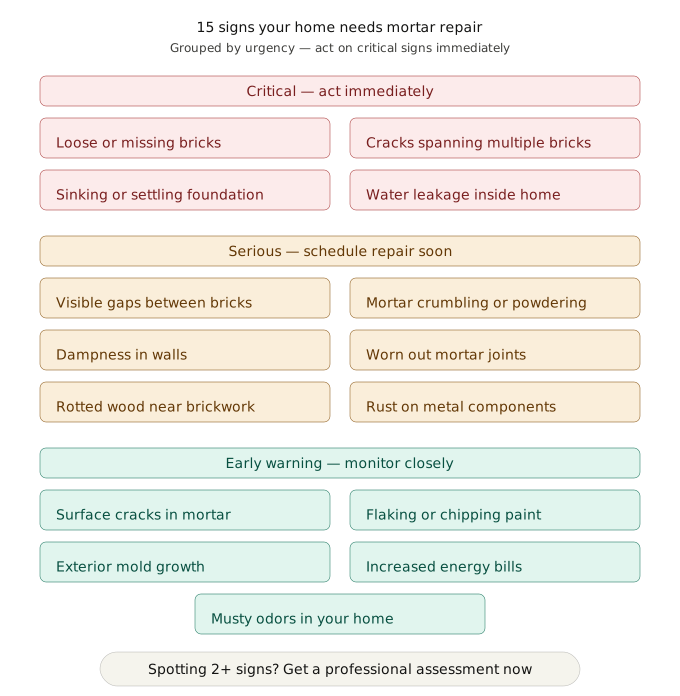
Here’s a quick-reference table of all 15 signs your home needs mortar repair, grouped by urgency:
| Urgency | Sign | Typical Repair Cost |
| Critical | Loose or missing bricks | $500 – $3,000 |
| Critical | Cracks spanning multiple bricks | $1,000 – $5,000+ |
| Critical | Sinking or settling foundation | $2,000 – $15,000+ |
| Critical | Water leakage inside home | $500 – $5,000 |
| Serious | Visible gaps between bricks | $300 – $2,000 |
| Serious | Mortar crumbling or powdering | $500 – $3,000 |
| Serious | Dampness in walls | $300 – $2,000 |
| Serious | Worn mortar joints | $300 – $2,500 |
| Serious | Rotted wood near brickwork | $500 – $3,000 |
| Serious | Rust on metal components | $200 – $1,500 |
| Early | Surface cracks in mortar | $200 – $800 |
| Early | Flaking or chipping paint | $200 – $600 |
| Early | Exterior mold growth | $150 – $500 |
| Early | Increased energy bills | $200 – $1,000 |
| Early | Musty odors indoors | $200 – $800 |
Critical Signs Your Home Needs Mortar Repair (Act Immediately)
These signs that your home needs mortar repair indicate active structural risk. Delaying repair at this stage leads to exponentially higher costs.
1. Water Leakage Inside Your Home
Water stains on interior walls, especially near windows or along the ceiling, are serious signs your home needs mortar repair. Failed mortar allows rain to penetrate the wall and reach interior surfaces.
Left unaddressed, water infiltration causes mold growth, insulation damage, and even structural rot. If you’re seeing interior water stains, have your mortar inspected immediately.
2. Loose or Missing Bricks
Loose or displaced bricks are among the most urgent signs your home needs mortar repair. When mortar fails completely, bricks lose their anchor and can shift, crack, or fall out entirely.
This creates both a safety hazard and a structural weakness. Even one missing brick allows water into the wall cavity, accelerating damage to surrounding joints. Immediate professional repair is essential.
3. Sinking or Settling Foundation
If your foundation appears to be shifting — doors sticking, floors uneven, visible cracks in foundation walls — it could be one of the most serious signs your home needs mortar repair.
Weak mortar in foundation walls cannot support the structural load, leading to gradual settlement. This requires immediate professional evaluation of both the foundation and the mortar.
4. Cracks Spanning Multiple Bricks
Cracks that extend across several bricks in a stair-step or horizontal pattern are among the most serious signs your home needs mortar repair. These indicate structural movement, not just surface wear.
Multiple brick cracks may indicate foundation issues, thermal expansion stress, or load-bearing failure. A structural assessment should accompany any mortar repair for this type of damage.
Serious Signs Your Home Needs Mortar Repair (Schedule Soon)
These signs your home needs mortar repair indicate significant deterioration that will worsen within 6–12 months if not addressed.
5. Visible Gaps Between Bricks
If you can see noticeable gaps between your bricks, the mortar has eroded past the point of surface damage. Gaps wider than 6 mm (¼ inch) are a clear sign your home needs mortar repair urgently.
These gaps allow moisture, insects, and cold air into the wall cavity. The longer they remain open, the faster surrounding mortar deteriorates — creating a chain reaction of failure across the wall.
6. Mortar Crumbling or Powdering
Run your finger along a mortar joint. If it crumbles or turns to powder, this is one of the most definitive signs your home needs mortar repair. The mortar has lost its binding strength entirely.
This often results from poor original mortar quality, excessive moisture exposure, or years of freeze-thaw cycling. Once mortar reaches this stage, spot repair is rarely sufficient — full repointing is typically needed.
7. Dampness in the Walls
Persistent damp patches on interior walls — especially during or after rain — indicate moisture is migrating through failed mortar joints. This is one of the less obvious signs your home needs mortar repair.
Dampness promotes mold and mildew growth, which creates health risks and degrades air quality. A professional moisture assessment can confirm whether mortar failure is the root cause.
8. Rust on Metal Components
Rust appearing on metal window frames, lintels, or door hardware near brickwork suggests excessive moisture — often due to failed mortar joints. This is an indirect but reliable sign that your home needs mortar repair.
When the mortar stops sealing against water, the metal components corrode from prolonged exposure. Fixing the mortar stops the moisture source and prevents costly metal replacement.
9. Worn or Receding Mortar Joints
Mortar joints that appear recessed, uneven, or visibly eroded are clear signs your home needs mortar repair. Healthy joints should be flush or slightly concave — not deeply recessed.
Receding joints expose more brick surface to weather, accelerating erosion. Repointing restores the joint profile and weatherproofing.
10. Rotted Wood Near Brickwork
Wood rot on window frames, door frames, or structural timbers adjacent to brickwork is one of the most damaging signs your home needs mortar repair.
When mortar fails, water doesn’t just affect the masonry — it migrates to surrounding wood, causing rot that compromises structural integrity. Fixing the mortar stops the water source and prevents further wood damage.
Early Warning Signs Your Home Needs Mortar Repair (Monitor)
These are the earliest signs your home needs mortar repair. Catching them now means the cheapest, simplest fixes.
11. Surface Cracks in Mortar
Surface cracks are one of the earliest signs your home needs mortar repair. They may start as hairline fractures but can widen quickly under freeze-thaw pressure.
Pay attention to the pattern. Horizontal cracks may indicate foundation settlement, while vertical ones typically signal standard weathering. Even small cracks allow water in — and one freeze cycle turns a hairline crack into a gap.
12. Increased Energy Bills
A sudden spike in heating or cooling costs can be one of the surprising signs your home needs mortar repair. Cracked or missing mortar creates air leaks that force your HVAC system to work harder.
If your energy bills have risen without changes in usage or rates, inspect your exterior mortar. Sealing failed joints can reduce energy costs by 5–15% in severe cases.
13. Exterior Mold or Algae Growth
Mold, algae, or green staining on exterior brick walls indicates persistent moisture — often caused by mortar that no longer repels water. This is one of the visible signs your home needs mortar repair.
While cleaning removes the surface growth, only mortar repair addresses the root cause. Without fixing the joints, mold returns within months.
14. Flaking or Chipping Exterior Paint
Paint peeling or flaking on exterior walls is often blamed on poor paint quality, but it’s frequently one of the overlooked signs your home needs mortar repair.
When mortar fails, moisture penetrates behind the paint layer, causing it to bubble and peel from the inside out. Repainting without fixing the mortar means the new paint will fail just as quickly.
15. Musty Odors Indoors
Persistent musty or damp smells inside your home can be indirect signs your home needs mortar repair. The odor typically comes from mold growing behind walls where moisture has entered through failed mortar.
Don’t mask the smell with air fresheners. Identify and fix the moisture source — which is often deteriorated mortar joints on the exterior.
What Causes Mortar to Fail?
Understanding why mortar fails helps you recognise the signs your home needs mortar repair before they become critical:
Freeze-thaw cycling: Water enters micro-cracks, freezes and expands 9%, then thaws. Repeated 70+ times per year in Milwaukee, this gradually destroys mortar from within.
Age: Standard mortar has a lifespan of 25–50 years, depending on quality and exposure. If your home is 30+ years old, an inspection is essential.
Poor original mortar: Low-quality mortar or incorrect mix ratios fail faster. Homes built during housing booms sometimes used substandard materials.
Moisture exposure: Poor drainage, overflowing gutters, and ground splash concentrate water on mortar joints, accelerating erosion.
Previous poor repairs: Portland cement mortar applied to soft brick causes spalling and traps moisture, making the problem worse than if left unrepaired.
The Brick Industry Association confirms that mortar joint failure is the leading cause of water infiltration in brick structures.
Cost of Ignoring Signs Your Home Needs Mortar Repair
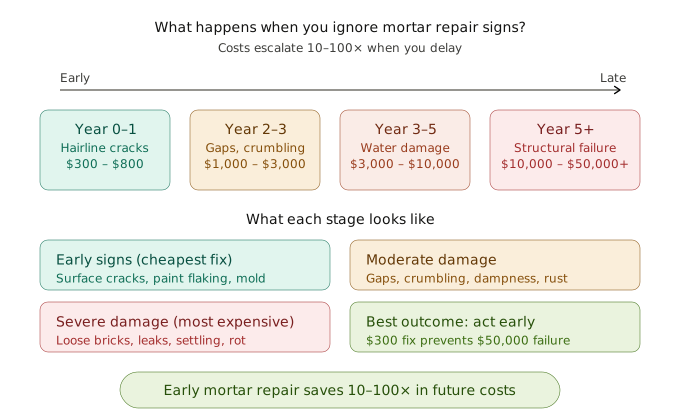
Delaying mortar repair is one of the most expensive mistakes homeowners make. Here’s how costs escalate:
| Timeline | What Happens | Repair Cost |
| Year 0–1 | Hairline cracks, surface wear | $200 – $800 |
| Year 2–3 | Gaps open, mortar crumbles, moisture enters | $1,000 – $3,000 |
| Year 3–5 | Water damage, mold, brick displacement | $3,000 – $10,000 |
| Year 5+ | Structural failure, foundation issues | $10,000 – $50,000+ |
A $300 mortar repair in year 1 prevents a $50,000 structural repair in year 5. Recognising the signs your home needs mortar repair early is the most cost-effective home maintenance decision you can make.
💡 Real Example from Our Portfolio
A Milwaukee homeowner ignored hairline cracks for 3 years. By the time they called us, water had penetrated the wall cavity, caused mold behind the drywall, and rotted two window frames. The original mortar repair would have cost $600. The final bill, including mold remediation, wood replacement, and full repointing, was $14,000.
How to Inspect Your Mortar at Home
You can check for signs your home needs mortar repair with a simple DIY inspection:
1. The finger test: Run your finger along mortar joints. If mortar crumbles, turns to powder, or comes away on your finger, it’s failing.
2. The screwdriver test: Gently push a flathead screwdriver into the mortar. If it penetrates more than 5 mm easily, the mortar has deteriorated significantly.
3. Visual walk-around: Walk the full perimeter of your home and look for cracks, gaps, missing mortar, mold, and peeling paint near brickwork.
4. Interior check: Look for water stains near windows, along baseboards, and on ceilings. Check for musty odors in rooms adjacent to exterior brick walls.
5. Energy bill review: Compare your utility bills year-over-year. A 10–15% increase without usage changes may indicate air leaks through failed mortar.
According to the National Association of Home Inspectors, mortar condition should be checked annually as part of routine home maintenance.
When to Call a Professional for Mortar Repair
Call a professional masonry contractor if you spot any of these signs that your home needs mortar repair:
Any critical sign: Loose bricks, multi-brick cracks, foundation settling, or interior water leaks require immediate professional assessment.
Two or more serious signs: Multiple simultaneous signs indicate widespread mortar failure that needs professional evaluation and systematic repair.
Mortar older than 25 years: Even if you don’t see obvious signs, mortar approaching end-of-life should be professionally inspected.
After severe weather: Major storms, prolonged freezing, or flooding can damage mortar that appeared sound. A post-event inspection catches hidden damage.
Spotted Signs Your Home Needs Mortar Repair?
Don’t wait for a $300 problem to become a $50,000 emergency. North Shore Brickwork provides free mortar assessments across Milwaukee and southeastern Wisconsin.
Contact North Shore Brickwork today for a free mortar inspection.
FAQs | Mortar Repair Signs
Q: What are the first signs your home needs mortar repair?
The earliest signs include hairline surface cracks, exterior paint flaking near brickwork, and minor mold or algae growth on brick walls. These are inexpensive to fix ($200–$800) but escalate rapidly if ignored.
Q: How often should I inspect my mortar?
Inspect your mortar at least once per year with a visual walk-around. In harsh climates like Milwaukee, inspect after every severe winter. Professional inspections are recommended every 10–15 years.
Q: Can I repair mortar myself?
Small surface repairs on accessible, ground-level walls can be DIY. However, for any structural signs (loose bricks, multi-brick cracks, foundation issues), always hire a professional. Incorrect mortar type or depth can cause more damage.
Q: How much does mortar repair cost?
Early repairs cost $200–$800. Moderate repointing costs $1,000–$5,000. Severe structural repairs with water damage remediation can reach $10,000–$50,000+. Acting early saves 10–100× in future costs.
Q: Does mortar repair increase home value?
Yes. Well-maintained mortar improves curb appeal, passes home inspections cleanly, and prevents structural issues that reduce property value. A failed mortar is a red flag for buyers.
Q: What is the difference between mortar repair and repointing?
Mortar repair is the general term for fixing failed mortar. Repointing is the specific technique of removing old mortar to 15–25 mm depth and replacing it with new, matching mortar. Repointing is the most common form of mortar repair.
Q: How long does mortar repair last?
Professional mortar repair (repointing) lasts 20–30 years with standard mortar and 30–50+ years with lime mortar. Poor-quality repairs may fail within 2–5 years.
Q: Can failed mortar cause mold inside my home?
Yes. When mortar fails to seal against water, moisture penetrates the wall cavity and creates conditions for mold growth behind drywall. Interior musty odors are a common sign of this problem.
Q: Is mortar repair covered by homeowners’ insurance?
Standard homeowners’ insurance typically does not cover mortar repair due to normal wear and tear. However, if mortar failure leads to sudden water damage (e.g., burst pipe caused by settling), the resulting damage may be covered. Check your policy.
Q: What happens if I ignore the signs my home needs mortar repair?
Ignoring mortar repair signs leads to progressive damage: water infiltration, mold growth, brick displacement, wood rot, foundation settling, and ultimately structural failure. A $300 early repair can prevent $50,000+ in damage.