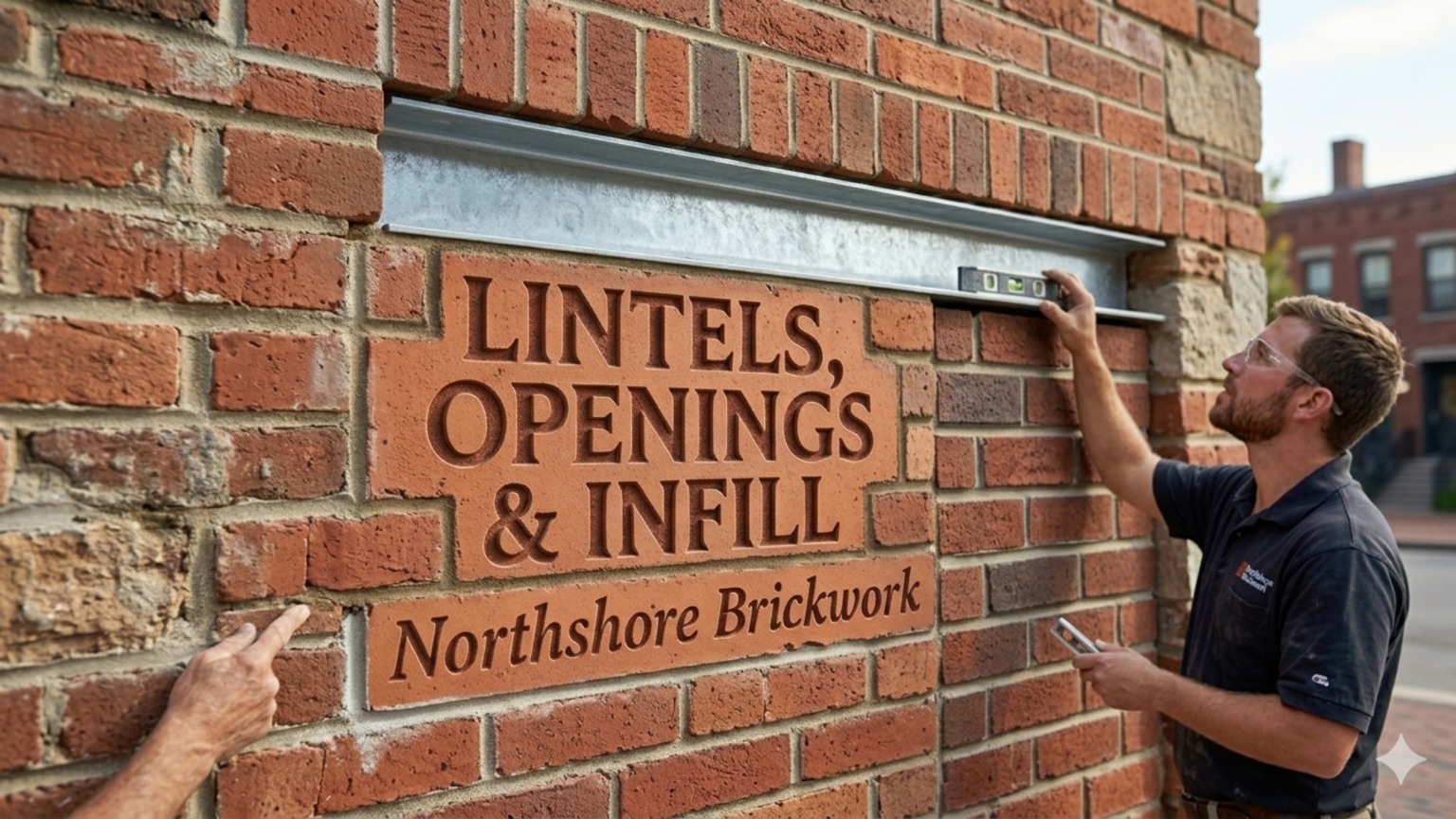
Lintel repair is one of the most important — and most overlooked — structural maintenance tasks for any brick or stone building. Lintels are the horizontal beams that span the top of every window and door opening, supporting the weight of the wall above.
When a lintel fails, the consequences are serious: cracking brickwork above openings, displaced bricks, water infiltration around windows and doors, and in worst cases, partial structural collapse. Recognising the warning signs early and acting on lintel repair promptly can prevent thousands of dollars in damage.
In this guide, we cover everything property owners need to know about lintel repair — from identifying which type of lintel you have, to understanding the replacement process and costs. Every recommendation comes from our team at North Shore Masonry, who handle lintel repair projects across Milwaukee daily.
What Is a Lintel and Why Does It Need Repair?
A lintel is a structural beam — made of steel, concrete, stone, or wood — that spans the top of a window, door, or other opening in a masonry wall. Its sole purpose is to transfer the weight of the wall above the opening to the surrounding structure.
Without a functioning lintel, the bricks or stones above the opening have no support. Gravity takes over, causing cracks, displacement, and eventually collapse. This is why lintel repair is not cosmetic — it is structural.
According to the International Masonry Institute, lintel failure is among the top three causes of structural brick wall deterioration, alongside mortar erosion and foundation settlement.
Types of Lintels and Their Lintel Repair Requirements
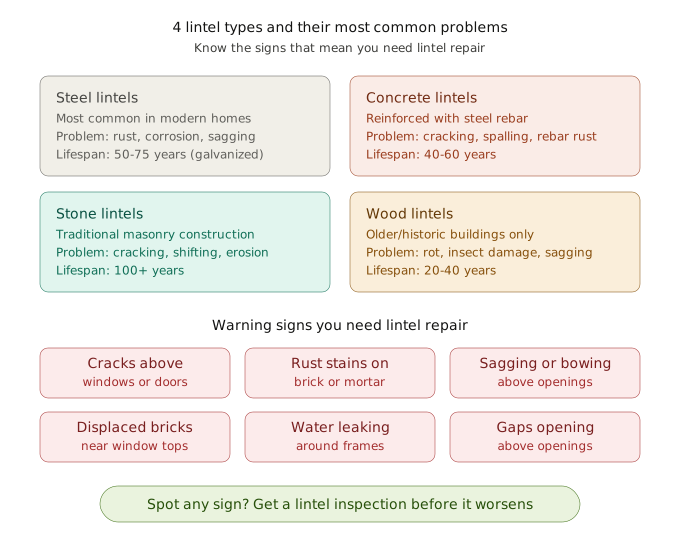
Understanding which type of lintel your property has is the first step in planning lintel repair. Each material fails differently and requires different repair approaches:
| Lintel type | Material | Common in | Typical lifespan | Most common failure |
| Steel lintel | Galvanized steel beam/angle | Post-1950 homes, commercial | 50–75 years | Rust and corrosion |
| Concrete lintel | Reinforced concrete | Modern residential/commercial | 40–60 years | Cracking, rebar corrosion |
| Stone lintel | Cut limestone, sandstone | Pre-1920 historic buildings | 100+ years | Cracking, shifting |
| Wood lintel | Timber beam | Pre-1900 historic buildings | 20–40 years | Rot, insect damage |
| I-beam lintel | Structural steel I-beam | Commercial, large openings | 75–100 years | Rust, deflection |
Steel Lintels
Steel lintels are the most common type in Milwaukee-area homes built after 1950. They offer excellent load-bearing capacity and can span large openings. However, when the galvanized coating deteriorates, rust begins — and rusting steel expands, pushing bricks outward and upward.
Steel lintel repair typically involves either treating surface rust (if caught early) or full lintel replacement (if corrosion has compromised structural integrity).
Concrete and Cement Lintels
Reinforced concrete lintels are strong but vulnerable to moisture. When water reaches the steel reinforcement bars inside, the rebar rusts and expands, causing the concrete to crack and spall from within. This type of lintel repair often requires complete replacement.
Stone Lintels
Stone lintels are the most durable type, but can crack under settlement or seismic stress. Because they are often found in historic buildings, lintel repair for stone lintels requires careful matching of replacement stone and lime mortar to maintain authenticity.
Wood Lintels
Wood lintels are found primarily in pre-1900 buildings. They are vulnerable to rot, insect damage, and moisture. In most cases, wood lintel repair means full replacement with a more durable material — typically steel or reinforced concrete.
Warning Signs You Need Lintel Repair Now
These are the critical signs that indicate your property needs lintel repair:
Stair-step cracks above windows or doors: The most classic sign. These cracks form because the lintel is no longer supporting the weight above, causing the brickwork to settle unevenly.
Rust stains on brickwork: Orange or brown staining above or around an opening indicates the steel lintel inside is corroding. By the time you see rust stains, the corrosion is already significant.
Bowing or sagging above openings: If the brickwork above a window or door appears to bow outward or sag downward, the lintel has lost its structural capacity. This is urgent — partial collapse can follow.
Displaced or loose bricks: Bricks shifting above an opening are a direct result of lintel failure. The expanding rust pushes bricks out of alignment.
Water leaking around window or door frames: When a lintel corrodes, gaps open between the lintel and the brickwork, allowing water to penetrate. This causes interior water damage and mold growth.
Gaps appearing above openings: Visible gaps between the lintel and the brickwork above indicate the lintel has deflected (sagged) under load, separating from the masonry it supports.
💡 When Is It an Emergency?
If you see bowing brickwork above any opening, displaced bricks, or cracks wider than 6 mm (1/4 inch) above a window or door, contact a masonry professional immediately. These signs indicate the lintel may fail, risking partial wall collapse. Do not delay lintel repair when these signs appear.
Common Lintel Problems by Material Type
Steel Lintel Problems
Corrosion and rust: The most common steel lintel problem. Once the galvanized coating fails, moisture reaches bare steel. Rust expands the steel by up to 10x its original volume, pushing bricks out of position.
Deflection and sagging: Overloaded or undersized steel lintels bend under the weight they carry. This creates visible sagging above openings and cracks in the surrounding brickwork.
Thermal bridging: Steel conducts heat, creating cold spots on interior walls above openings. This causes condensation, which accelerates corrosion from the inside.
Concrete Lintel Problems
Cracking: Concrete lintels crack from excessive loads, settlement, or freeze-thaw cycles. Cracks allow moisture in, accelerating deterioration.
Spalling: When embedded rebar corrodes, it expands and forces the concrete cover to break away in chunks. Spalled lintels lose both strength and weather protection.
Sagging from insufficient design: Lintels that were undersized for their load develop excessive deflection over time, causing doors and windows to stick.
Stone and Wood Lintel Problems
Stone cracking: Natural stone can crack along grain lines under stress. Settlement, seismic activity, or impact can split a stone lintel.
Wood rot: Moisture exposure causes wood lintels to rot from the inside out. By the time rot is visible on the surface, the lintel has lost most of its structural strength.
The 5-Step Professional Lintel Replacement Process
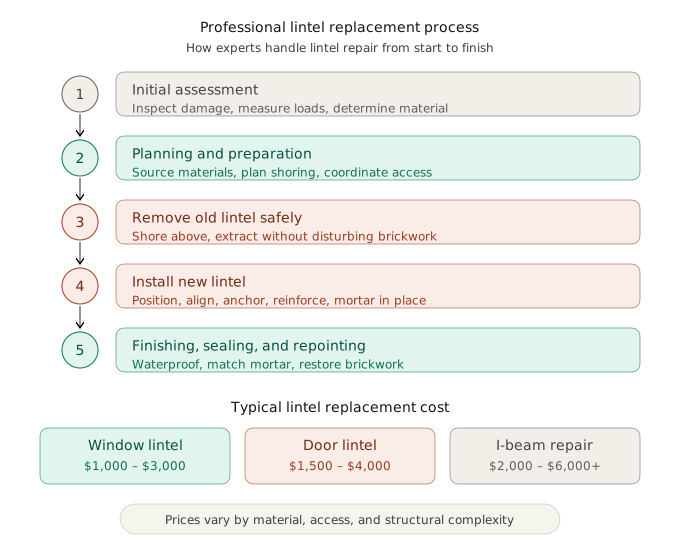
At North Shore Masonry, we follow a proven 5-step process for every lintel repair and replacement project:
Step 1 — Initial assessment: We inspect the lintel and surrounding brickwork, assess the type and extent of damage, measure the load requirements, and determine whether repair or full replacement is needed.
Step 2 — Planning and preparation: We source the correct replacement material (matching steel gauge, concrete specification, or stone type), plan temporary shoring to support the wall during replacement, and coordinate access and scaffolding.
Step 3 — Safe removal of the old lintel: Temporary supports (acrow props or needles) are installed to carry the wall load. The old lintel is carefully extracted without disturbing the surrounding brickwork. This is the most skill-intensive step.
Step 4 — Installation of the new lintel: The replacement lintel is positioned precisely, levelled, anchored, and mortared into place. Adequate bearing (minimum 150 mm / 6 inches on each side) is essential for proper load transfer.
Step 5 — Finishing, sealing, and repointing: The area is sealed and waterproofed to prevent moisture infiltration. Surrounding mortar joints are repointed to match existing brickwork. Any displaced bricks are reset and mortared.
The Structural Engineering Institute recommends that all lintel replacements be evaluated by a licensed professional to ensure the replacement meets current load-bearing code requirements.
Lintel Repair vs Lintel Replacement: Which Do You Need?
Not every lintel problem requires full replacement. Here is when lintel repair is sufficient versus when replacement is necessary:
| Condition | Lintel repair | Lintel replacement |
| Surface rust (no structural loss) | Yes — clean, treat, paint | Not needed |
| Deep corrosion (steel thinning) | No | Yes — full replacement |
| Hairline concrete cracks | Yes — epoxy injection | Not needed |
| Spalling with rebar exposed | No | Yes — full replacement |
| Minor stone chip | Yes — stone repair mortar | Not needed |
| Stone split or cracked through | No | Yes — new stone lintel |
| Wood rot (any amount) | No | Yes — replace with steel |
| Sagging or deflection | No | Yes — structural failure |
As a general rule, if the lintel has lost structural capacity (sagging, deep corrosion, splitting), replacement is the only safe option. Surface-level issues can often be repaired at a lower cost.
Lintel Repair and Replacement Cost Guide 2026
Understanding lintel repair costs helps you budget appropriately. Here are realistic prices for the Milwaukee area:
| Project type | Estimated cost | Includes |
| Surface rust treatment (per lintel) | $200 – $500 | Clean, treat, prime, paint |
| Window lintel replacement (steel) | $1,000 – $3,000 | Shoring, removal, new lintel, repointing |
| Door lintel replacement (steel) | $1,500 – $4,000 | Wider span, heavier load |
| Concrete lintel replacement | $1,500 – $3,500 | Demolition, new pour or precast |
| Stone lintel replacement | $2,000 – $5,000 | Stone sourcing, hand fitting |
| I-beam repair or replacement | $2,000 – $6,000+ | Heavy-duty structural work |
| Multiple lintel project (3–5) | $3,000 – $12,000 | Economy of scale, shared scaffolding |
Factors that increase lintel repair cost: height requiring scaffolding (+$500–$2,000), difficult access, historic material matching, structural engineer consultation, and permit requirements in landmark districts.
💡 Cost-Saving Tip
If you need multiple lintels replaced, bundling them into one project saves significantly on scaffolding and setup costs. We often see 20–30% savings when homeowners address 3–5 lintels at once rather than one at a time.
How to Prevent Lintel Failure
Proactive maintenance extends lintel life and reduces the need for costly lintel repair:
1. Inspect every 10 years: Have a mason inspect all lintels during routine tuckpointing or repointing assessments. Catching surface rust early means a $200 treatment instead of a $3,000 replacement.
2. Maintain caulking and flashing: Proper flashing above lintels directs water away from the steel. Failed flashing is the primary cause of accelerated corrosion. Replace caulking around windows every 7–10 years.
3. Keep weep holes clear: Weep holes above lintels allow trapped moisture to drain. Blocked weep holes force water to sit on the lintel surface, accelerating rust.
4. Address cracks immediately: Hairline cracks above openings indicate early lintel stress. Addressing them early prevents the crack from propagating across multiple brick courses.
5. Ensure proper drainage: Gutters, downspouts, and grading should direct water away from walls. Constant moisture exposure is the primary driver of all lintel failure modes.
6. Use galvanized or stainless steel: When replacing lintels, specify hot-dip galvanized or stainless steel for maximum corrosion resistance. The upfront premium is minimal compared to the extended lifespan.
Need Lintel Repair in Milwaukee?
North Shore Masonry handles steel, concrete, stone, and I-beam lintel repair and replacement across southeastern Wisconsin. Free assessments. Detailed written quotes. No structural shortcuts.
Contact North Shore Masonry today for a free lintel inspection.
FAQs | Lintel Repair
Q: What is lintel repair?
Lintel repair is the process of fixing or replacing the structural beam (lintel) that spans the top of a window, door, or other opening in a masonry wall. This beam supports the weight of the wall above and must be structurally sound to prevent cracking, displacement, and collapse.
Q: How do I know if I need lintel repair?
Common signs include stair-step cracks above windows or doors, rust stains on brickwork, bowing or sagging above openings, displaced bricks near window tops, and water leaking around frames. Any of these signs warrants a professional inspection.
Q: How much does lintel repair cost?
Surface rust treatment costs $200–$500 per lintel. Full window lintel replacement costs $1,000–$3,000. Door lintels cost $1,500–$4,000. I-beam repairs run $2,000–$6,000+. Bundling multiple lintels saves 20–30% on scaffolding.
Q: How long does lintel replacement take?
A single window lintel replacement typically takes 1–2 days. Door lintels or I-beams may take 2–3 days. Multiple lintels on the same wall can often be done in 3–5 days total.
Q: Can a rusted lintel be repaired or must it be replaced?
Surface rust (no structural loss) can be treated, primed, and painted for $200–$500. If the steel has thinned, pitted, or shows structural deflection, full replacement is necessary. A professional can assess the remaining structural capacity.
Q: What happens if I ignore lintel repair?
A failing lintel progressively loses its ability to support the wall above. This leads to widening cracks, brick displacement, water infiltration, mold growth, and eventually partial wall collapse. Delaying repair always increases cost.
Q: What is the difference between a lintel and an I-beam?
A lintel is any horizontal beam spanning an opening. An I-beam is a specific type of steel beam shaped like the letter I, used for larger openings or heavier loads. I-beam lintel repair follows the same process but requires heavier equipment.
Q: Are wood lintels still used?
Wood lintels are rarely used in new construction due to vulnerability to rot and insects. They are found in pre-1900 buildings and are typically replaced with steel or reinforced concrete during lintel repair.
Q: Does lintel repair require a permit?
In most Milwaukee jurisdictions, lintel replacement does not require a building permit for standard residential work. However, historic landmark properties may require approval from the historic preservation commission. Commercial projects may require structural engineering review.
Q: How do I prevent lintel failure?
Inspect lintels every 10 years, maintain flashing and caulking around windows, keep weep holes clear, address cracks early, ensure proper drainage, and use galvanized or stainless steel when replacing lintels.