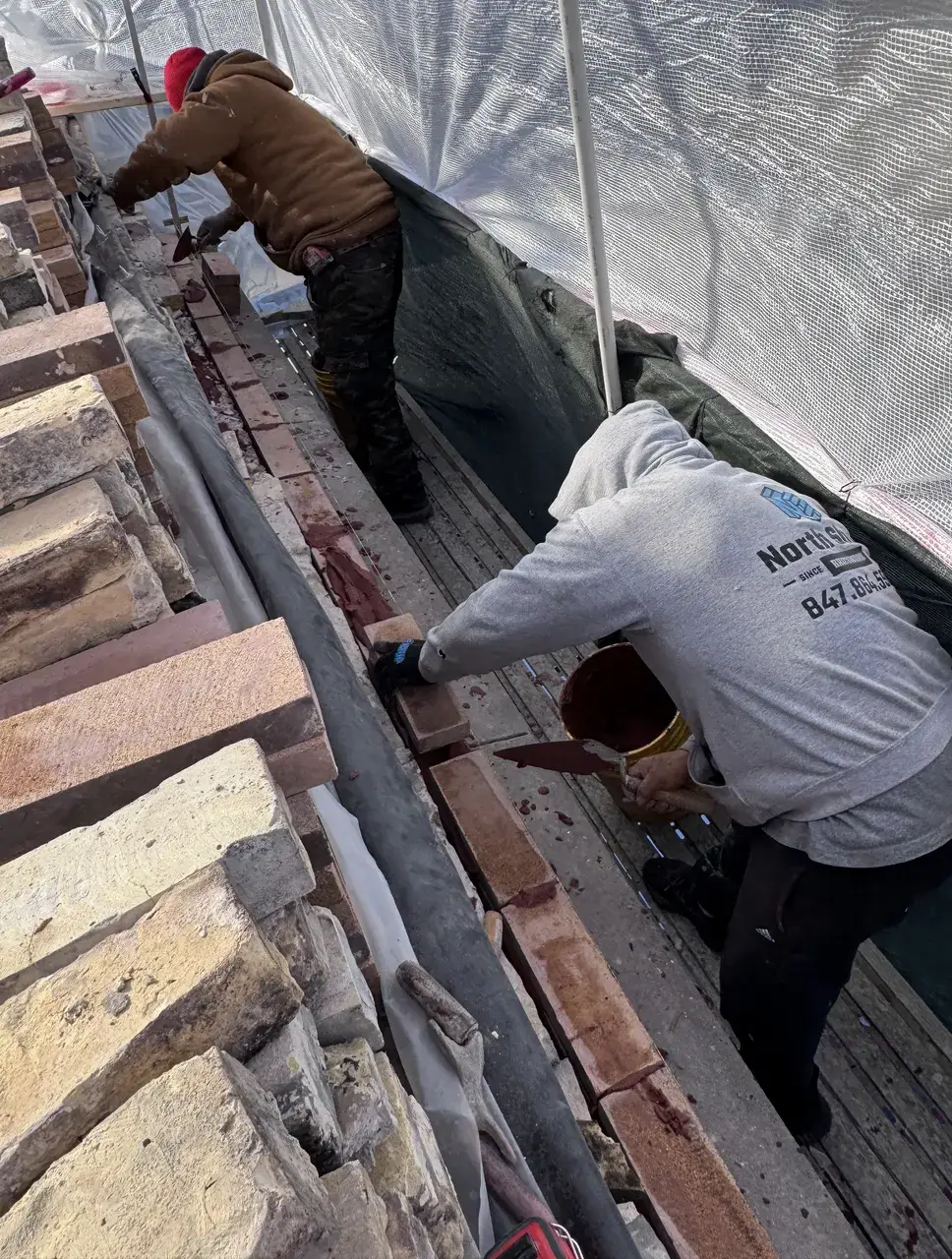
How long does a typical bricklaying service take? It’s the first question every homeowner asks before starting a masonry project. Whether you’re building a garden wall, renovating a facade, or adding an extension, knowing the timeline helps you plan around disruptions.
The short answer is that most bricklaying services take between 1 day and 4 weeks, depending on the scope. But several factors can push that timeline shorter or longer.
In this guide, we break down exactly how long a typical bricklaying service takes for every common project type — plus the factors that speed things up or cause delays. Every estimate comes from real project timelines completed by our team at North Shore Brickwork Milwaukee
How Long Does a Typical Bricklaying Service Take? (Quick Answer)
Here’s a quick overview of how long a typical bricklaying service takes based on common residential and commercial projects:
| Project Type | Typical Duration | Bricks Per Day (Per Bricklayer) |
| Small garden wall | 1 – 2 days | 400 – 500 |
| Boundary wall (20–40 m) | 3 – 5 days | 400 – 500 |
| Single wall repair/rebuild | 1 – 3 days | 350 – 450 |
| Chimney rebuild | 2 – 5 days | 300 – 400 |
| House facade (new build) | 1 – 3 weeks | 400 – 500 |
| Home extension | 2 – 4 weeks | 400 – 500 |
| Commercial building | 4 – 12+ weeks | 450 – 600 (crew) |
A skilled bricklayer typically lays 400–500 bricks per day under normal conditions. This is the baseline that determines how long a typical bricklaying service takes for any given project size.
Bricklaying Timeline by Project Type
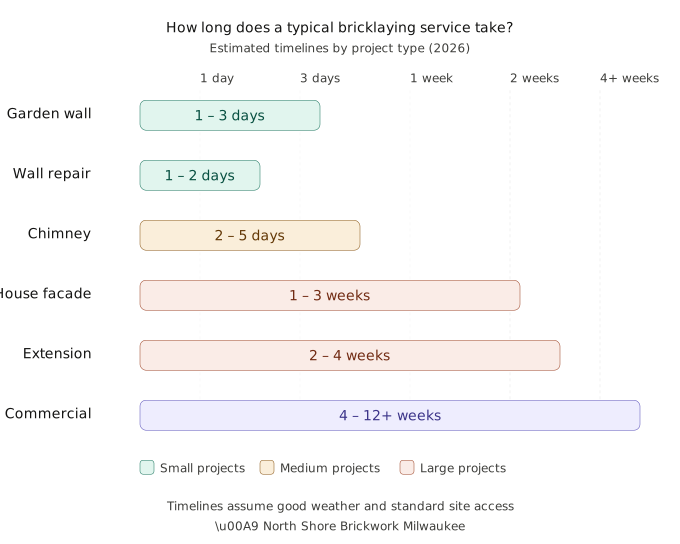
Garden Walls and Boundary Walls (1–5 Days)
Small garden walls are the quickest bricklaying projects. A simple, straight wall under 10 metres long can be completed in a single day by an experienced bricklayer.
Longer boundary walls (20–40 metres) typically take 3–5 days, including foundation preparation and mortar curing time between courses.
Chimney Brickwork (2–5 Days)
Chimney projects are slower per brick because of height, scaffolding setup, and the precision required for flue alignment. A standard chimney rebuild takes 2–5 days, depending on the number of flues and height above the roofline.
House Facade and New Build (1–4 Weeks)
A full house facade is one of the largest residential bricklaying projects. For an average-sized Milwaukee home, expect 1–3 weeks with a two-person crew.
New builds with full brick exteriors can take 2–4 weeks or longer, as the bricklaying must coordinate with other trades (window installation, roofing, electrical rough-ins).
Home Extensions (2–4 Weeks)
Extensions involve foundation work, damp-proof courses, and integration with the existing structure. The bricklaying itself may only take 1–2 weeks, but the total project, including prep and finishing, runs 2–4 weeks.
How Project Size Affects Bricklaying Duration
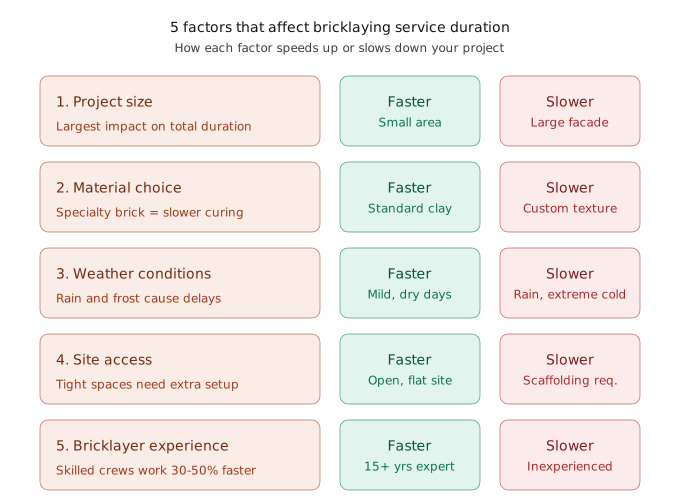
Project size is the single biggest factor in how long a typical bricklaying service takes. Here’s a simple way to estimate:
| Total Bricks Needed | Crew Size | Estimated Duration |
| Under 500 | 1 bricklayer | 1 day |
| 500 – 2,000 | 1–2 bricklayers | 2 – 5 days |
| 2,000 – 5,000 | 2–3 bricklayers | 1 – 2 weeks |
| 5,000 – 15,000 | 3–4 bricklayers | 2 – 4 weeks |
| 15,000+ | 4+ crew members | 4+ weeks |
Don’t forget to factor in the layout complexity. A straightforward rectangular design is much quicker than intricate patterns, curves, or decorative bonding patterns like Flemish or herringbone.
💡 Pro Tip from Our Team
When estimating your project, count the square metres of wall face — standard bricks require roughly 60 bricks per square metre. Multiply by the number of walls to get your total brick count, then divide by 450 (average daily output) to estimate days.
How Material Choice Impacts Bricklaying Time
Different types of bricks and mortar directly affect how long a typical bricklaying service takes. Here’s how:
Brick Type and Laying Speed
| Brick Type | Laying Speed | Why |
| Standard clay brick | Fastest | Uniform size, easy to handle |
| Engineering brick | Fast | Dense but consistent dimensions |
| Reclaimed/salvaged brick | Moderate | Irregular sizes need more adjustment |
| Reclaimed / salvaged brick | Slowest | Cleaning, sorting, and size variation |
Mortar Curing Time
Standard cement mortar sets within 24–48 hours. Lime-based mortar (used for historic properties) can take 3–7 days to fully cure, which slows the overall project timeline.
According to the Brick Industry Association, mortar type selection should be based on the brick’s compressive strength and exposure conditions — not just speed.
How Weather and Site Conditions Cause Delays
Weather is the most unpredictable factor in how long a typical bricklaying service takes. Here’s what can go wrong:
Weather Delays
Rain: Bricklaying must stop during rain. Wet mortar joints won’t cure properly and can wash out entirely. Even light drizzle compromises joint strength.
Freezing temperatures (below 3°C): Mortar freezes before it cures, creating weak joints that crumble. Professional bricklayers will not lay bricks in freezing conditions.
Extreme heat (above 30°C): Mortar dries too fast, reducing bond strength. Bricks may need to be dampened before laying, slowing the process.
High winds: Wind accelerates mortar drying and makes scaffolding work dangerous, especially above two stories.
The National Weather Service in Milwaukee provides forecasts we use to plan project schedules around weather disruptions.
Site Access Issues
Difficult site access adds time in several ways. Narrow driveways mean materials must be carried further. Rear-of-property work may require crane delivery. Scaffolding setup on uneven ground takes longer to erect safely.
If your site requires scaffolding, add 0.5–1 day for setup and the same for removal to your timeline.
Does Bricklayer Experience Affect How Long the Service Takes?
Absolutely. Bricklayer experience is one of the most significant factors in how long a typical bricklaying service takes.
| Experience Level | Bricks Per Day | Error Rate | Overall Speed |
| Apprentice (1–2 years) | 200 – 300 | Higher | Slowest |
| Intermediate (3–5 years) | 350 – 450 | Moderate | Average |
| Expert (10+ years) | 450 – 600 | Very low | Fastest |
An experienced bricklayer doesn’t just work faster — they make fewer mistakes. Corrections and rework can add 10–20% to total project time when less experienced workers are involved.
Hiring a skilled professional may cost more per day, but the faster completion and higher quality typically mean lower total project cost.
Design Complexity and Its Impact on Duration
The design and bonding pattern you choose significantly affects how long a typical bricklaying service takes:
| Bond Pattern | Speed Impact | Common Use |
| Stretcher bond (running bond) | Fastest | Most residential walls |
| Flemish bond | +15–20% slower | Decorative facades |
| English bond | +10–15% slower | Strong structural walls |
| Herringbone pattern | +30–50% slower | Feature walls, paths |
| Curved walls | +40–60% slower | Garden features, arches |
Arches, circular features, and soldier courses (bricks laid vertically) all require additional cutting and fitting time. Discuss your design aspirations with your contractor early to get an accurate timeline.
How to Speed Up Your Bricklaying Service
Here are proven ways to reduce how long a typical bricklaying service takes without sacrificing quality:
1. Prepare the site in advance: Clear the work area, ensure the foundation is ready, and have all materials delivered before the crew arrives. A prepared site can save a full day.
2. Choose standard materials: Standard clay bricks and Type N mortar allow the fastest laying speed. Custom or reclaimed materials add 20–40% more time.
3. Schedule during ideal weather: April through October (10–25°C) offers the best conditions in Milwaukee. Avoid winter starts if possible.
4. Hire an experienced crew: A two-person expert crew can outpace a three-person inexperienced crew while producing better quality work.
5. Use simple bond patterns: Stretcher bond is the fastest to lay and works perfectly for most residential applications.
6. Communicate your timeline: Discuss deadlines with your contractor upfront. A good bricklayer will plan around your schedule and flag potential delays early.
💡 Our Approach at North Shore Brickwork
We provide a detailed project timeline before work begins, including buffer days for weather. Regular check-ins keep you informed on progress, and we always have contingency plans for unexpected delays.
Need a Bricklaying Quote in Milwaukee?
Now you know how long a typical bricklaying service takes — plan with confidence. North Shore Brickwork provides free, detailed project timelines with every estimate.
Contact North Shore Brickwork today for a free project assessment.
FAQs | Bricklaying Service
Q: How long does a typical bricklaying service take for a garden wall?
A small garden wall (under 10 metres) typically takes 1–2 days for a skilled bricklayer. Longer boundary walls of 20–40 metres take 3–5 days, including foundation prep and mortar curing.
Q: How many bricks can a bricklayer lay in a day?
An experienced bricklayer lays 400–500 standard bricks per day in good conditions. Apprentices average 200–300. Complex patterns, specialty bricks, or difficult access can reduce output by 20–50%.
Q: How long does it take to brick a house?
A full house facade takes 1–3 weeks with a two-person crew. New builds with complete brick exteriors take 2–4 weeks, as bricklaying must coordinate with window and roof installation.
Q: Does the weather affect how long bricklaying takes?
Yes, significantly. Rain stops work entirely. Freezing temperatures (below 3°C) prevent mortar from curing. Extreme heat dries mortar too fast. Ideal conditions are 10–25°C with no rain.
Q: How long does mortar take to cure?
Standard cement mortar reaches working strength in 24–48 hours and full strength in 28 days. Lime-based mortar takes 3–7 days for initial set and several weeks for full carbonation.
Q: Is it faster to use larger bricks or blocks?
Yes. Concrete blocks cover more area per unit, so block walls go up 2–3× faster than standard brick walls. However, they lack the aesthetic appeal of traditional brickwork.
Q: How long does a chimney rebuild take?
A standard chimney rebuild takes 2–5 days, depending on height, number of flues, and whether scaffolding is needed. Crown cap replacement adds half a day.
Q: Can bricklaying be done in winter?
Bricklaying should be avoided when temperatures drop below 3°C. If winter work is necessary, heated enclosures and frost-protection additives can be used, but this adds cost and time.
Q: How do I know if my bricklayer is working at a reasonable speed?
A professional bricklayer should lay roughly 400–500 bricks per day for standard work. If progress seems unusually slow, ask for a progress update — delays may be caused by hidden issues like foundation problems.
Q: Should I get a timeline in writing before work starts?
Absolutely. A written timeline with milestones protects both you and the contractor. It should include start date, estimated completion, and contingency days for weather.
/htQ: How long does a typical bricklaying service take for a garden wall?
A small garden wall (under 10 metres) typically takes 1–2 days for a skilled bricklayer. Longer boundary walls of 20–40 metres take 3–5 days, including foundation prep and mortar curing.
Q: How many bricks can a bricklayer lay in a day?
An experienced bricklayer lays 400–500 standard bricks per day in good conditions. Apprentices average 200–300. Complex patterns, specialty bricks, or difficult access can reduce output by 20–50%.
Q: How long does it take to brick a house?
A full house facade takes 1–3 weeks with a two-person crew. New builds with complete brick exteriors take 2–4 weeks, as bricklaying must coordinate with window and roof installation.
Q: Does the weather affect how long bricklaying takes?
Yes, significantly. Rain stops work entirely. Freezing temperatures (below 3°C) prevent mortar from curing. Extreme heat dries mortar too fast. Ideal conditions are 10–25°C with no rain.
Q: How long does mortar take to cure?
Standard cement mortar reaches working strength in 24–48 hours and full strength in 28 days. Lime-based mortar takes 3–7 days for initial set and several weeks for full carbonation.
Q: Is it faster to use larger bricks or blocks?
Yes. Concrete blocks cover more area per unit, so block walls go up 2–3× faster than standard brick walls. However, they lack the aesthetic appeal of traditional brickwork.
Q: How long does a chimney rebuild take?
A standard chimney rebuild takes 2–5 days, depending on height, number of flues, and whether scaffolding is needed. Crown cap replacement adds half a day.
Q: Can bricklaying be done in winter?
Bricklaying should be avoided when temperatures drop below 3°C. If winter work is necessary, heated enclosures and frost-protection additives can be used, but this adds cost and time.
Q: How do I know if my bricklayer is working at a reasonable speed?
A professional bricklayer should lay roughly 400–500 bricks per day for standard work. If progress seems unusually slow, ask for a progress update — delays may be caused by hidden issues like foundation problems.
Q: Should I get a timeline in writing before work starts?
Absolutely. A written timeline with milestones protects both you and the contractor. It should include start date, estimated completion, and contingency days for weather.