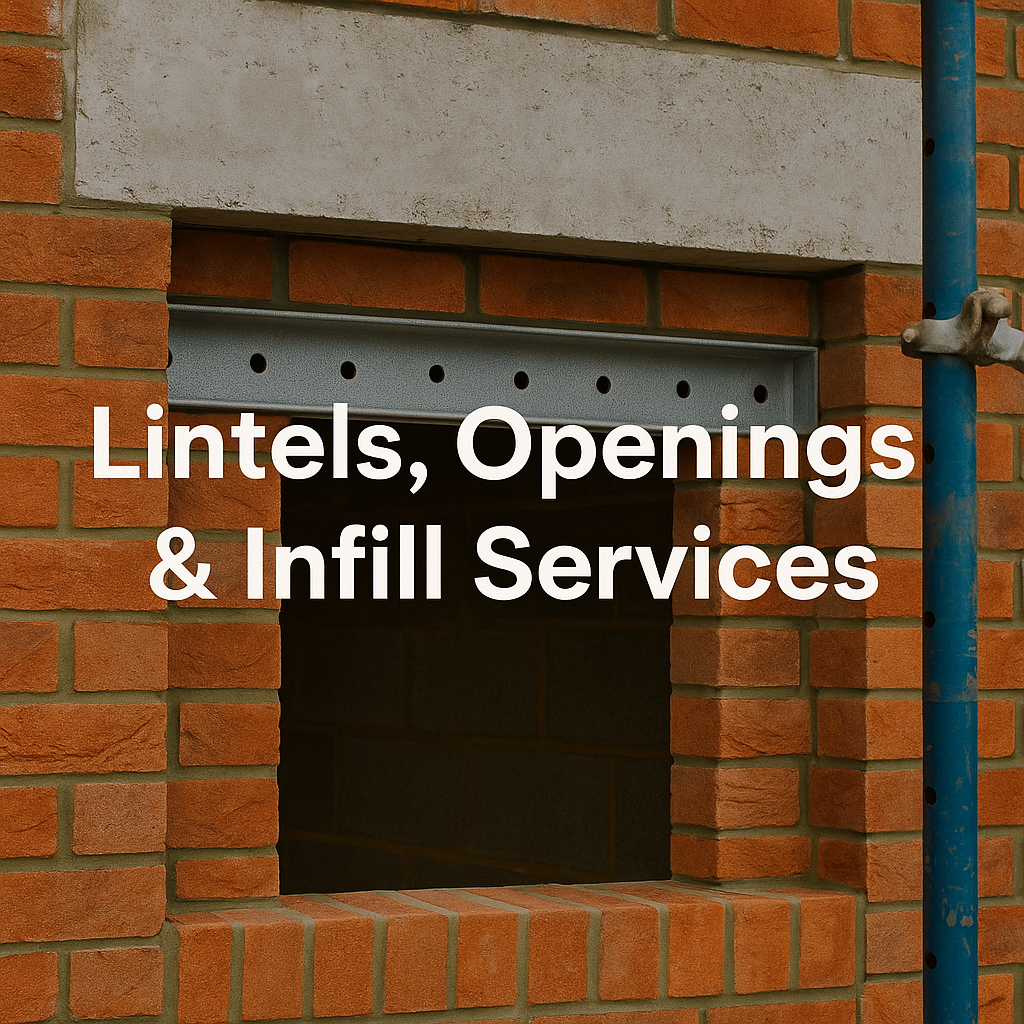
Every building tells a story — one built not only on bricks and mortar but on the unseen structural components that hold it all together. Among these, lintels play an essential role in protecting the stability and strength of masonry walls. Over time, however, factors like rust, water intrusion, and age can cause serious deterioration, leading to visible cracks, leaks, and compromised safety.
At North Shore Masonry, we specialize in professional lintel repair, lintel replacement, masonry openings, and infill services, combining technical precision with architectural sensitivity. Whether it’s reinforcing a commercial façade, restoring a historic building, or modifying a wall for a new opening, our craftsmen ensure every detail meets both engineering standards and aesthetic expectations.
Understanding Lintels and Their Structural Role
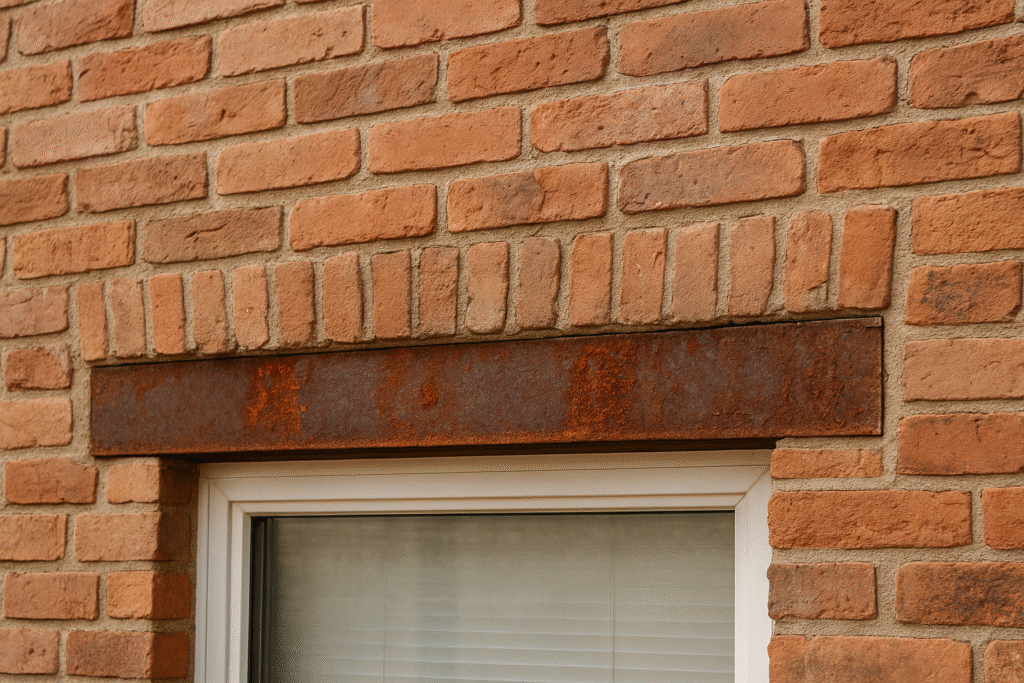
A lintel is a horizontal structural element placed above openings such as windows, doors, arches, or wall penetrations. Its job is deceptively simple yet vital — to carry the weight of the masonry above the opening and transfer it safely to the adjacent walls.
In modern construction, lintels are most commonly made of steel, although older structures may feature stone, concrete, or timber lintels. Regardless of material, the key function remains the same: support the load above and protect the wall from failure.
When lintels weaken — whether through corrosion, moisture, or improper flashing — the structural performance of the wall begins to degrade. What starts as a faint crack over a window can quickly evolve into bulging masonry, internal leaks, or brick displacement. That’s why early detection and skilled repair are critical.
Why Lintels Deteriorate Over Time
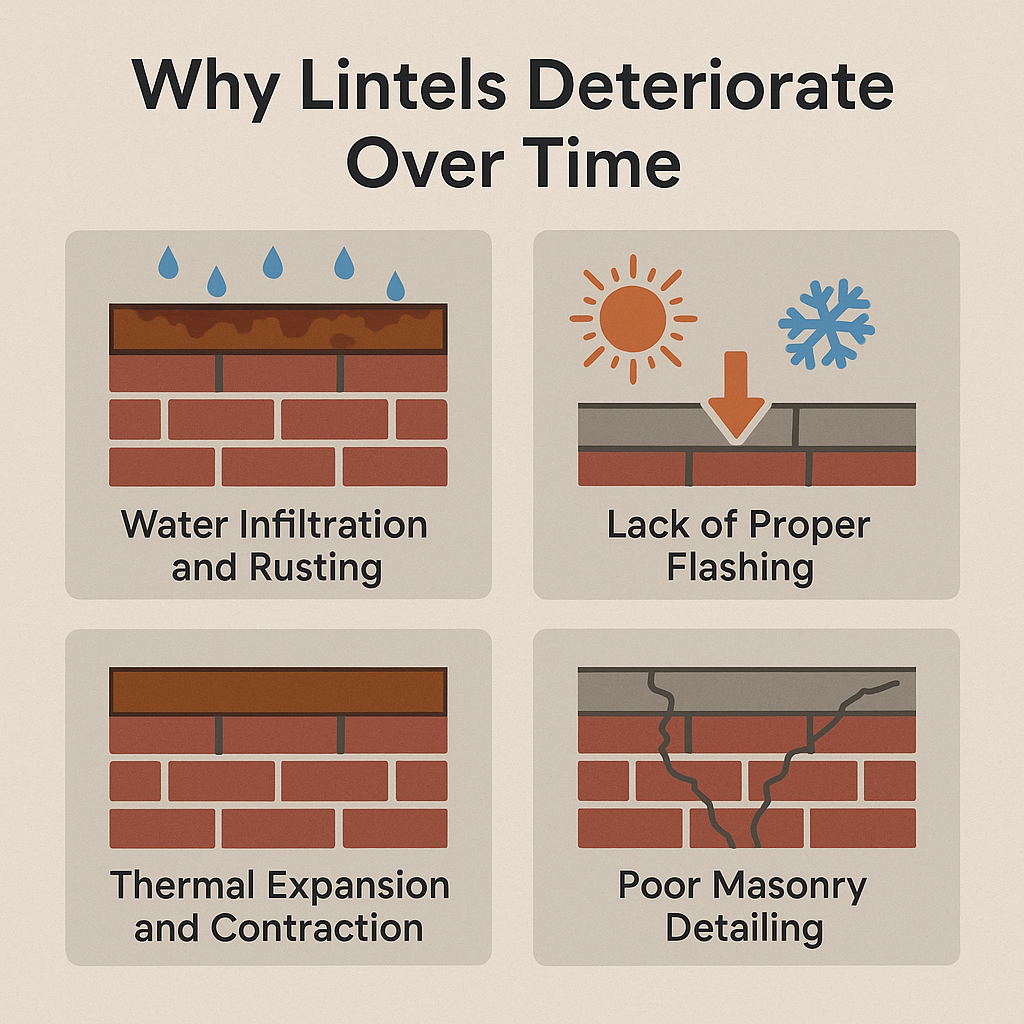
Even though lintels are built to withstand decades of exposure, environmental and construction-related factors gradually compromise their strength. Some of the most common causes include:
1. Water Infiltration and Rusting
Steel lintels are particularly vulnerable to moisture intrusion. When water penetrates mortar joints and reaches the lintel surface, it causes rusting. Rust expands up to six times the size of the original metal, exerting tremendous pressure on the surrounding brickwork — leading to horizontal cracks and brick displacement.
2. Lack of Proper Flashing
Flashing is a thin, waterproof barrier installed above the lintel to redirect water away from the wall cavity. In many older or poorly built properties, flashing is missing or deteriorated, allowing water to enter freely. Without flashing, lintel corrosion accelerates, and moisture can travel into the building envelope.
3. Thermal Expansion and Contraction
Repeated cycles of heating and cooling cause the steel lintel and surrounding masonry to expand and contract at different rates. Over time, this movement stresses the mortar joints and causes cracking around openings.
4. Poor Masonry Detailing
If mortar joints are too dense or improperly sealed, the wall loses its ability to “breathe.” This traps moisture around the lintel area, accelerating corrosion.
5. Age and Material Fatigue
Even in well-built structures, materials degrade over decades. Lintels exposed to constant environmental stress may lose strength, bend, or crack.
Early Warning Signs of Lintel Problems
Spotting lintel deterioration early can save you from costly repairs later. Warning signs include:
- Step or horizontal cracks running along the top of windows or doors
- Rust stains or brown streaks on the masonry surface
- Bulging or displaced bricks above an opening
- Gaps between the window/door frame and the surrounding masonry
- Peeling paint or moisture damage inside near openings
- Efflorescence (white powdery deposits) caused by water migration
If you see any of these, your building likely has lintel damage — and it’s time for a professional inspection.
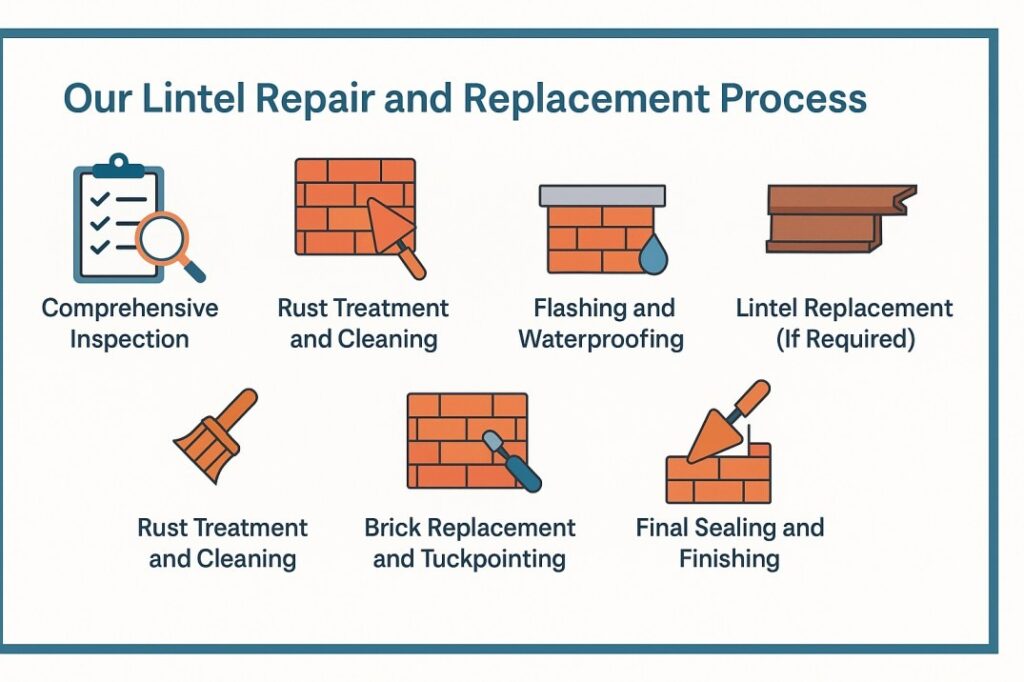
Our Lintel Repair and Replacement Process
At North Shore Masonry, we approach lintel work as both a structural and architectural craft. Each project begins with a detailed assessment and ends with a structurally sound, watertight, and aesthetically seamless repair.
1. Comprehensive Inspection
We evaluate the condition of existing lintels, surrounding masonry, and mortar joints. Using specialized tools, we check for internal rust, cracks, and hidden water pathways.
2. Controlled Masonry Removal
Our craftsmen carefully remove bricks above the lintel without disturbing the stability of the wall. If necessary, temporary supports or needle shoring systems are used to redistribute the load during repair.
3. Rust Treatment and Cleaning
For lintels that are structurally sound but corroded, we wire-brush the steel, apply rust neutralizers, and use high-performance primers designed for masonry environments.
4. Flashing and Waterproofing
This is the single most important step in preventing future damage. We install galvanized or stainless steel flashing with proper end dams and weep holes to ensure any moisture drains safely away from the wall cavity.
5. Lintel Replacement (If Required)
If the existing lintel has failed or is beyond repair, we replace it with new, load-rated steel lintels. These are sized and installed according to structural requirements and building codes.
6. Brick Replacement and Tuckpointing
Once the lintel is secured, we reinstall the original brickwork or source matching units if replacements are needed. The mortar is color-matched and tooled for a seamless finish that blends naturally with the façade.
7. Final Sealing and Finishing
The repaired area is waterproofed, and all joints are sealed to prevent future moisture intrusion. The end result is a restored, reinforced, and visually consistent masonry surface.
Creating and Modifying Openings
Buildings evolve, and so do the needs of their owners. Whether you’re adding a new entrance to a retail space, enlarging a window for natural light, or reconfiguring an interior wall, precise masonry modification is essential.
North Shore Masonry provides structural opening creation and alteration services designed to meet exact architectural and load-bearing specifications.
Our process includes:
- Coordinating with your general contractor, engineer, or architect
- Installing temporary supports before cutting or removing masonry
- Installing proper lintels or headers for load transfer
- Finishing edges and openings for seamless integration
These modifications are performed with the same attention to safety, durability, and aesthetics as our restoration work.
Infill Masonry — Closing Unused Openings
When a window, door, or vent is no longer needed, it can be permanently sealed through a process known as infill masonry. This is common during renovations, security upgrades, or energy retrofits.
Our approach ensures that the new infill area is virtually invisible:
- We use matching brick, stone, or CMU units to replicate the existing wall texture.
- We align bond patterns perfectly with adjacent masonry.
- We tie new masonry into the existing wall using stainless steel anchors for stability.
- We finish with color-matched tuckpointing for a unified appearance.
Done right, an infill looks like it was part of the original design, maintaining the architectural harmony of the building.
The Importance of Proper Flashing and Drainage
Many lintel failures begin not with structural flaws, but with poor water management. Flashing acts as a barrier and drainage system that keeps moisture from seeping into steel and mortar.
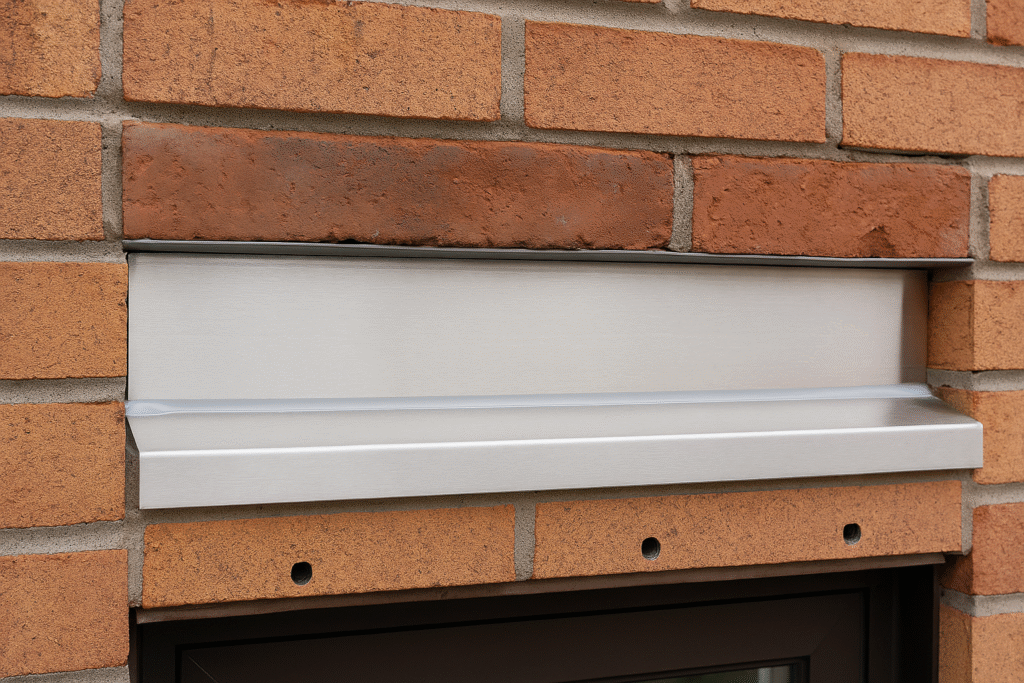
At North Shore Masonry, we use corrosion-resistant flashing materials such as stainless steel, copper, or rubberized membranes depending on project requirements. We ensure correct integration with weep holes, cavity walls, and joint sealants — so that water exits the system instead of being trapped inside it.
This small detail plays a huge role in preventing future deterioration and maintaining the wall’s health for decades.
Material Compatibility and Historic Preservation
Historic masonry buildings often have unique lintel systems — sometimes crafted from limestone, wood, or wrought iron. Replacing or repairing these requires a deep understanding of period-specific techniques and materials.
North Shore Masonry specializes in heritage and landmark lintel restoration, ensuring all repairs respect the building’s original materials and proportions. We use compatible mortars, traditional flashing methods, and non-invasive anchoring systems to preserve architectural authenticity.
Common Mistakes in Lintel Repairs
Not all masonry repairs are created equal. Many quick fixes can actually worsen the problem. Common mistakes include:
- Painting over rust without treating it
- Failing to install or replace flashing
- Using incompatible mortar that’s harder than the original brick
- Over-grinding or removing too much masonry during replacement
- Ignoring structural cracks or wall movement before repairs
These shortcuts often lead to recurring water leaks, renewed corrosion, or visible surface mismatches. Proper lintel work demands both engineering precision and aesthetic understanding.
Benefits of Professional Lintel and Infill Work
Choosing a professional masonry contractor for lintel and infill work ensures you receive:
- Structural safety and compliance with building codes
- Long-term waterproofing and corrosion prevention
- Improved building aesthetics and property value
- Reduced maintenance costs over time
- Seamless visual blending with existing architecture
Your building’s openings aren’t just functional — they define its visual rhythm and integrity. Keeping them structurally sound and beautifully finished protects both form and function.
Why Choose North Shore Masonry
North Shore Masonry brings decades of hands-on experience in masonry repair, structural reinforcement, and architectural restoration. We are recognized for:
- Precision lintel replacement and reinforcement
- Expertise in both modern and historic masonry systems
- Skilled craftsmanship and attention to visual detail
- Use of high-performance primers, sealants, and coatings
- Transparent communication, detailed assessments, and reliable timelines
We treat each structure as a unique architectural asset — balancing safety, longevity, and aesthetic continuity.
Preventative Maintenance and Longevity
After lintel and masonry repairs, continued maintenance is key. We recommend:
- Inspecting openings annually for cracks or rust stains
- Ensuring sealants and caulking remain flexible and intact
- Keeping water drainage paths clear
- Reapplying water-repellent coatings every few years
- Scheduling professional evaluations after extreme weather or renovations
Preventative care extends the lifespan of your masonry, protecting both the building’s integrity and its visual appeal.
Conclusion
Lintels, openings, and infill work may seem like technical details, but they are the unsung heroes of masonry construction. They determine how a building breathes, carries load, and withstands the elements.
With North Shore Masonry, you get a partner that understands both the science and the art of masonry. Our lintel repair, replacement, opening creation, and infill services ensure that your property remains strong, watertight, and architecturally consistent — for years to come.